Where to Stay in Da Nang? I’ve Spent 41 Nights in the City and I’ll Help You Choose
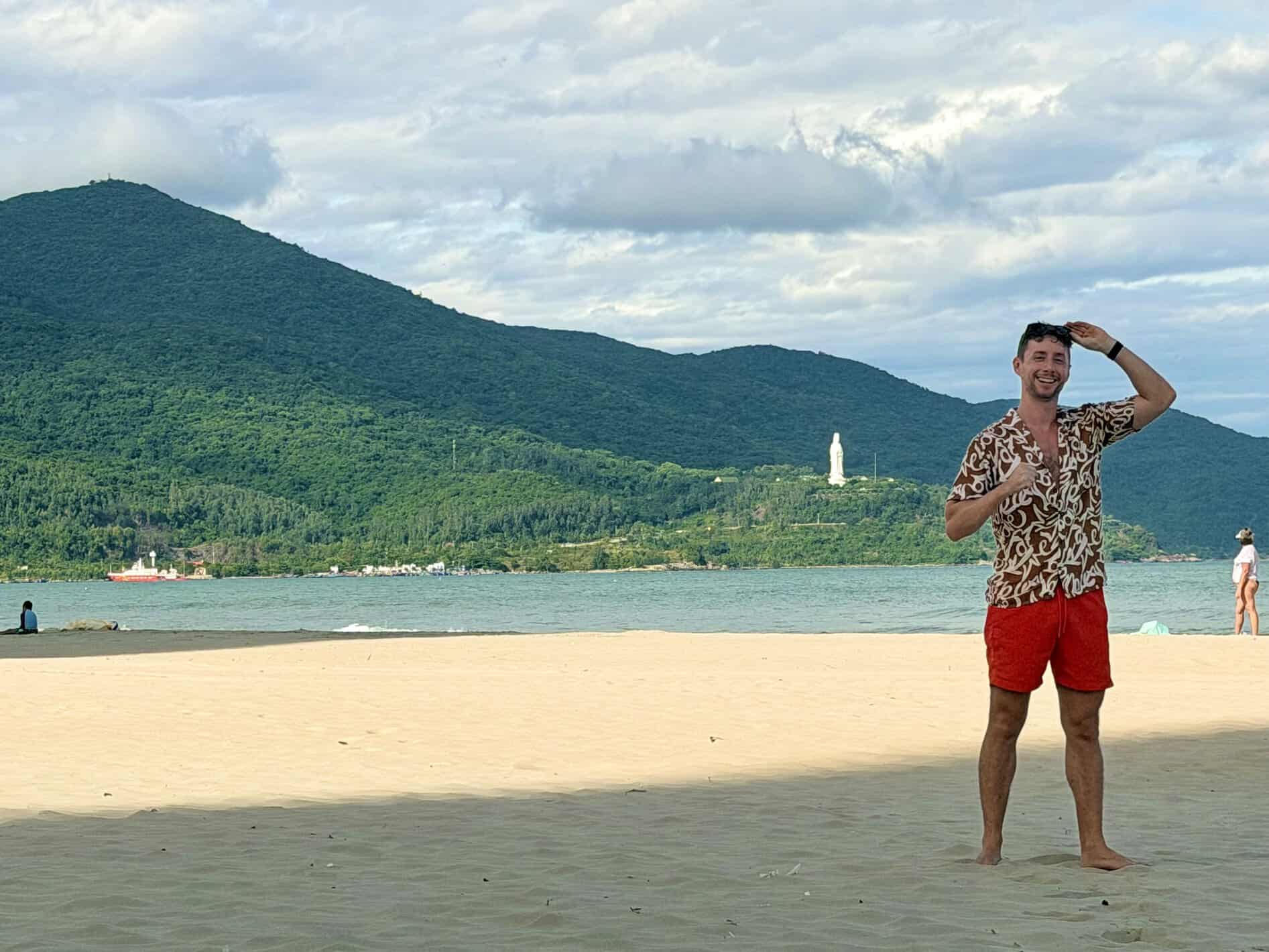
Da Nang beach at the right time of day, which isn’t the one you’d guess

Da Nang isn’t a pretty city. It’s an easy one, which is a different thing and sometimes a better one: thirty kilometers of beach, an airport inside the city itself, cafés with wifi every fifty meters and prices that still surprise you after Thailand. If you’re coming for lanterns, boats on the canal, colorful little houses and narrow lanes, what you’re looking for is forty minutes away and it’s called Hoi An.
The costly mistake here isn’t just picking the wrong hotel, which I did on one of my trips. It’s also picking the wrong side of the river. The Han splits Da Nang in two, and almost everything you came to do is on the beach half. Sleep on the other half and you spend the trip crossing bridges.
This isn’t a guide put together from Booking listings. I’ve been to Da Nang three times and slept 41 nights in six different places, from a room for about $24 to a five-star Meliá. I’ve slept in four of the seven areas, and I know the other three from going there every day: one has my gym, another my coworking space, and the third I only go to during the day, and I’ll explain why.
⚡ Quick summary: which area is yours?
| Area | The vibe | Price | To the beach | Best for |
|---|---|---|---|---|
| Sơn Trà Peninsula | Mountain, monkeys, cut off | $$$$ | It has its own | A day trip, not a bed |
| An Hải | Ordinary neighborhood, everything close | $ the cheapest | 5 min walk | First-timers, and the cheapest |
| Mỹ Khê | The beach from the photos, touristy | $$$$ the priciest | Across the road | Having the sea outside your door |
| An Thượng | Westerners, bars, coworking | $$ | 10 min | Tourists who come to party |
| Khuê Mỹ | Quiet, local restaurants | $$$ | 10 min | Peace and quiet, nomads and coworking |
| Non Nước | Big resorts and the Marble Mountains | $$$$ | Private | Resort life and switching off |
| Hải Châu | The real city, no beach | $ but less choice | Across the river | Expats and stays of several months |
👇 Tell me how you travel and I’ll show you only your areas
Tap the buttons. The table above, the area sections and the sidebar list all filter at once.
What kind of trip is it?
When are you going?
Da Nang in one minute
Before we get into neighborhoods, hold on to one idea, because it settles 80% of the decision: in Da Nang there’s only one thing you have to get right, which side of the river you sleep on.
The beach side is thirty kilometers of unbroken sand, and that’s where everything is: the specialty coffee, the coworking spaces, the brunch spots, the beach clubs and the restaurants you’ll want to try. The city side is more local, with the Dragon Bridge and the market, and it’s where you shouldn’t book if you’re coming as a tourist. Not even to save money, which is what I suspected before I checked: it costs the same as the cheapest beach area.
That doesn’t mean you shouldn’t cross. I do, but only to go somewhere specific, and then I come back to sleep by the beach.
The neighborhood names changed in July 2025. Vietnam scrapped its districts and moved to a two-tier system, so guides that talk about “Sơn Trà District” are describing something that no longer exists. If your hotel’s address doesn’t match what you’ve read elsewhere, that’s why, and it isn’t your mistake.
What it costs, and the two things nobody tells you
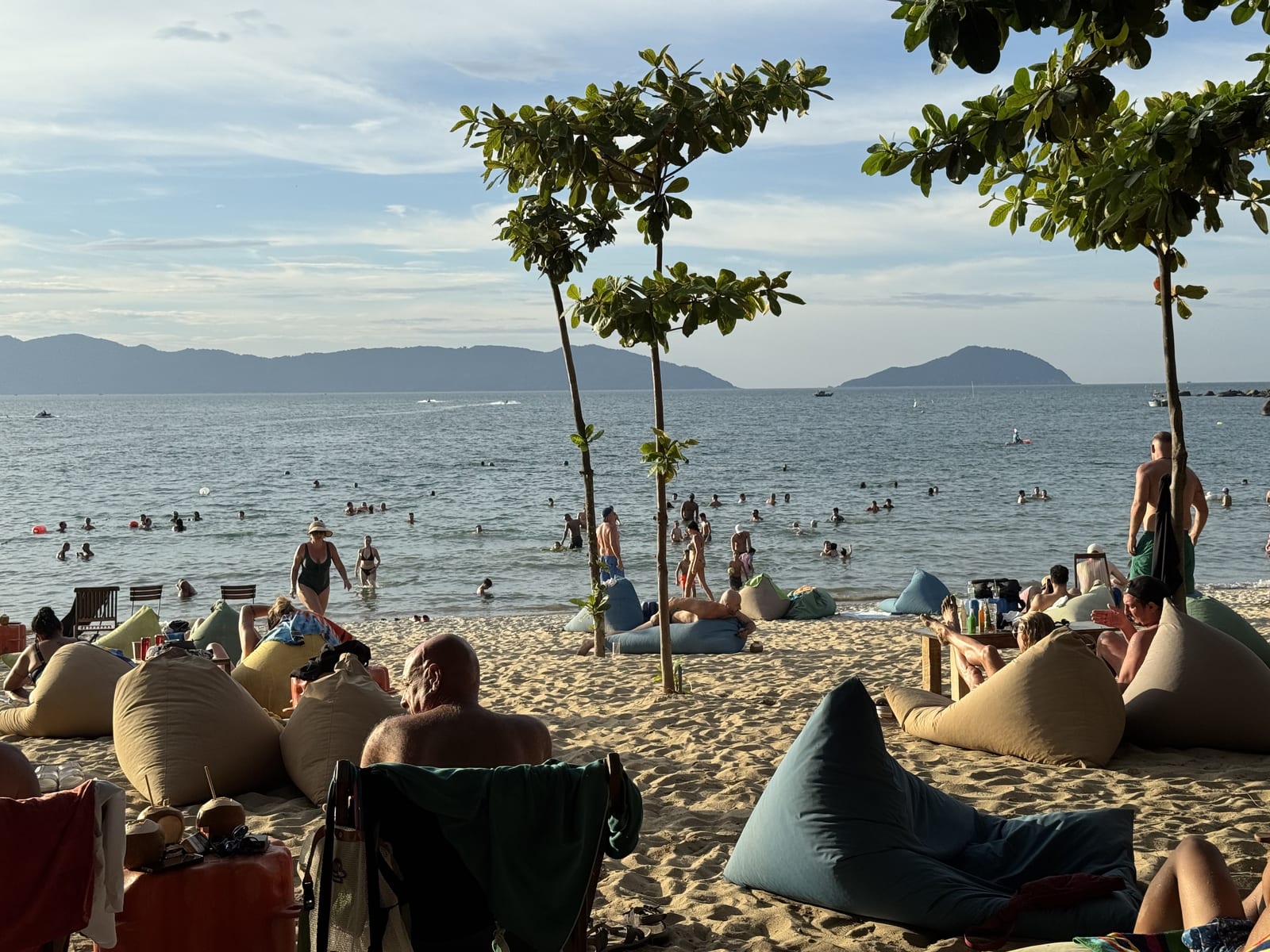
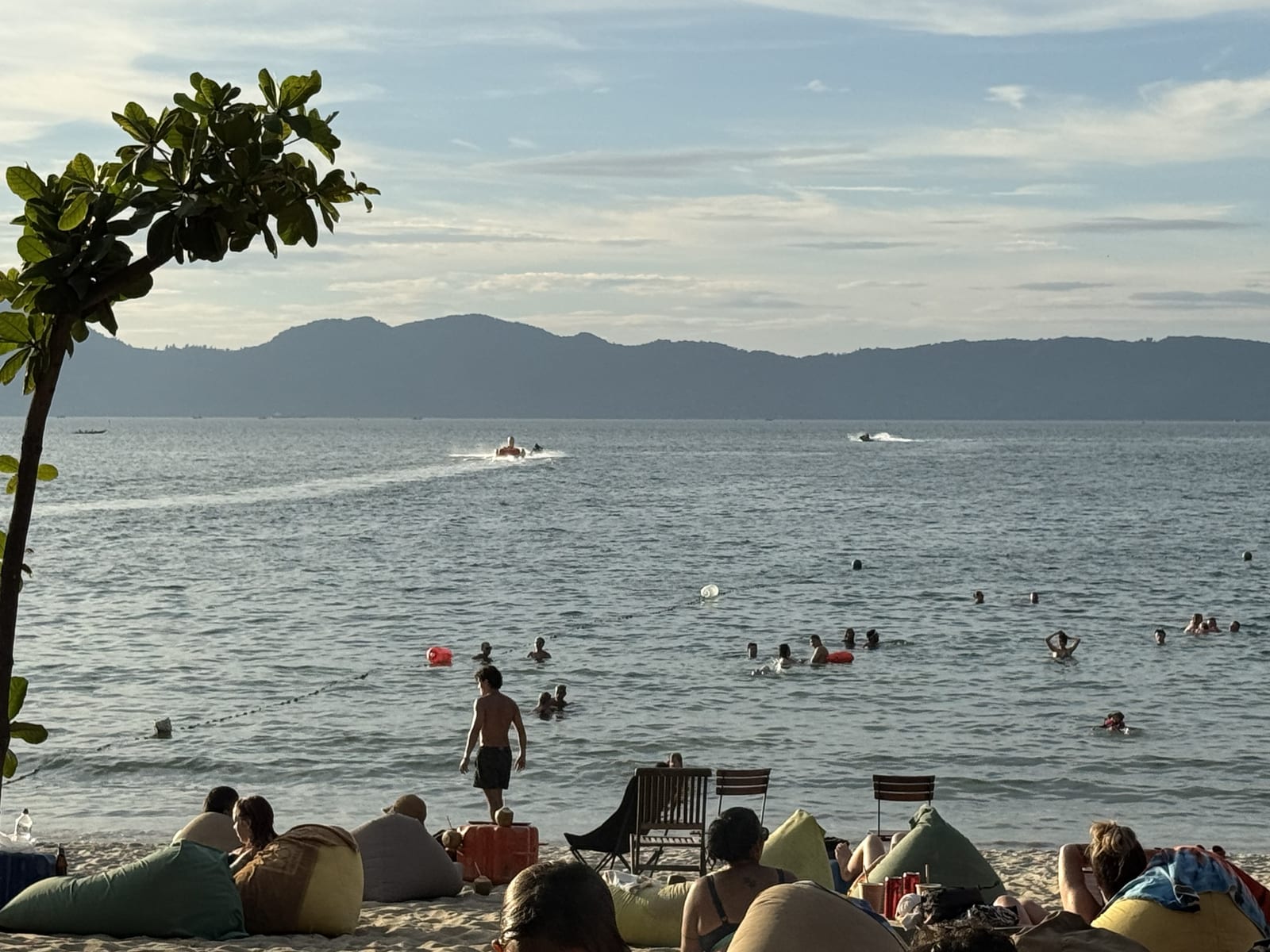
In Da Nang the beach is an afternoon thing, not a midday one. People get in the water from four or five o’clock and stay until dark. During the day people are at work, and it’s too hot to lie in the sun anyway. Go down at noon and you’ll find it empty and think you’ve nailed it, but you’ve actually picked the worst time there is. Unless that’s exactly what you want, baking in the sun with nobody around, which is fair enough too.
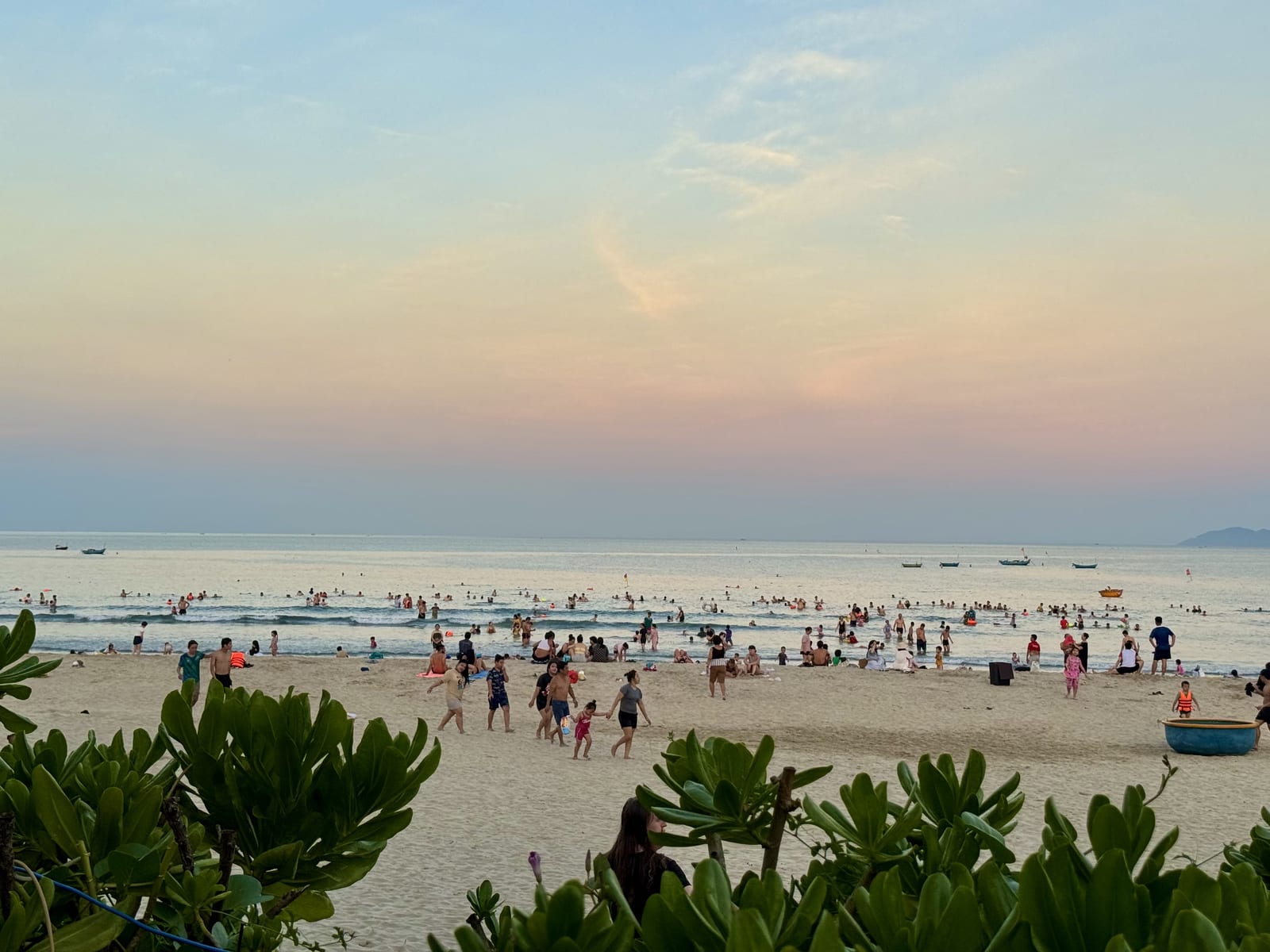
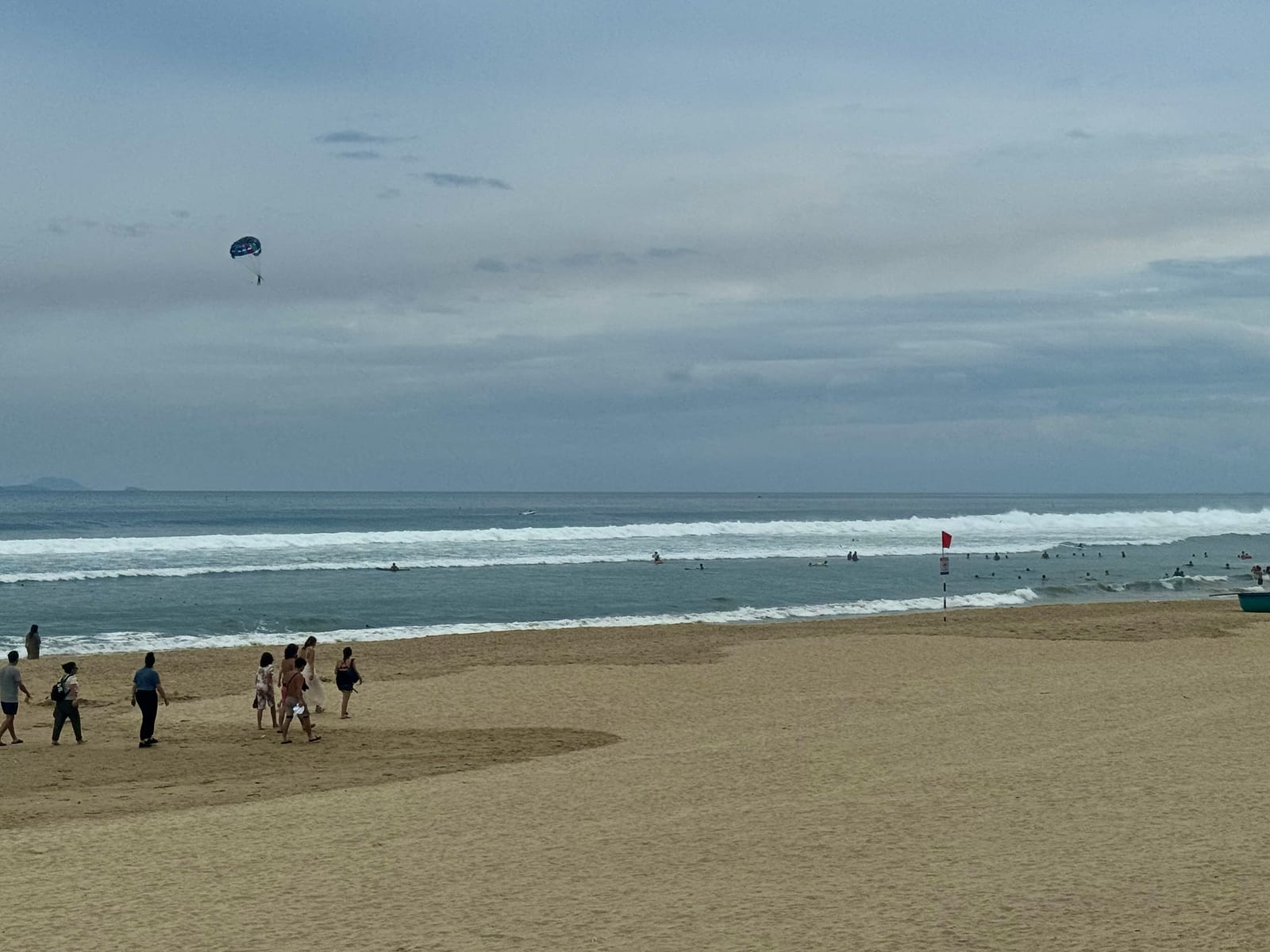
The second explains a photo you’ll see everywhere and probably won’t understand. In the afternoon the beach gets packed, but not for lack of space: they only mark off about a hundred meters with a lifeguard, and everyone crowds into it. Right next to it there are hundreds of empty meters, with no lifeguard and a red flag.
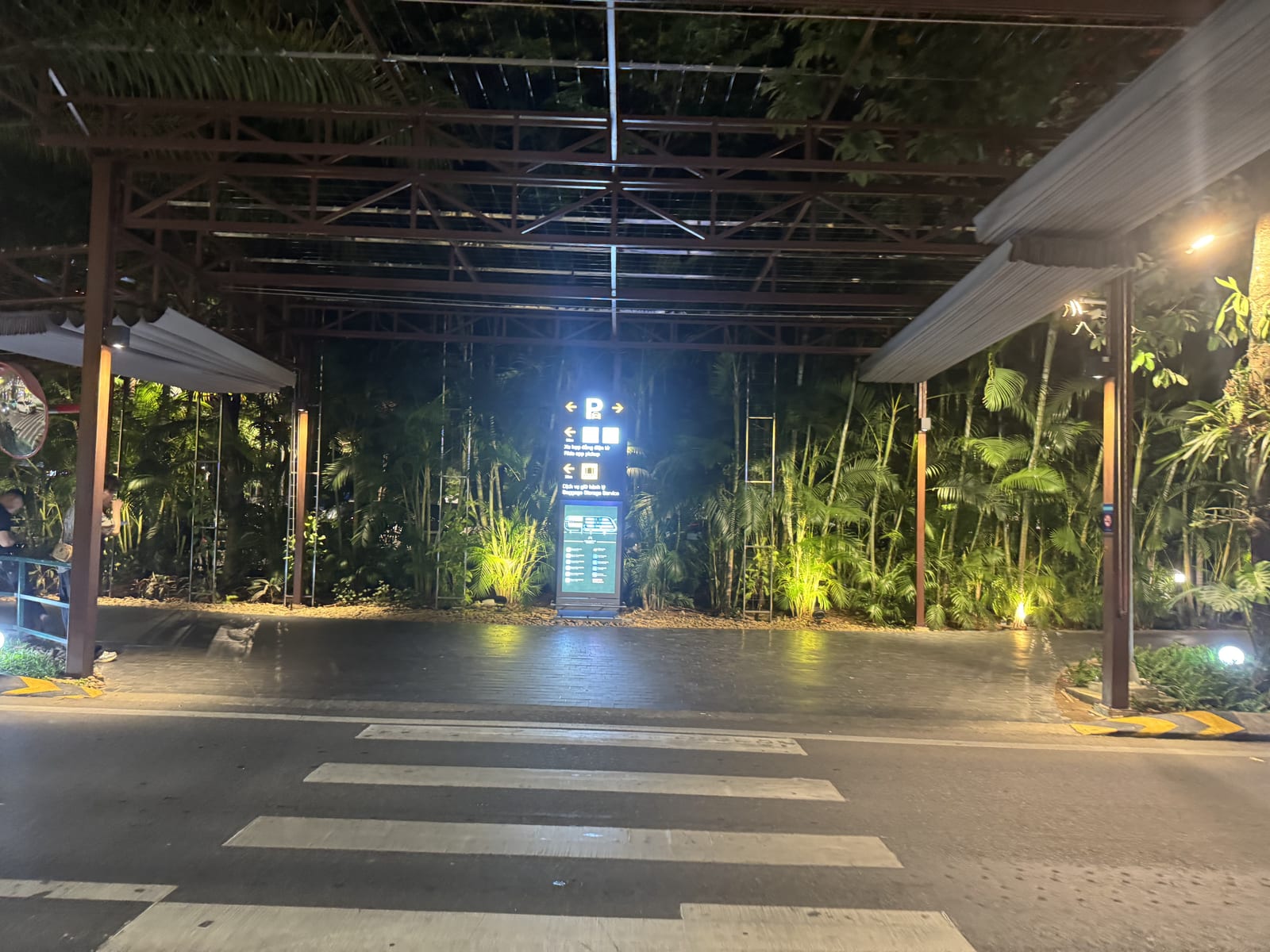
Prices in August 2026
- Coffee at a tourist spot 25,000 to 45,000 VND ($1 to $1.70)
- Beer 45,000 to 60,000 VND ($1.70 to $2.30)
- Bánh mì, the famous sandwich 20,000 to 40,000 VND ($0.80 to $1.50)
- Local dish, chicken and rice 45,000 to 80,000 VND ($1.70 to $3.10)
- Tourist restaurant, per person 200,000 VND ($7.70)
- Massage 200,000 VND ($7.70)
- Electric motorbike, full day 120,000 VND ($4.60)
- Grab motorbike, short ride 17,000 VND ($0.65)
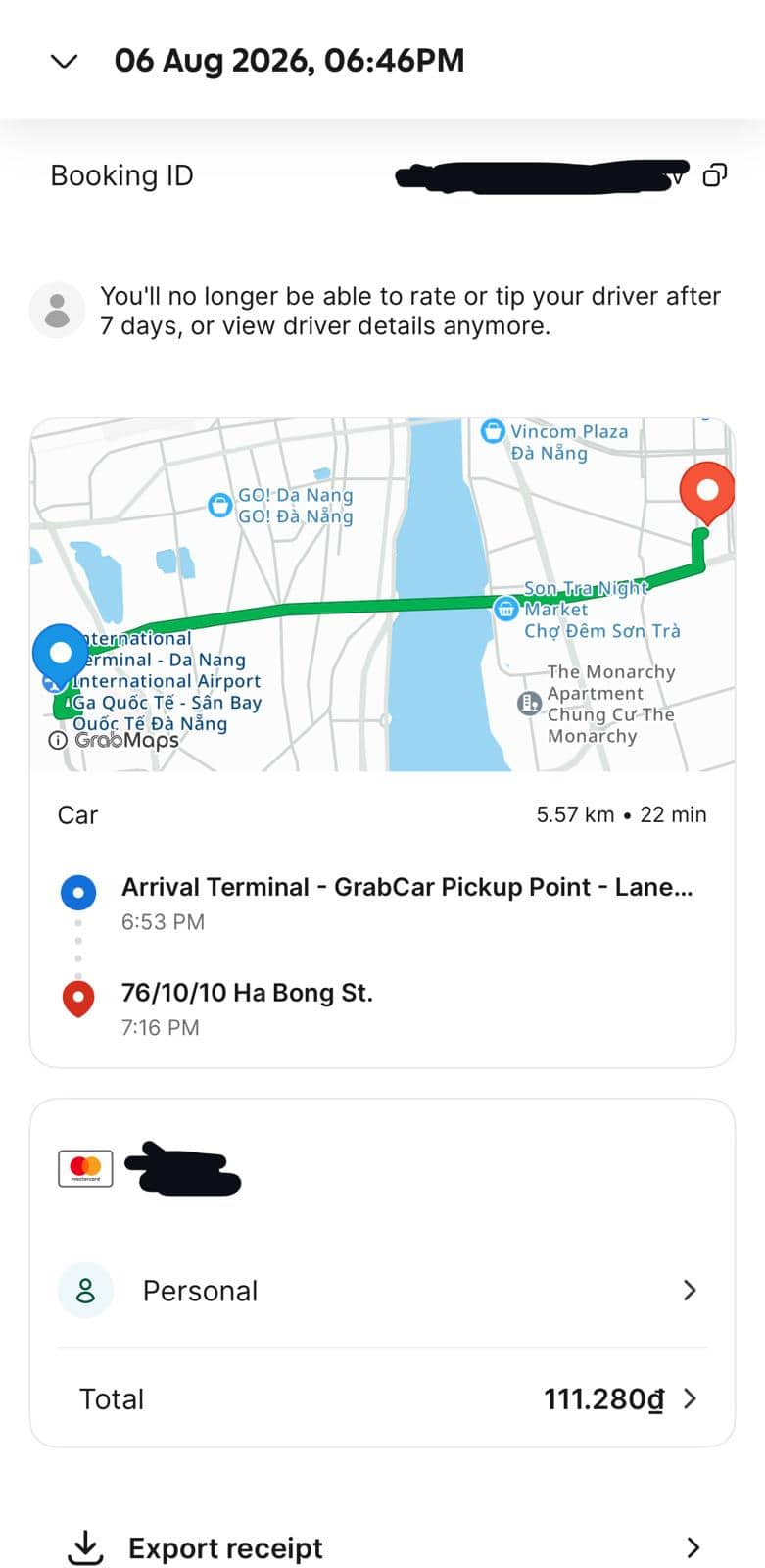
- Grab from the airport 110,000 VND ($4.20)
Roughly 26,000 VND to the dollar, so the 45,000 coffee is about $1.70 and the 200,000 massage about $7.70.
Getting around
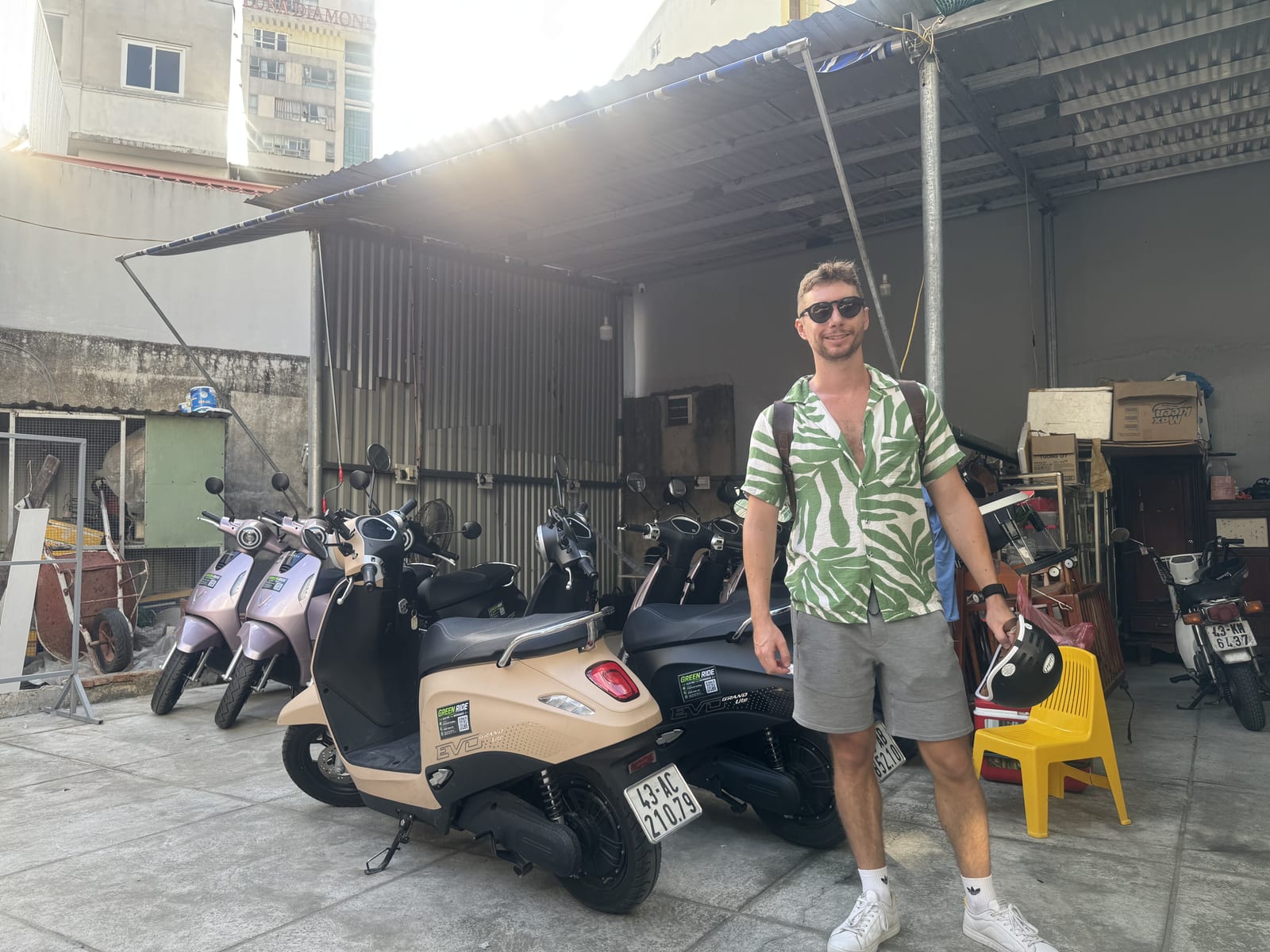
I get around on an electric motorbike: 120,000 VND a day (about $4.60), they swap the battery whenever you need it, and it does about 100 km on a charge. It reaches 35 or 40 km/h in sport mode, though in town you’ll be doing 20 anyway because the traffic doesn’t allow more, and it takes hills with a passenger on the back without complaining. I rent mine from GreenRide, in An Hải.
You can ride one without a license, but only if the bike falls into Vietnam’s moped category, the xe gắn máy: a design speed of 50 km/h at most, and no more than 4 kW if it’s electric or 50 cc if it runs on gasoline. It has to meet all of those at once. Go over any of them and it becomes a xe mô tô, and you need an A1 license.
So ask for a photo of the registration paper, the Giấy đăng ký xe, and check that it says xe gắn máy. Don’t trust the “no license needed” line from whoever rents it to you: riding without a license when you needed one means a fine of 2 to 4 million VND (about $77 to $154). Helmets are compulsory for both riders, and you have to be at least 16. And careful: if the bike needs a license and you don’t have one, travel medical insurance normally won’t cover the accident.
If you don’t want a bike, a Grab motorbike ride is 17,000 VND (about $0.65), and that gets you from a café to the beach, from the beach to the coworking space and from there to dinner. To order one you need data from the moment you land: I use Holafly’s eSIM, which I put through seven days of speed tests here.
When to come
March to September is beach season. From October to February the northeast monsoon arrives, and the sea brings two- and three-meter waves and a red flag. In August I’ve had twenty days with only five cloudy ones, and on those days the sea gets rough and you don’t feel like going in.
In a hurry? Three places I’ve slept in myself
All three are my own stays, with the nights and the bill to prove it. None of them comes off a list.
 The resort
If you’re coming to stay put in the hotel, this is the one. Private beach and half board.
Check availabilityA big, very quiet apartment. The bathroom is its weakest point.
Check availability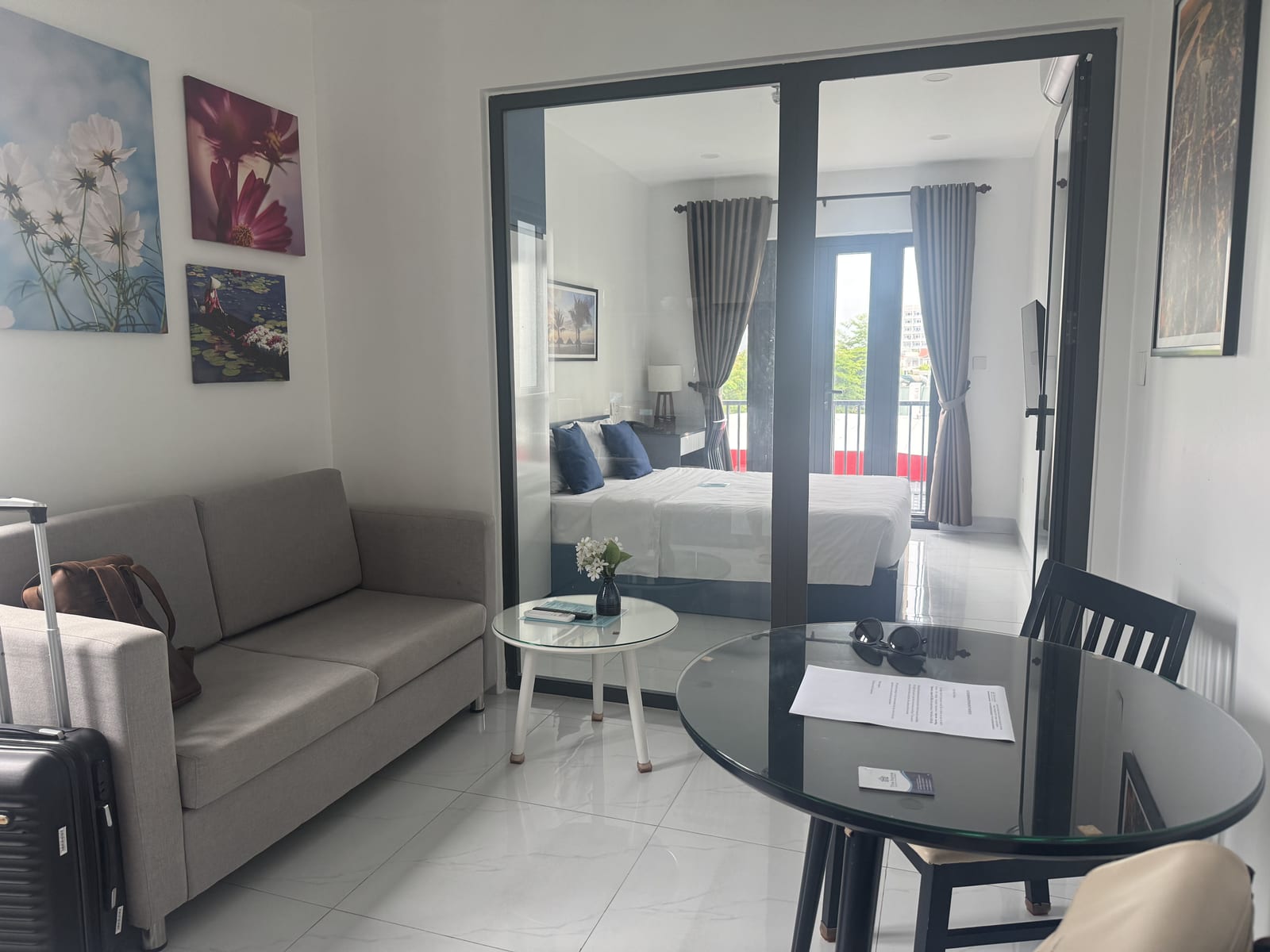 Service
Very clean, with 10/10 service. The hallways smell of cooking.
Check availabilityTwo of the three are in the same area, and that’s no accident: An Hải is where I’ve slept the most, 22 nights over two different trips.
Only book places rated 9 or higher on Booking. If one is a perfect fit on price or location you can drop to 8.5, but no lower. The standard here isn’t the European one: an 8 out of 10 for cleanliness in Da Nang isn’t the same level of clean as an 8 out of 10 back home in Spain. It’s the filter that will save you the most grief, and it costs nothing to apply.
The seven areas, from north to south
The Sơn Trà Peninsula
- Price$$$$ resorts only
- To the beachIt has its own
- At nightNothing going on
- Rough seaDoesn’t matter
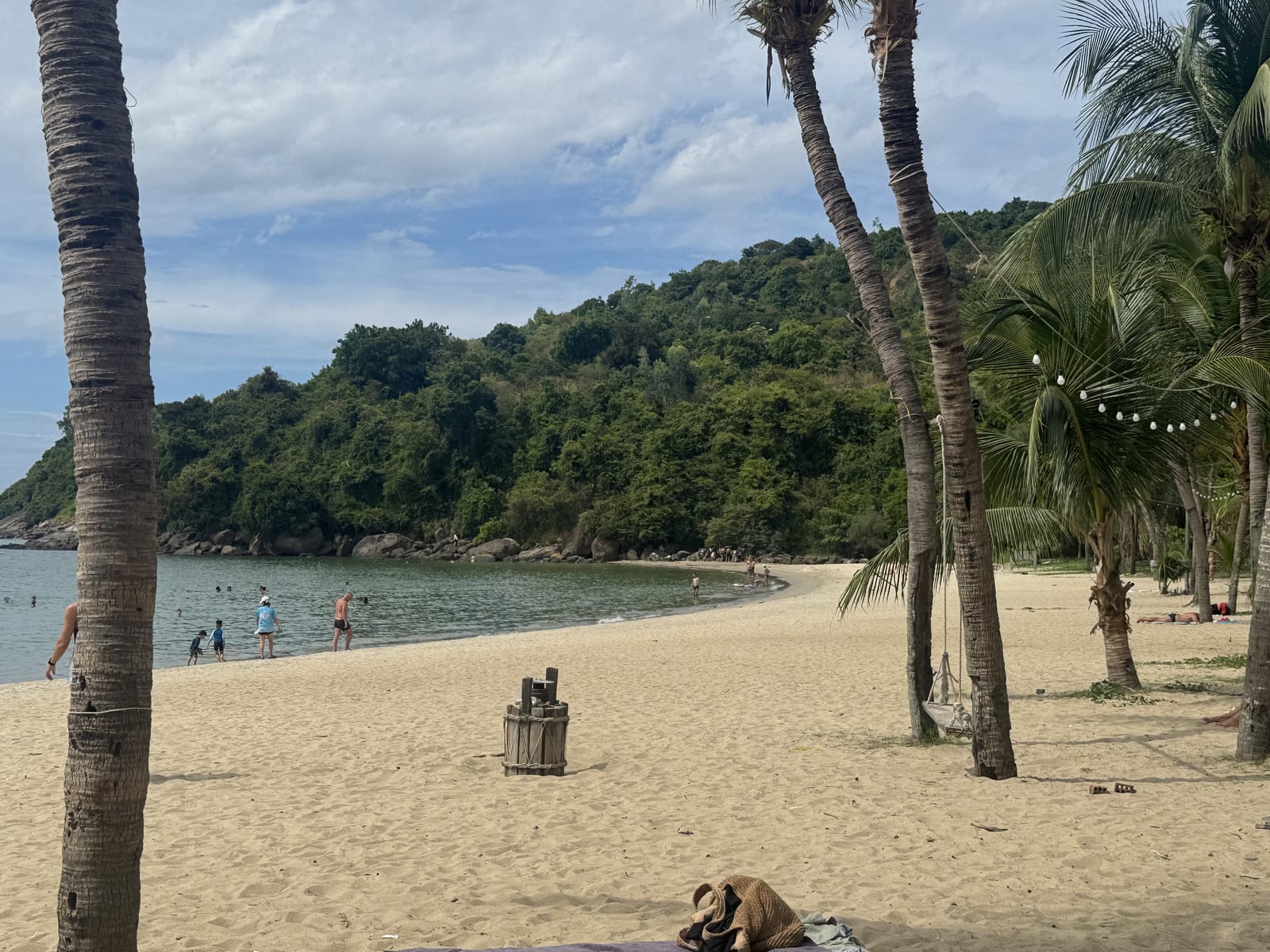
This is where Google will take you if you search for photos of Da Nang: the mountain running into the sea, the giant pagoda, the InterContinental hanging off the cliff. It’s beautiful and you should go up. What you shouldn’t do is sleep here, except in one very specific case.
That case is going to one of its resorts, the InterContinental or the Natalie Indochine Mountain Villa, with no plans to leave. If that’s you, go ahead and enjoy it. For any other kind of trip you’d be cutting yourself off: there’s no neighborhood, no street restaurants, nothing to wander down to at nine in the evening, and every trip out is a twenty-minute taxi ride.
I go up and come back the same day. And when the sea gets rough in town, I head to Simple Beach, at the end of Yết Kiêu Street, fifteen or twenty minutes away by motorbike and much, much quieter. Its downside is shade: either you grab one of the few palm trees or you end up at the beach bar.
Don’t smile at the monkeys. To you it’s a friendly smile. To a monkey, showing your teeth means you’re about to attack, and it goes on alert. They look like stuffed animals, but they can get dangerous.
Why come
- The best views in the whole city, no contest
- Simple Beach, the perfect plan B when the sea is rough down in town
- Real nature twenty minutes from the center
Why not sleep here
- No neighborhood: no shops, no street restaurants, no life
- Every outing is a taxi, and it adds up
- You miss the best of Da Nang, which is wandering the streets in the afternoon
What is worth your time around here
- Simple Beach: at the end of Yết Kiêu, across the Thuận Phước bridge. The quiet beach for when there are waves down in town.
- Linh Ứng Pagoda: the giant Lady Buddha you can see from all over the city.
An Hải, the strip by the bridge
- Price$ the cheapest
- To the beach5 min walk
- At nightQuiet
- Rough seaHolds up
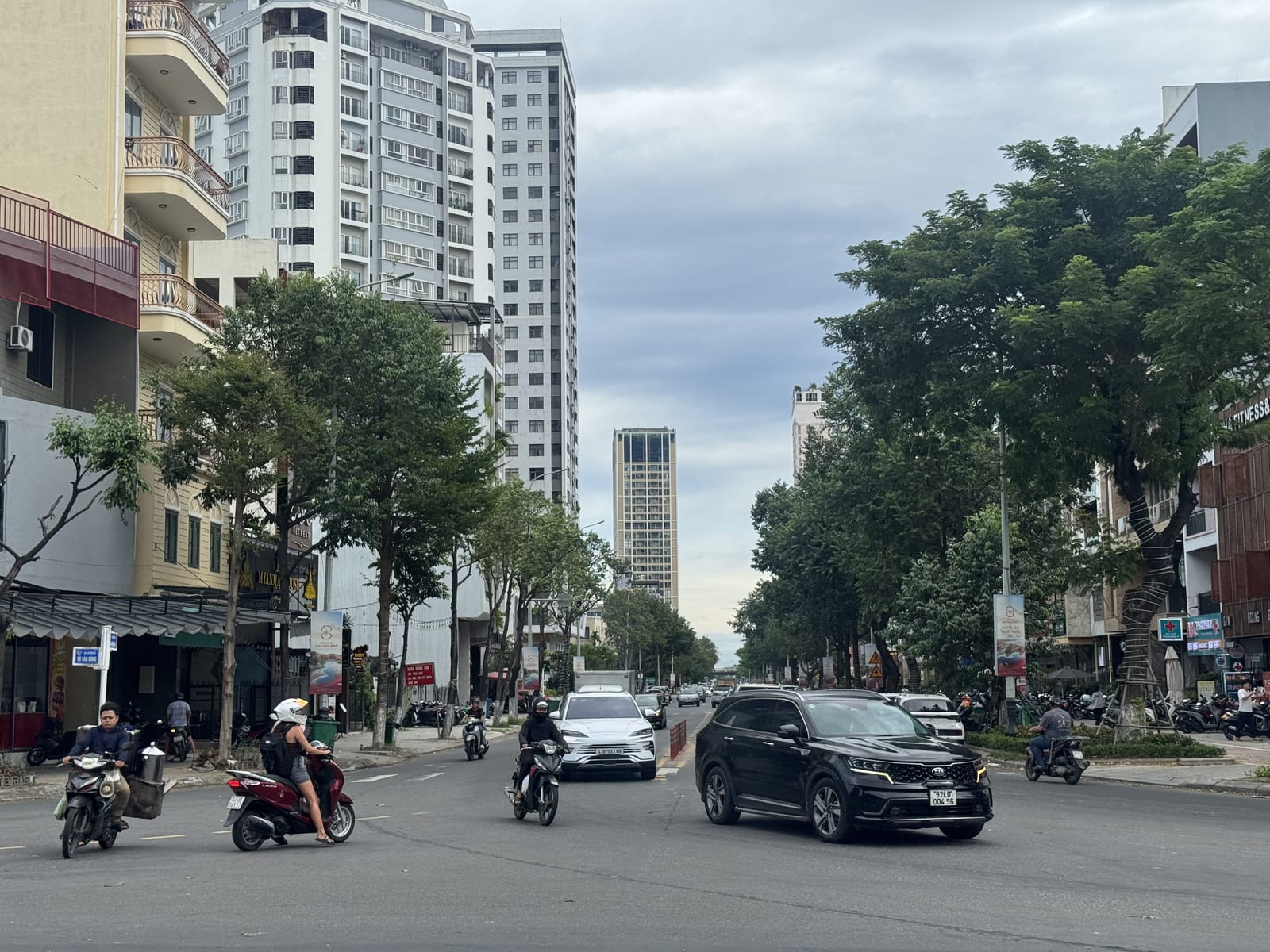
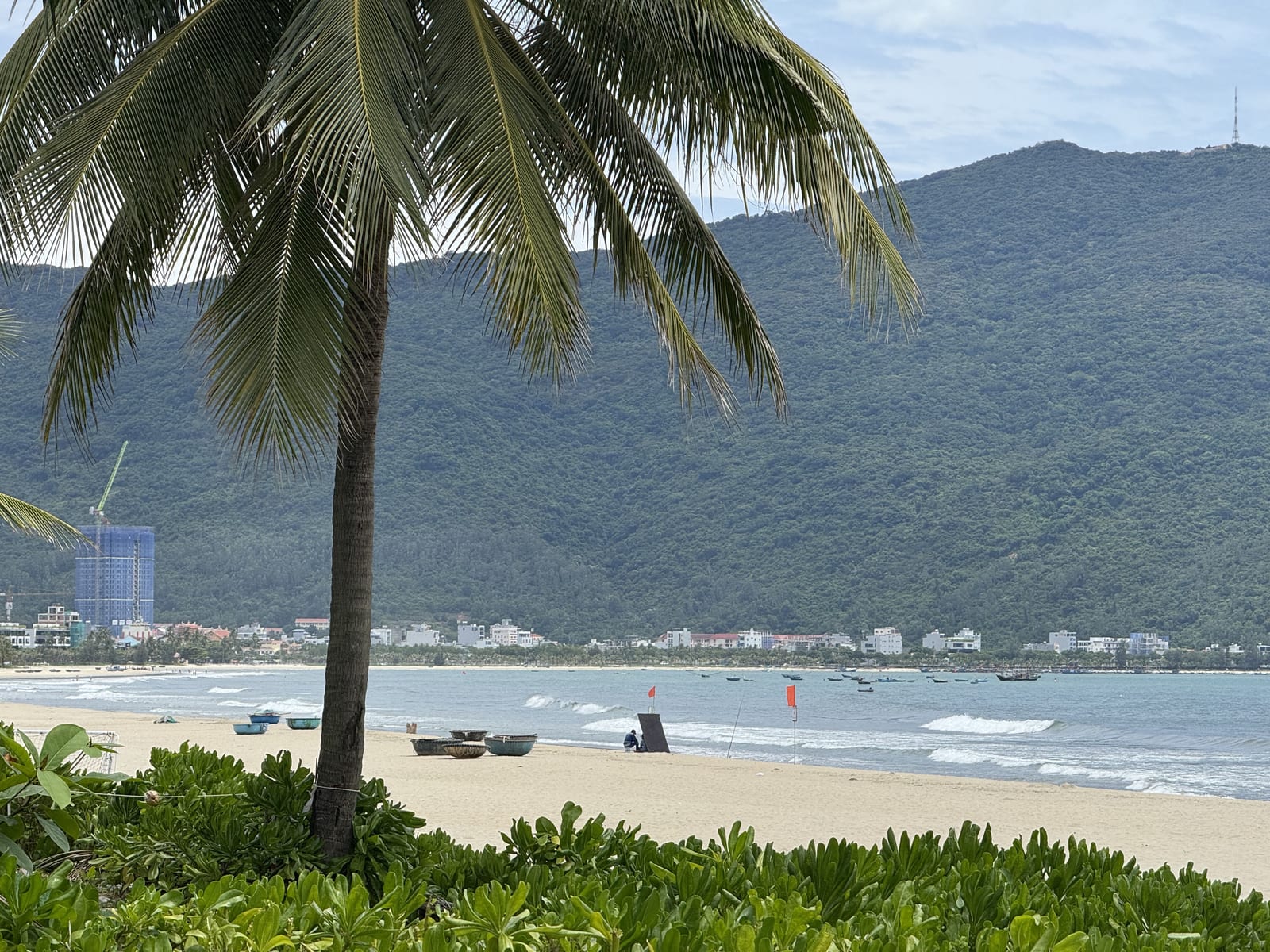
This is my area. I’ve slept here 22 nights, in three different places and on two trips two years apart, and if you ask me where to book without me knowing anything about you, I’ll send you here.
It’s the strip that runs from the Han River bridge to the beach, and its strength is that it wasn’t designed for you. It’s a neighborhood where people live, with its food stalls, its night market and its cafés, and at the same time the sea is a five-minute walk away and the center is one bridge over. It’s the cheapest of all the well-located areas. No seafront prices, and none of the isolation of the south.
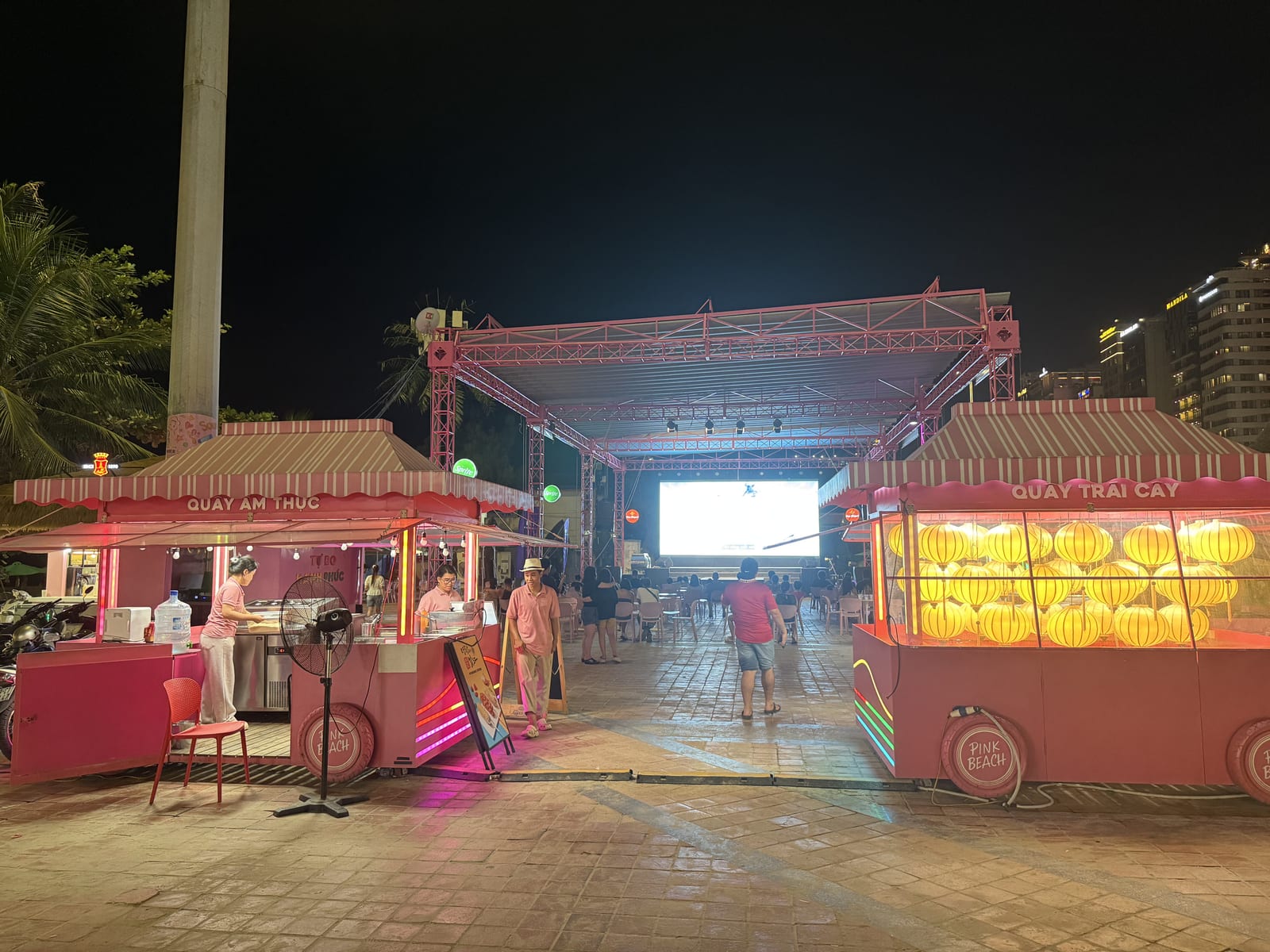
It’s also the area that holds up best in winter. When the sea gets rough from October to February, you still have a neighborhood to go out for dinner in, which is more than a beach resort can say.
Of the three places I’ve stayed, the one I recommend most is Mandala Living 3: about $36 a night, very spacious and very quiet. Its worst feature is the bathroom, which could be quite a bit better.
The Home Hotel comes in at about $37, it’s very clean and the service is a 10. On the other hand, the hallways smell of Asian cooking all day, and there’s some small print worth knowing: Booking says “breakfast included”, but the breakfast is a basket of food for you to cook yourself. I didn’t know and found out on the first morning, so you can learn from my mistake.
And in 2024 I paid about $28 at the Animor Green Home, where I learned something that applies to the whole city: paying by card at reception can cost you a 3.85% surcharge. Get dong out of an ATM as soon as you arrive.
Why stay here
- A real neighborhood, with street life and neighborhood prices
- The cheapest of the well-located areas, by a long way
- The beach a five-minute walk away, without paying for the seafront
- The center one bridge away, and the airport ten minutes
- The only one that works just as well in summer as in winter
- Big apartments for about $36 or $37 a night if you’re staying for weeks
What you give up
- No postcard views: it’s an ordinary area, not a pretty one
- Not much happens at night; if you want a scene, go to An Thượng
- Fewer photogenic cafés than further south
Where to sleep in An Hải
A search limited to this strip, so what you see is actually here and not twenty minutes away.
See hotels in An HảiWorth your time around here
- Chợ Đêm Sơn Trà: the night market, and the after-dinner plan.
- Bếp Cuốn: it has a Michelin mention, and you’d never guess from the outside.
- Seaview Coworking: if you work and don’t want to go all the way down to An Thượng.
- Hải Sản Ku Tom: neighborhood seafood, not the translated-menu kind.
Mỹ Khê, the beach from the photos
- Price$$$$ the priciest
- To the beachAcross the road
- At nightLively
- Rough seaLoses its appeal
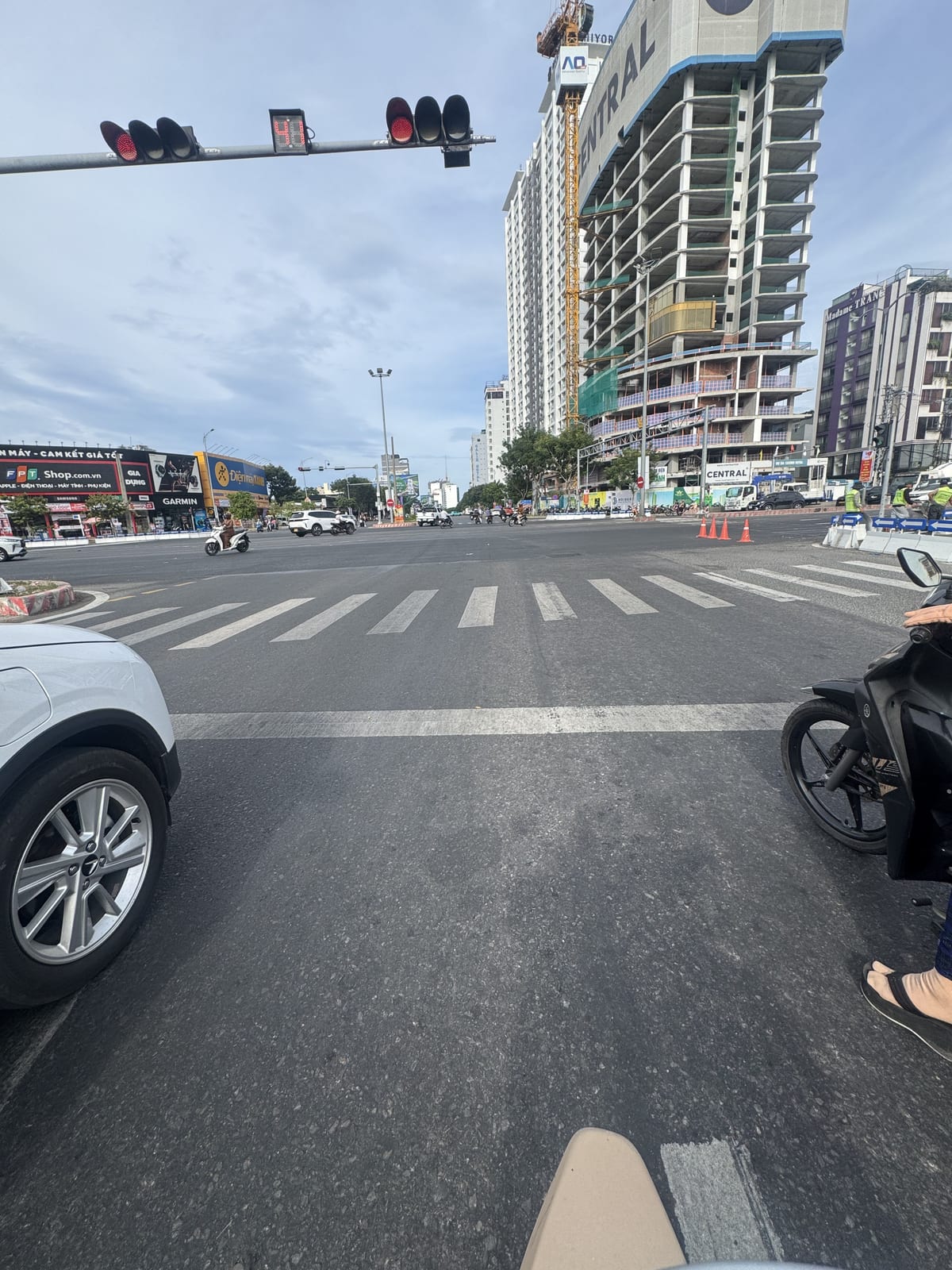
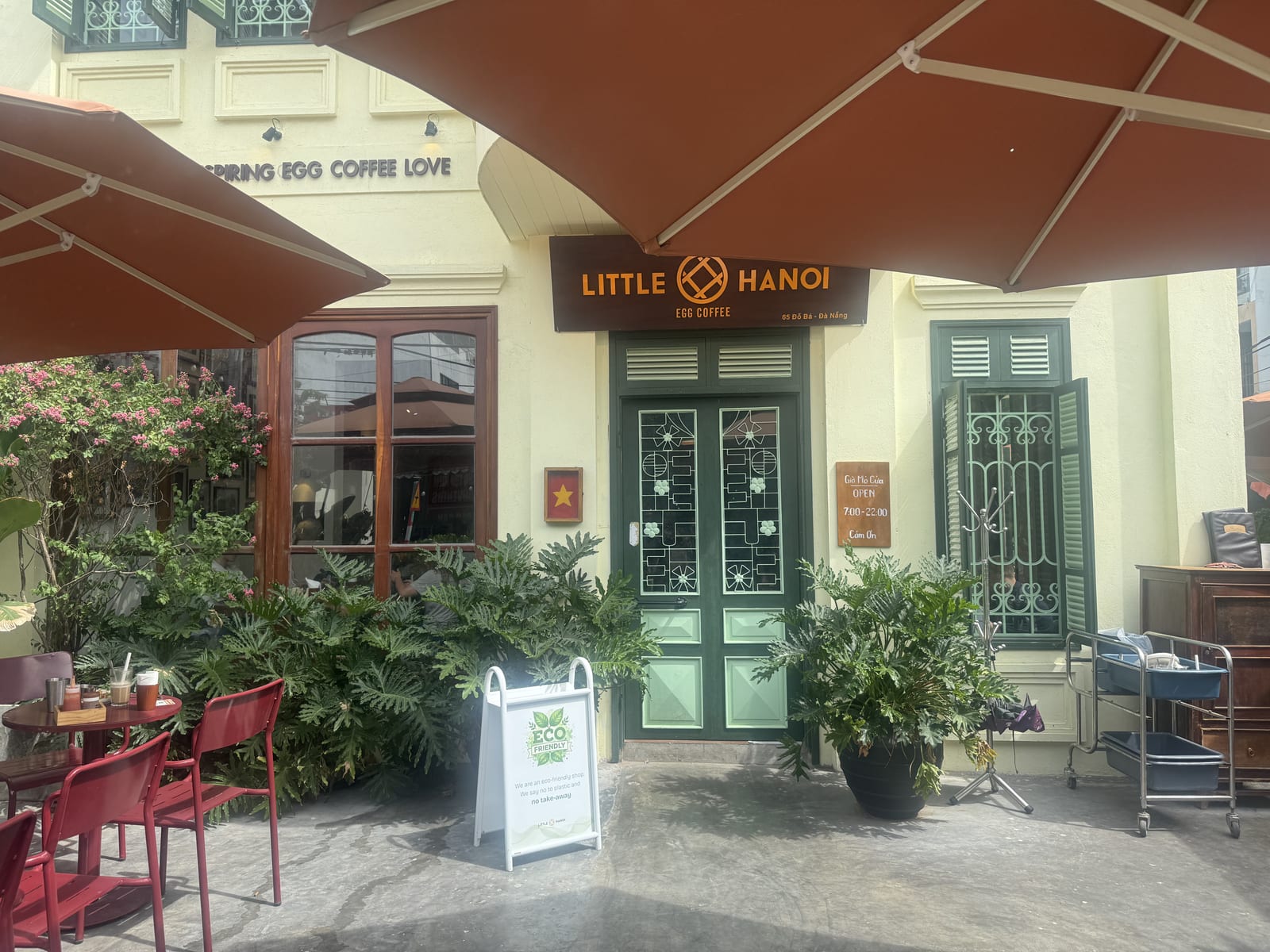
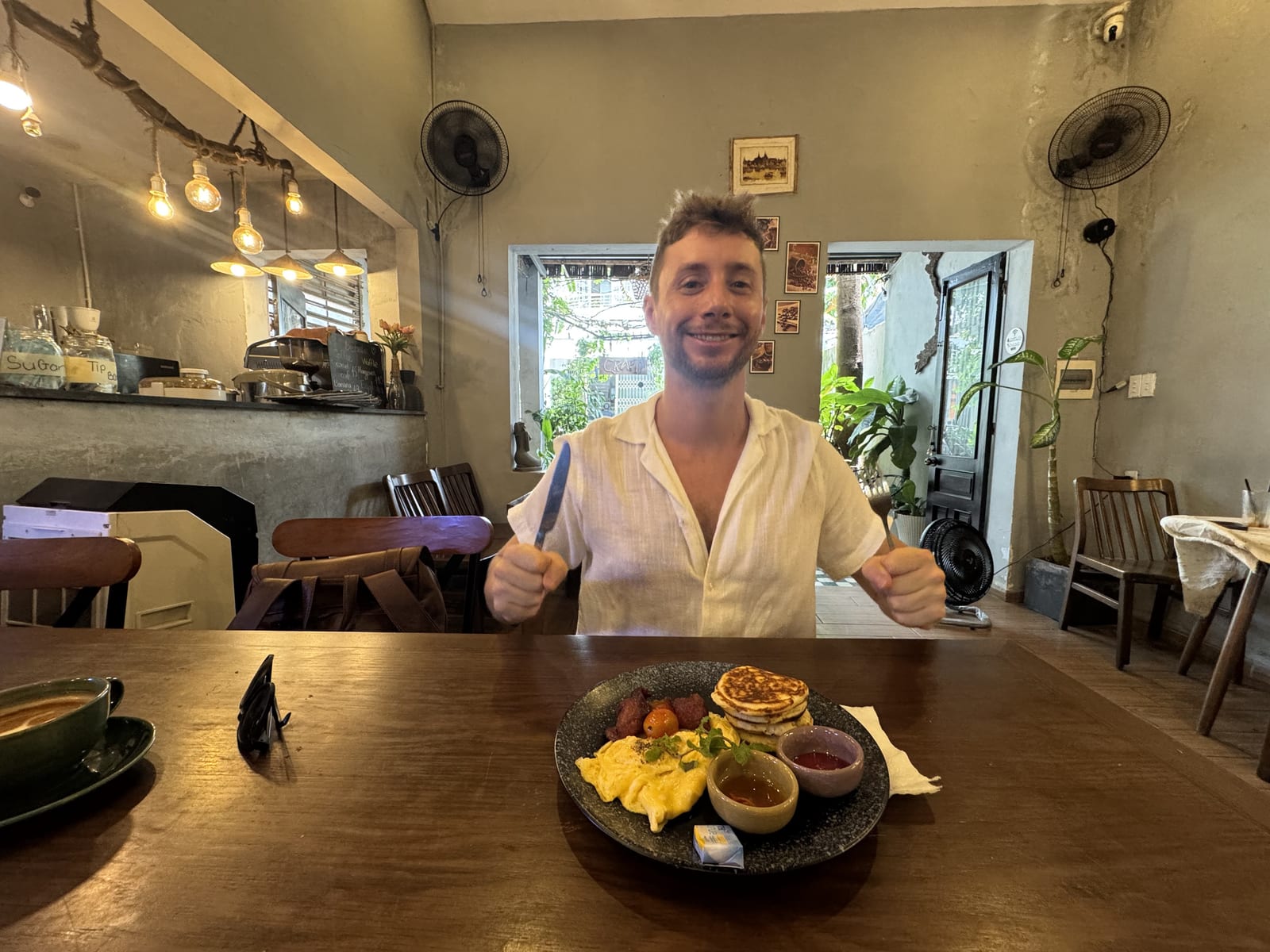
Mỹ Khê is the beach that turns up on every “best beaches in Asia” list, and the one you picture when you think of Da Nang. I haven’t slept here, but I come down every day: my gym is across the road and I have breakfast at Bread & Butter, so I know it at the same hours as the people who live here.
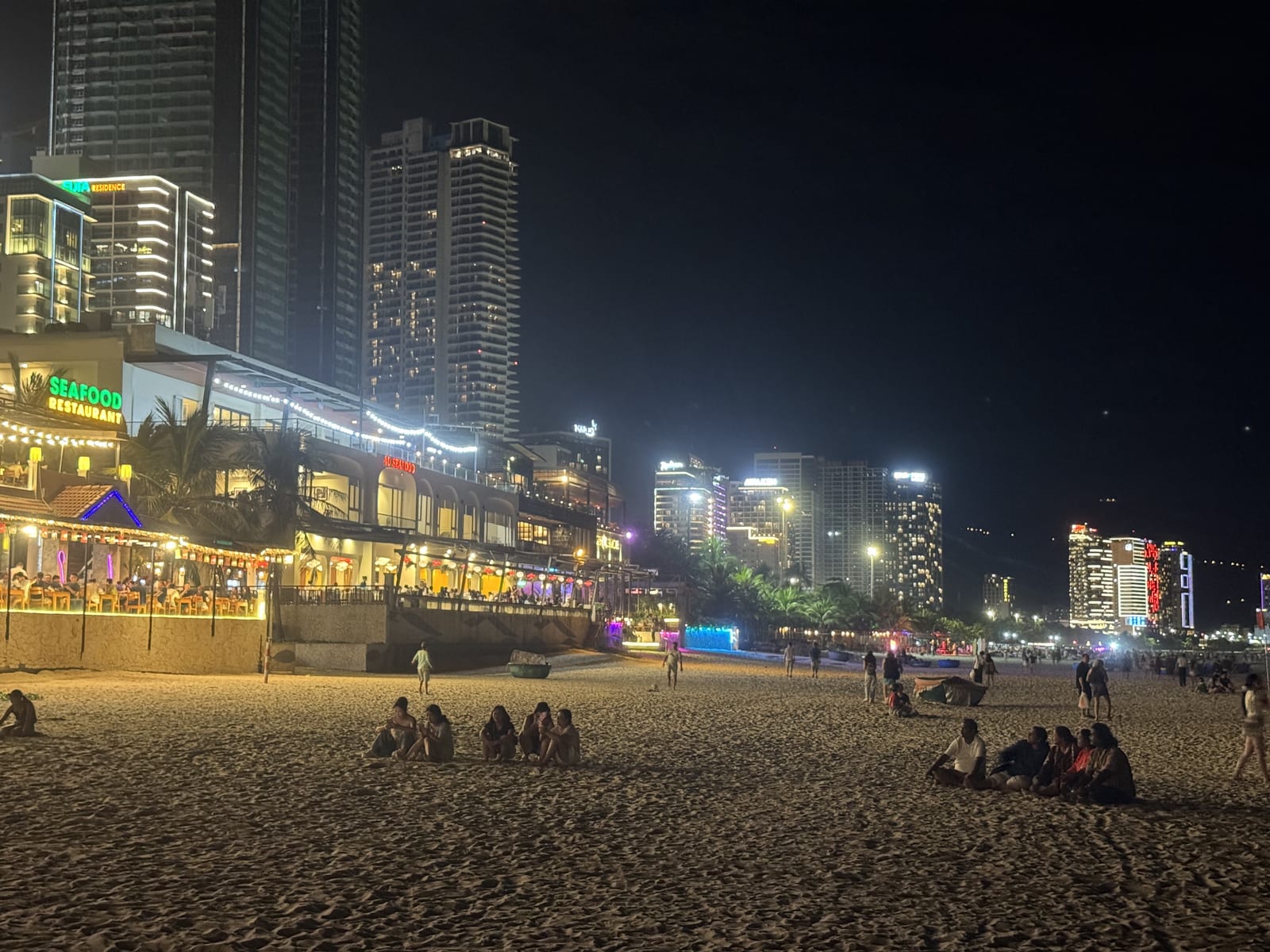
If what you want is to open the window and see the sea, this is your area and there’s nothing more to think about. Everything is within walking distance: the beach, cafés like Little HaNoi, the restaurants, Bikini Bottom. And for exactly that reason it’s the most expensive area in Da Nang, no contest, as well as the most touristy of the seven.
The downside you won’t read anywhere else is the motorbike: riding along the seafront avenue is chaos, with three lanes of motorbikes, tour buses and people crossing. If you’re going to rent a bike, sleeping here means heading out onto it every day.

And if you’re coming between October and February, think twice. Paying seafront prices to look at a red-flag sea is the worst deal in the city.

Why stay here
- The beach, literally across the road
- Everything on foot: cafés, restaurants and bars, no ride needed
- The best breakfasts and cafés in the city, all in one place
- Gyms, massages and all the practical stuff within walking distance
What you give up
- The most expensive area in the city, and the most touristy too
- The seafront avenue is chaos to ride on
- From October to February you pay for a view you won’t use
Where to sleep in Mỹ Khê
Remember the filter: a score of 9 or more, and 8.5 only if it really fits.
See hotels in Mỹ KhêWorth your time around here
- Bread & Butter Bakery: where I have breakfast when I’m in this area.
- No Limits Horizon Fitness: my gym, and the reason I come here every day.
- Amaya Cà Phê: Vietnamese coffee without the tourist packaging.
An Thượng, where the Westerners go
- Price$$ mid-range
- To the beach10 min walk
- At nightNoisy
- Rough seaHolds up
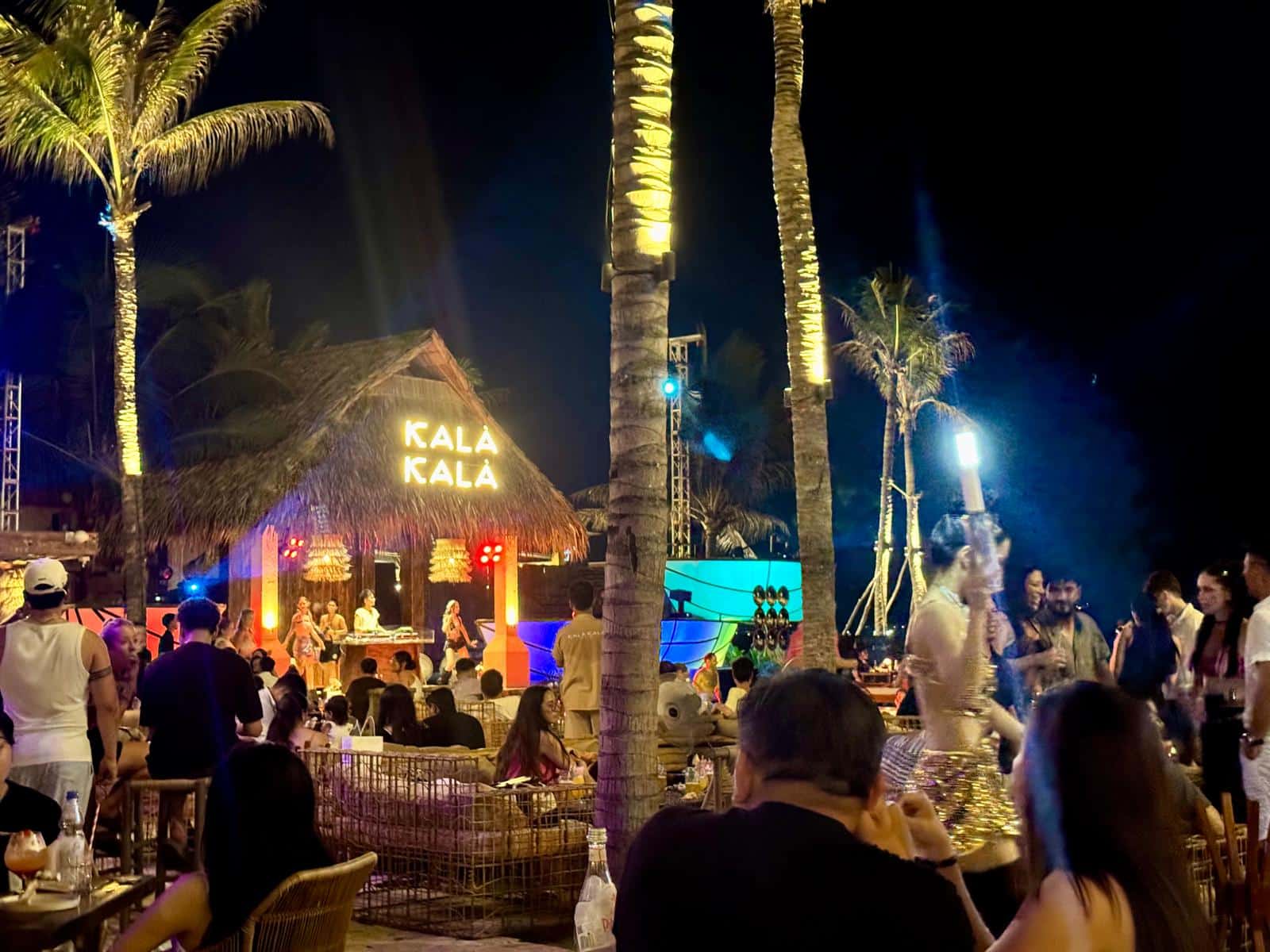
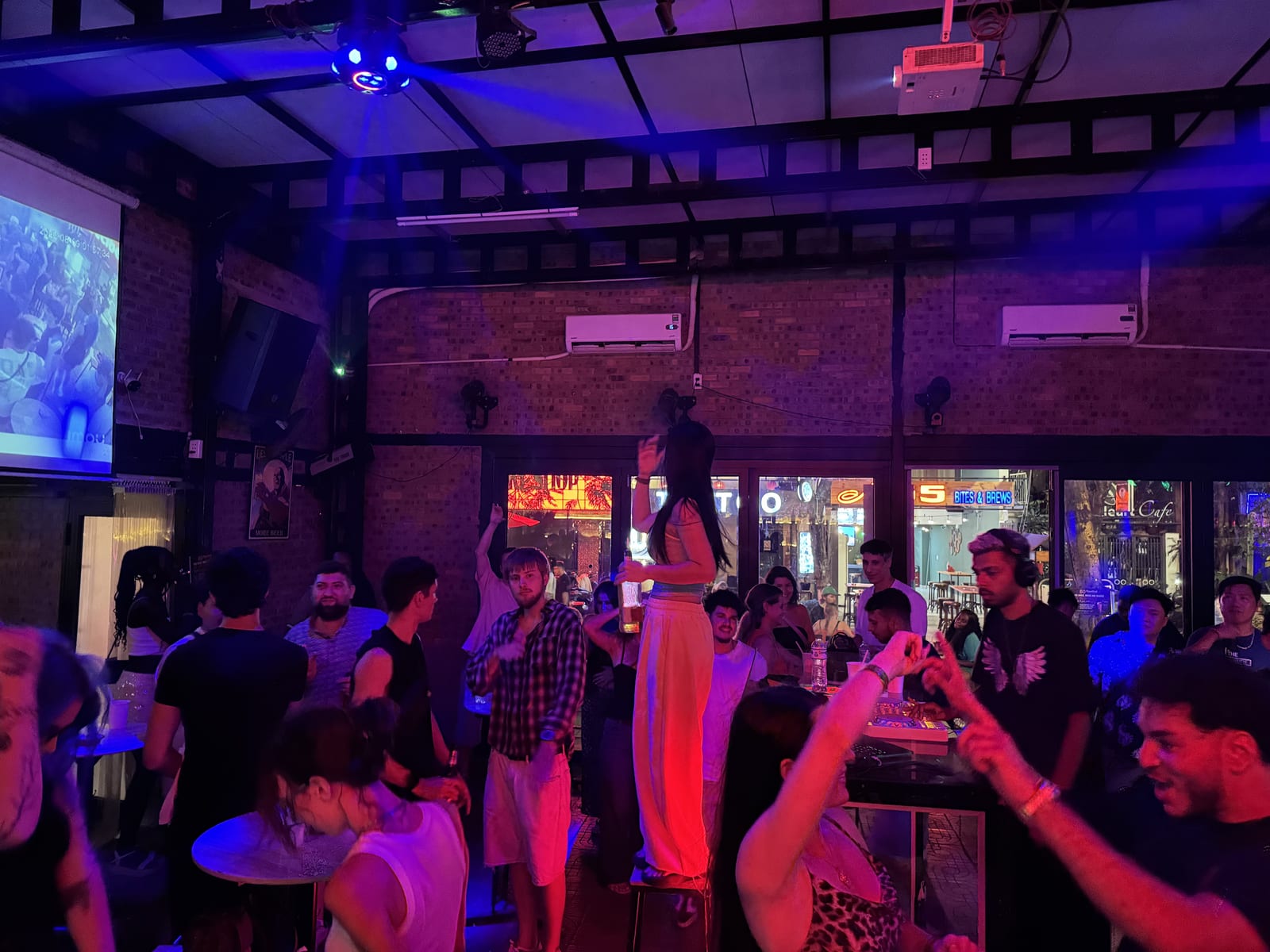
An Thượng is about ten streets packed with everything a Westerner misses: coworking spaces, specialty coffee, international food, gyms and bars. I slept here seven nights in 2024, at number 34 on Đỗ Bá Street, for about $24 a night, so what follows is firsthand, not hearsay.
This is where I send people who are coming as tourists and want to go out at night. Everything is on foot, you meet people without trying, and you don’t need a bike for anything. If your trip is two weeks long and you want a scene, you’ll get it right here.

What it isn’t, whatever half the internet says, is the digital nomad area. If you’re coming to work you want quiet, and this isn’t it. People who stay for months end up in An Hải or across the bridge, not here.
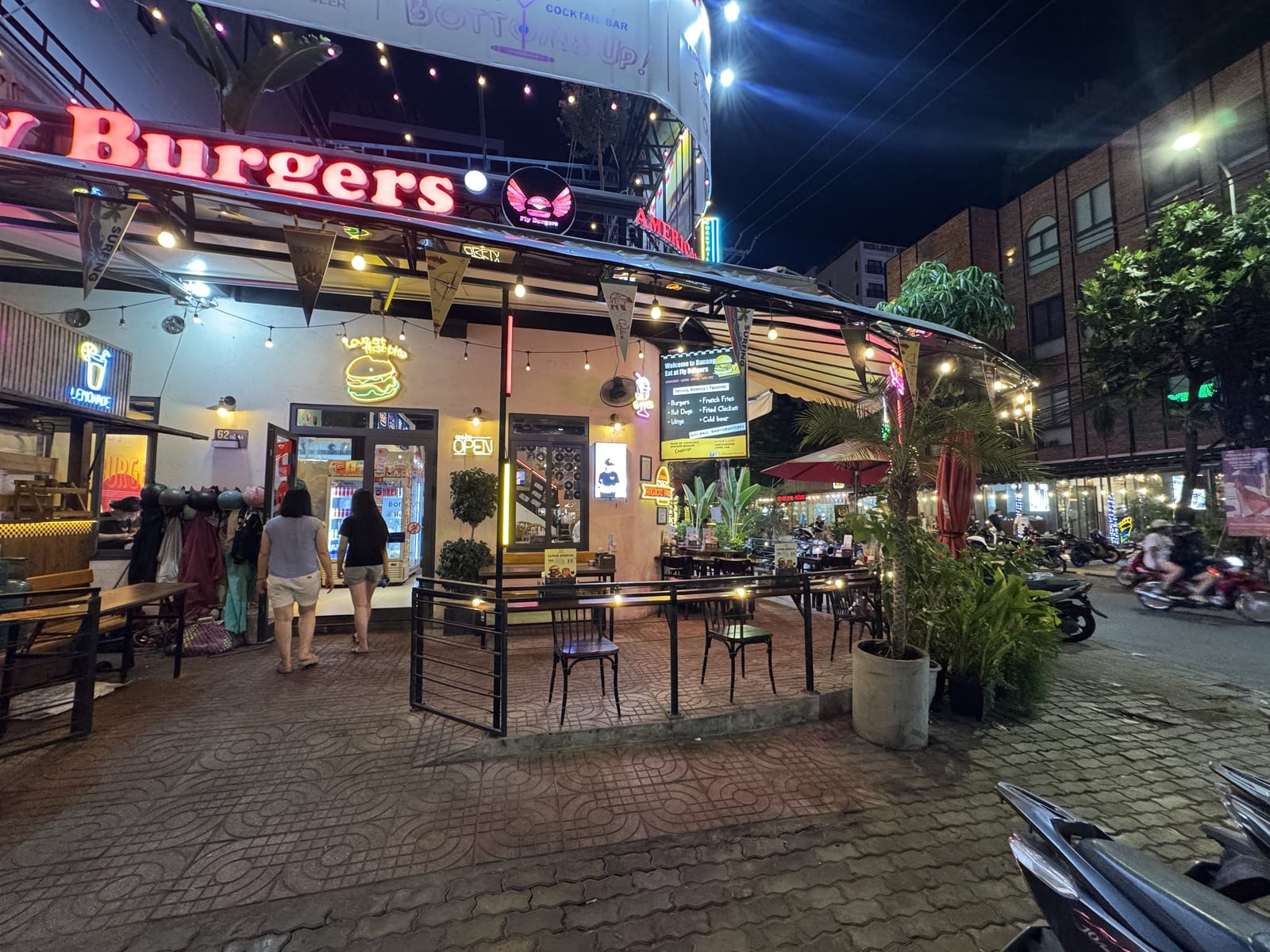
But if you’re looking for peace and quiet, avoid the streets around the Funky Donkey. After dinner, seven nights a week, you’ll be walking among drunks. It isn’t a dangerous or rough area, it’s just noisy, and at eleven at night the difference between booking on one street or the next one over is huge.
If you like the area but not the noise, the fix is to go five minutes south, to Khuê Mỹ.
Why stay here
- The only area with real nightlife
- Everything on foot, no need for a bike
- Coworking spaces and cafés with wifi every couple of doors, for the daytime
- International food for when you can’t face any more rice
What you give up
- Noise at night on the bar streets, and not only on weekends
- It’s the least Vietnamese area of Da Nang
- A bad idea if you’re coming to work: there are quieter areas for that
- The beach is ten minutes away, not across the road
Where to sleep in An Thượng
Check the map before you hit book: two streets can change your night completely.
See hotels in An ThượngWorth your time around here
- The Nomad Kitchen: the place I end up at after a few weeks here, when I’m missing Spanish food.
- Maia Beach Bar: right on the sand, for the hour when people actually swim.
- Le Funky Donkey: the bar that sets the tone for the area. Go, yes; sleep next to it, no.
- Đà Nẵng Forest Massage: a massage for 200,000 VND (about $7.70).
Khuê Mỹ and the south of Mỹ An
- Price$$$ the second priciest
- To the beach10 min walk
- At nightQuiet
- Rough seaHolds up
This is the answer to An Thượng’s downside, and it’s the area I recommend most to anyone who tells me they want quiet without being cut off. It’s An Thượng without An Thượng’s bars: the same cafés and the same coworking spaces, five minutes further south and with half the noise.
I haven’t slept here, but I spend a lot of time here: one of my favorite coworking spaces in the city is ACE Coworking Space, and I eat at Her Kitchen, which is literally next door.
Here’s something that doesn’t add up at first: eating here is dirt cheap and sleeping is expensive. It’s the second most expensive area in the city to stay in, probably because it’s the quietest and there isn’t much to choose from, and at the same time it’s where I’ve eaten best on the cheap. Both things are true, and both are worth knowing before you book.
And Her Kitchen explains the whole area better than any description. The chicken with rice and lettuce costs 55,000 VND (about $2.10) and you can eat for under 100,000 (about $3.85). The owners are really friendly and one of them speaks good English, which doesn’t always happen in a neighborhood place. It’s the kind of restaurant that would cost three times as much in An Thượng.
Let me be honest about something: you eat very well in Da Nang, but it’s hard to find places that are good, nice-looking and cheap all at once. In Chiang Mai or Koh Lanta I find them without trying. Here you have to hunt for them, and this area is where I’ve found the most.
Why stay here
- The calm of a local neighborhood with An Thượng’s amenities next door
- The best food prices along the whole beach strip
- The quietest of the well-located areas
- Coworking spaces without the party of the area just north
- Wider streets and less traffic
What you give up
- Nothing happens at night, and that’s either the point or the problem
- The beach ten minutes away, not across the road
- Sleeping is expensive: it’s the second priciest area, even though eating is cheap
- Fewer hotels to choose from than the areas further north
Where to sleep in Khuê Mỹ
Less to choose from than in An Thượng, so book further ahead.
See hotels in Khuê MỹWorth your time around here
- Her Kitchen: my favorite restaurant in the area. Chicken with rice, 55,000 VND (about $2.10).
- ACE Coworking Space: one of my favorite coworking spaces, and it’s right next door.
Non Nước, the resorts in the south
- Price$$$$ high
- To the beachPrivate
- At nightWhatever the hotel has
- Rough seaYou still have the pool
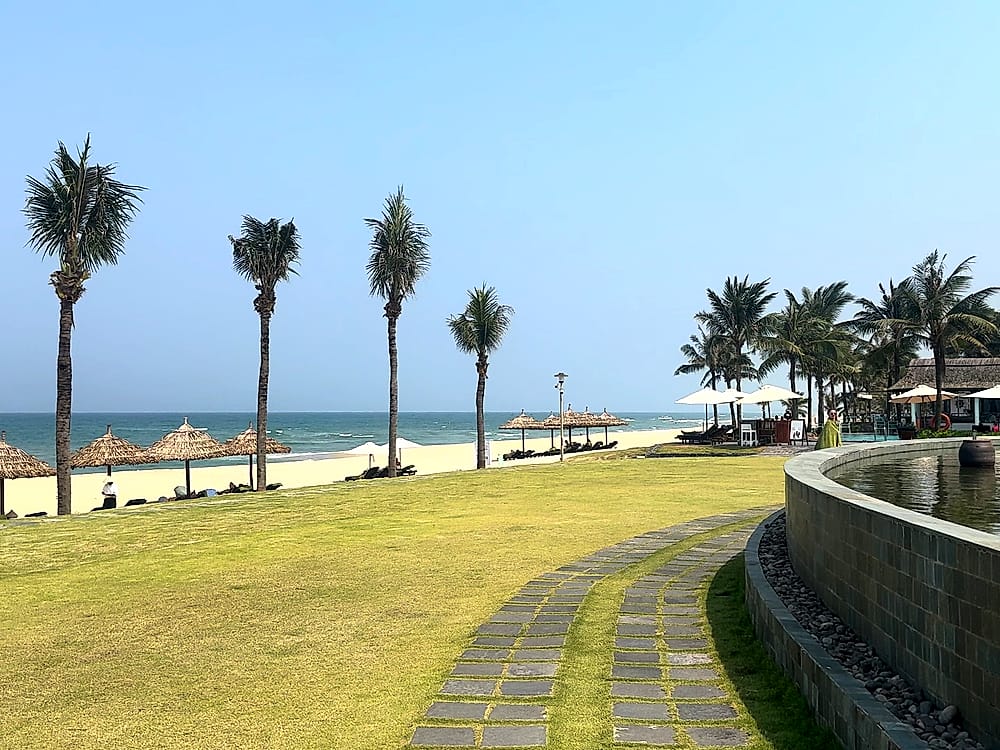
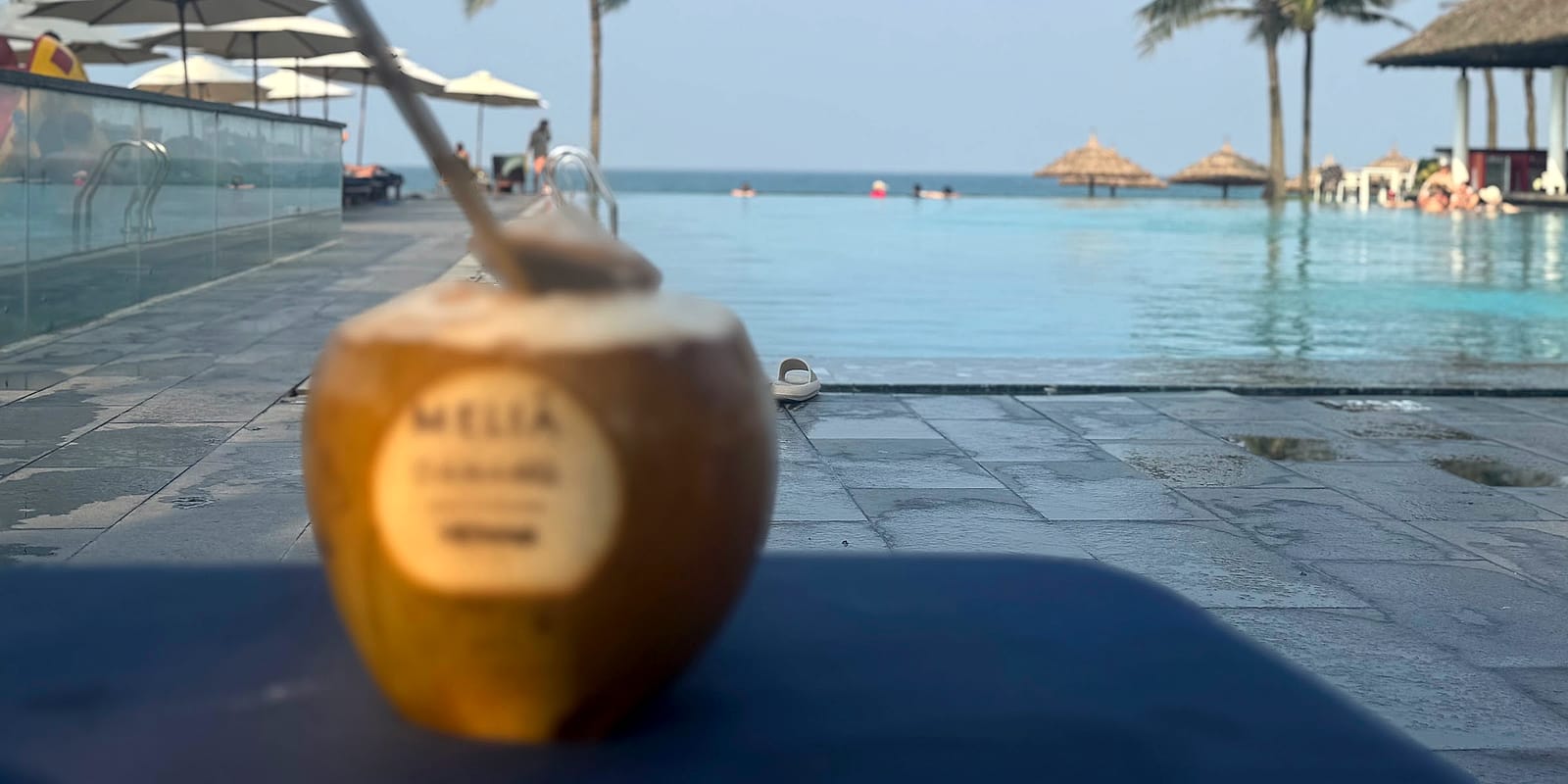
The southern end of the beach is a different world: there’s no neighborhood here, just big resorts with their own patch of sand, their pool and their restaurants. I spent five nights at the Meliá Danang in April 2026, on half board, and it’s an incredible resort.
If you want a rest stop between two cities on your Vietnam trip, or you’re traveling with small kids and don’t want to think about anything for a few days, this is the place. And the Marble Mountains are right here, one of the few Da Nang outings you can do in half a morning.
The trade-off is the usual one in resort areas: step outside the hotel and there’s nothing. No street with restaurants, no market, nowhere to walk to after dinner. Anything you want to do means a twenty-minute Grab north.
About the price, and I’m saying this so you don’t get a nasty surprise: I paid $499 for the five nights, but with a 20% discount at Meliá that came with my American Express Platinum. It isn’t the rate you’ll see if you go on Booking today, so take it as a reference for what’s possible, not as the going price in the area.
Why stay here
- Proper resorts, with a private beach and no crowds
- The Marble Mountains five minutes away
- The quietest area on the whole beach strip
- If the sea is rough, you still have the hotel pool
What you give up
- Outside the hotel there’s absolutely nothing
- Every outing is a twenty-minute Grab
- You miss the whole city, which is the best thing Da Nang has
Where to sleep in Non Nước
Here the Booking score matters less: they’re chains with international standards.
See hotels in Non NướcWorth your time around here
- Marble Mountains: caves, pagodas and views that make up for the stairs.
Hải Châu, the other side of the river
- Price$ like An Hải
- To the beachAcross the river
- At nightLocal
- Rough seaDoesn’t matter
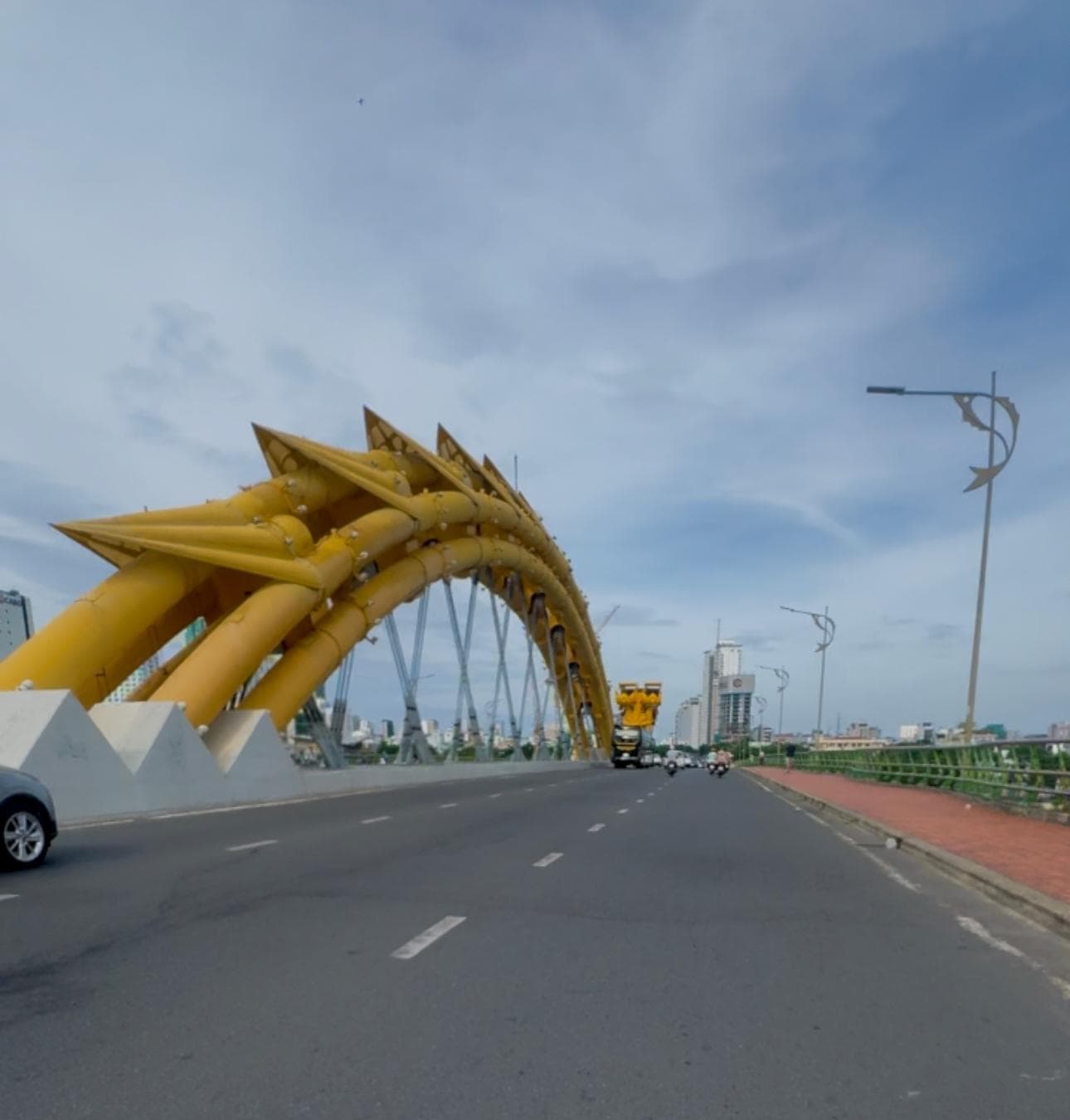
This is where I part ways with what you’ll read in other guides, so let me explain it properly. Almost every Spanish-language guide puts central Da Nang among its main recommendations. I’m telling you not to sleep here if you’re coming as a tourist. If you’re coming to stay for months, the answer changes completely, and I’ll get to that at the end of this section.
It’s not that it’s ugly or dangerous, because it isn’t. It’s the real city, with Hàn Market, the Cham Museum and the Dragon Bridge. The problem is that everything you came to do is on the other side of the river: the nice cafés, the brunch spots, the beach clubs, the restaurants with terraces and the beach. Sleep here and you spend the trip crossing bridges only to cross them back.
And here’s what really settles it, and I assumed the opposite myself before I looked: sleeping here isn’t any cheaper. Prices are similar to An Hải, which sits right by the beach. What changes is the choice: there are more big hotels here and quite a lot fewer with a 9 or more on Booking, so not only do you not save anything, you also have fewer really good ones to choose from.
Now, if you’re coming to stay for months, the math flips, and this is something you really won’t read in any guide. For an expat or a nomad, the HI4 area just over the bridge is one of the best in Da Nang: long-term rent is cheaper, it isn’t touristy, and in ten minutes you’re in the lively part. When your horizon isn’t two weeks but three months, crossing a bridge once a day stops being a problem and the savings do add up.
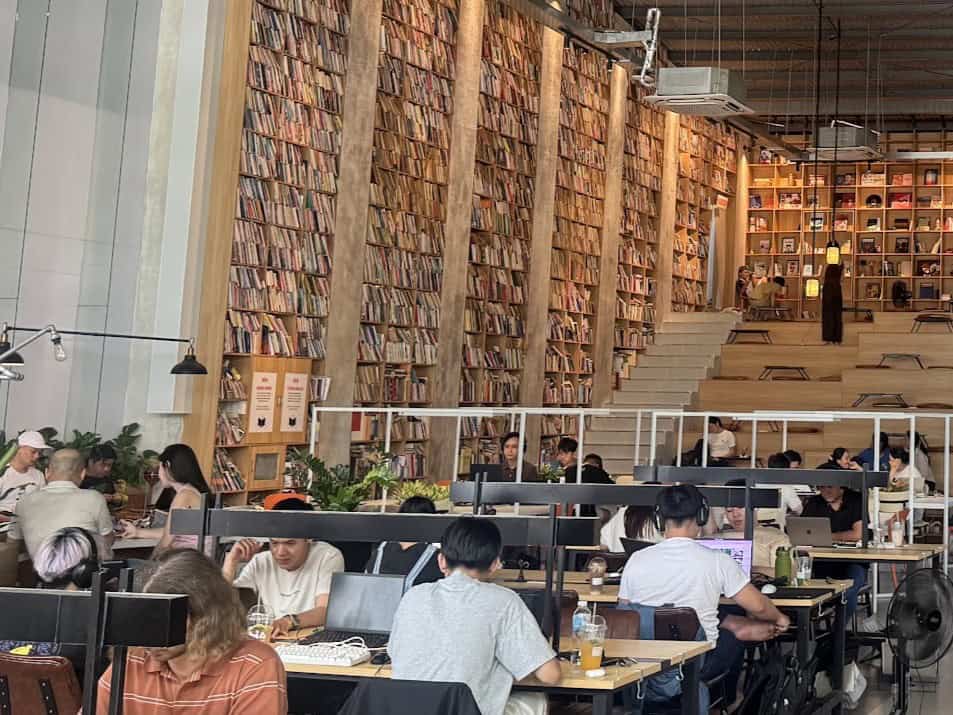
That said, do cross. I do, and always for the same reason: HI4 Coffee & Workspace, at 02 Nguyễn Văn Trỗi, which has a three-story wall of books and is open 24 hours. It’s the most spectacular place I’ve worked from in this city. Careful: there are two HI4s, and the beautiful one is this one, not the one on Mai Thúc Lân.
The warning is don’t sleep here if you’re coming for two weeks, not don’t come here. The Dragon Bridge, the market and HI4 make for a really good afternoon. And if you’re staying for months, this stops being a warning and becomes a recommendation.
Why come, or stay
- For staying months: cheaper rent and nothing touristy
- Ten minutes from the lively area, while you sleep in peace
- HI4 Nguyễn Văn Trỗi, the café with the wall of books, open 24 hours
- The Dragon Bridge, Hàn Market and the Cham Museum
Why not sleep here, if you’re a tourist
- The beach is on the other side of the river, and that’s thirty minutes there and back
- Almost everything you’re looking for is on the other bank
- It isn’t cheaper than An Hải, so there’s nothing to gain
- Far fewer hotels with a 9 or more on Booking
Worth your time around here
- HI4 Coffee & Workspace: 02 Nguyễn Văn Trỗi. The one with the wall of books. Open 24 hours.
- Dragon Bridge: it breathes fire on weekend nights.
- Hàn Market: the city’s big market.
🚫 Where not to stay
Nam Ô and Xuân Thiều, the far north
I haven’t slept there, and I’m not going to describe a neighborhood I haven’t set foot in. What I do know is why I haven’t gone: the coworking spaces aren’t there, the events and things to do are in Da Nang, and it’s thirty minutes by motorbike. It looks very cheap on Booking, and that’s exactly the trap. I wouldn’t recommend it to a tourist or to someone coming to stay for a while.
The bar block, if you’re in quiet mode
This isn’t an area to avoid so much as a place where one type of traveler shouldn’t book. The streets around the Funky Donkey, in An Thượng, are great if you’re coming to go out and a lot less great if you’re coming to sleep. The alternative is five minutes away and it’s called Khuê Mỹ.
Frequently asked questions
What’s the best area to stay in Da Nang?
An Hải, the strip between the Han River bridge and the beach. It’s where I’ve slept 22 of my 41 nights, and it strikes the best balance of price, neighborhood and distance to the sea. If it’s your first time or you’re staying a while, book there and don’t overthink it.
Da Nang or Hoi An?
They’re two different trips. Da Nang is an easy city with thirty kilometers of beach, gyms, coworking spaces and everyday life. Hoi An is the old town with the lanterns, beautiful and a lot more touristy. They’re forty minutes apart, so you can combine them.
What time do people swim in Da Nang?
From four or five in the afternoon until it gets dark. During the day people are at work and it’s too hot to be out in the sun. Go down at midday and you’ll find the beach empty, but you haven’t discovered anything: you’ve just gone at the worst time.
Can you swim in Da Nang in November?
Some days yes, and many days no. From October to February the northeast monsoon comes in, and the sea brings two- and three-meter waves and a red flag. If you’re coming in those months, pick your area with the city in mind rather than the beach, because the beach will be a bonus, not the plan.
Do you need a motorbike in Da Nang?
No. The airport is inside the city and a Grab motorbike ride is 17,000 VND (about $0.65). I rent an electric motorbike for 120,000 VND (about $4.60) a day because it pays off for me and it doesn’t need an international driving permit, but you can spend two weeks here without getting on one.
Is Da Nang expensive?
No, although the cafés are, because they’re aimed at tourists. A local dish runs 45,000 to 80,000 VND ($1.70 to $3.10), a beer 45,000 to 60,000 ($1.70 to $2.30) and a massage 200,000 ($7.70). Good apartments for stays of several weeks cost about $36 or $37 a night.
Is it worth sleeping on the Sơn Trà Peninsula?
Only if you’re going to the InterContinental and don’t plan to leave it. For any other kind of trip you’ll feel shut in: there’s no neighborhood, no street restaurants, and every trip out is a taxi. Go up by day, because the views are worth it, and sleep down below.
How many days do you need in Da Nang?
Four or five are enough to see the city, the Marble Mountains and the peninsula without rushing. If you work remotely, it’s one of those places where you stay for weeks without noticing: I’ve been three times and I’m up to 41 nights.
Need a hand?
We've stayed here ourselves and experienced it firsthand. If you have any questions, leave a comment below and avoid the typical first-timer mistakes.