Holafly Unlimited eSIM in Vietnam: I Used It for 7 Days, Is It Fast and Worth It?


⚡ The short answer: yes, it works well, and better than I expected. Downloads are rocket-fast, and uploads are too once you change one setting on your phone.
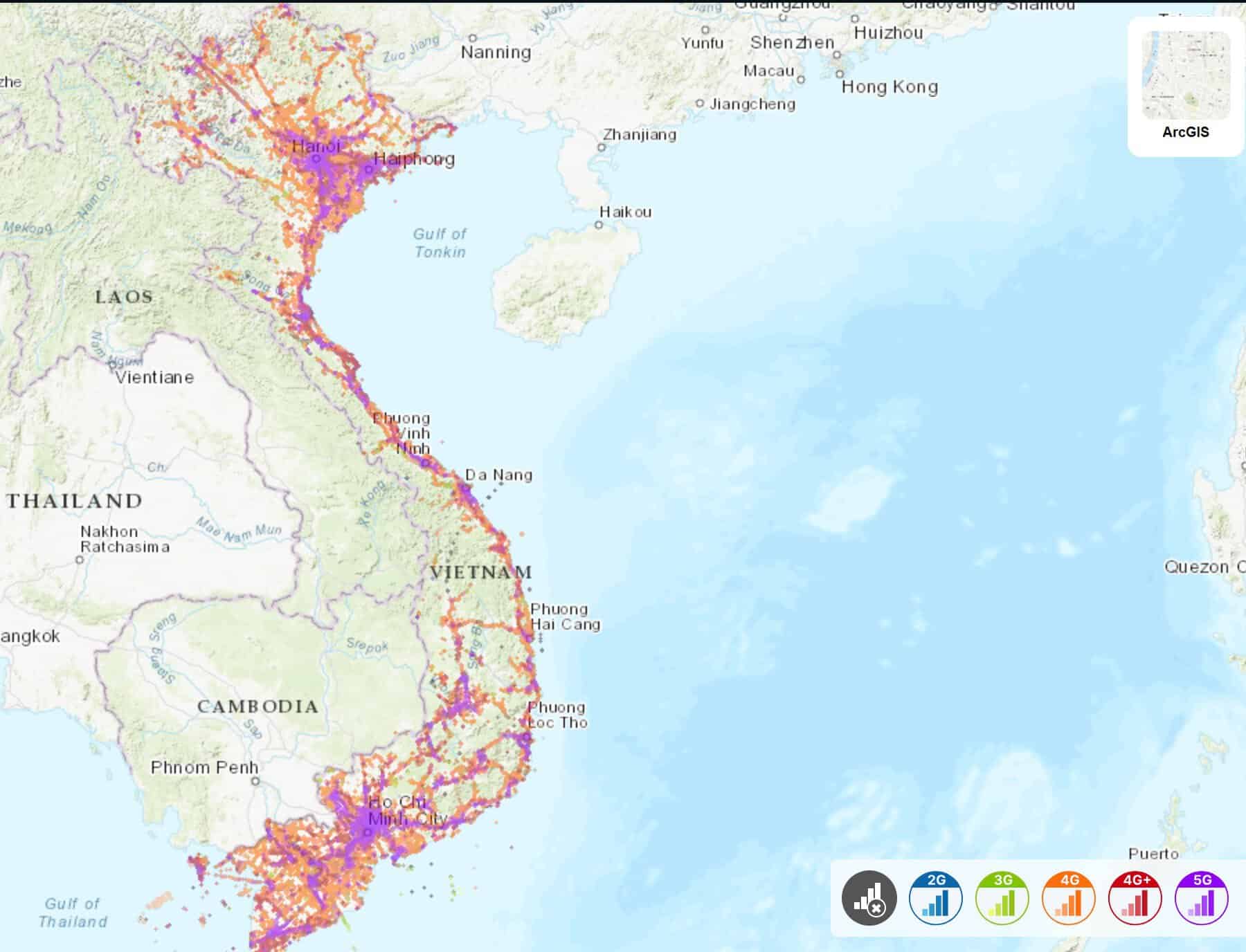
- Network it uses: VinaPhone, with 5G in every major city: Hanoi, Ho Chi Minh City, Da Nang, Haiphong and Hoi An.
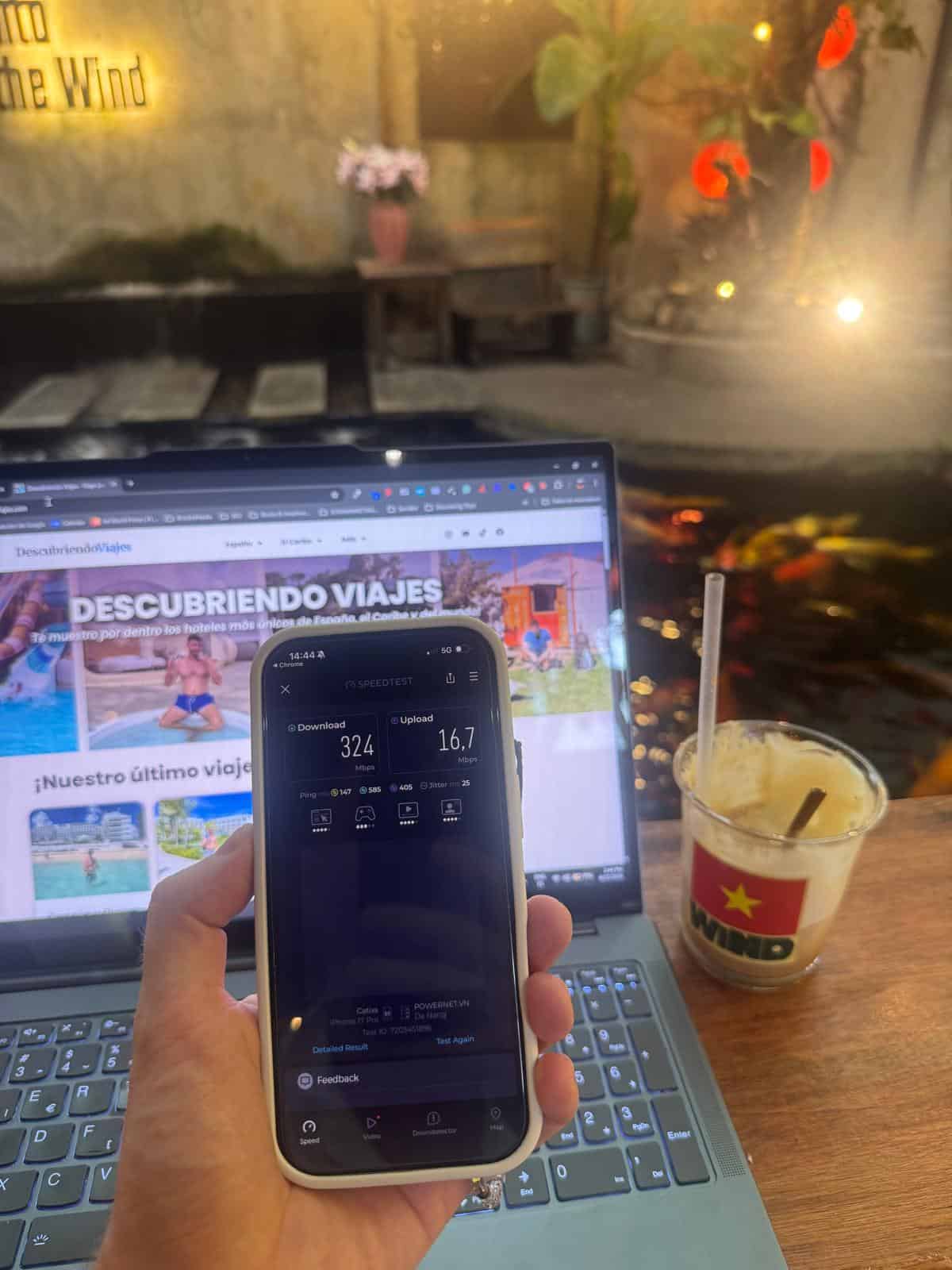
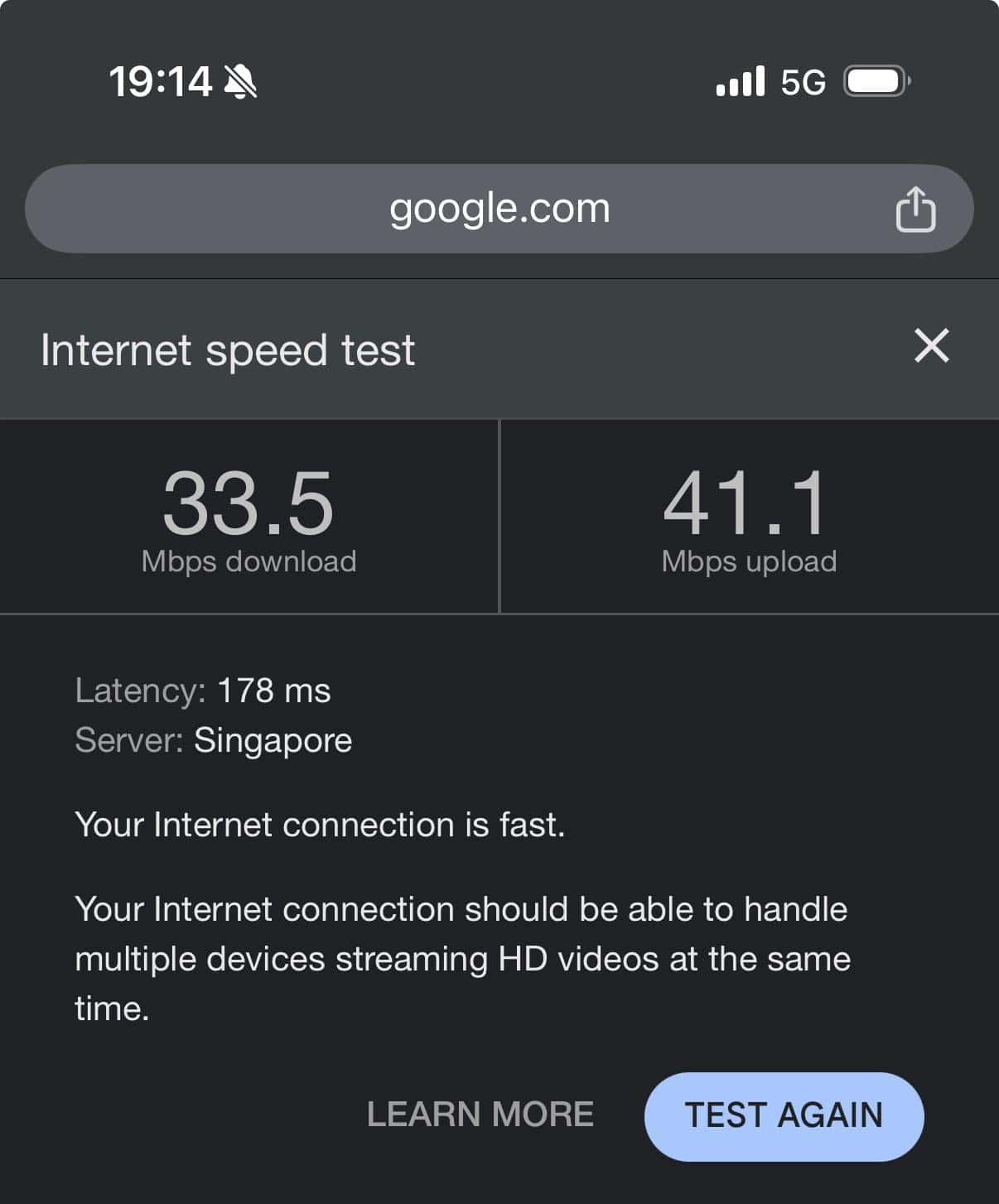
- Download: 324 Mbps against a Vietnamese server and 33.5 against one in Singapore. Plenty for anything you’ll do.
- Upload: 41.1 Mbps, once I’d changed a single phone setting.
- Ping: 81 to 178 ms. You’re half of Asia away, and nobody can fix that.
- Hotspot: yes. I’ve had my laptop and another phone hooked up at once.
- The catch: if you leave your 5G data setting alone, you’re slowed down without realizing it. More on that below.
Discount code: DESCUBRIENDO (5% off)
I’m writing this from Da Nang with the eSIM still running. If you’re shopping for a Vietnam eSIM so you can stay online without depending on whatever Wi-Fi each place offers, this is my verdict after seven days of daily use.
I bought the Asia plan on August 21, 2026 and used it seven days in a row: working, navigating, booking Grabs and uploading video, which punishes a connection more than anything else. I ran every speed test myself, out on the street, and all the screenshots are right here on this page.
1. How fast this eSIM really is in Vietnam, which is what you’re here for
I didn’t run one test and call it a day. I measured in the three situations that actually resemble your trip: working calmly in a coffee shop, pushing the phone hard with video, and wedged among thousands of people at a show. Nobody publishes that last one, and it’s the one you’ll get the most out of.
| Where | Day and time | Download | Upload | Ping |
|---|---|---|---|---|
| Da Nang, coffee shop. Da Nang server | Aug 22, 2:44 pm | 324 Mbps | 16.7 Mbps | 147 ms |
| Da Nang. Singapore server | Aug 22, 7:14 pm | 33.5 Mbps | 41.1 Mbps | 178 ms |
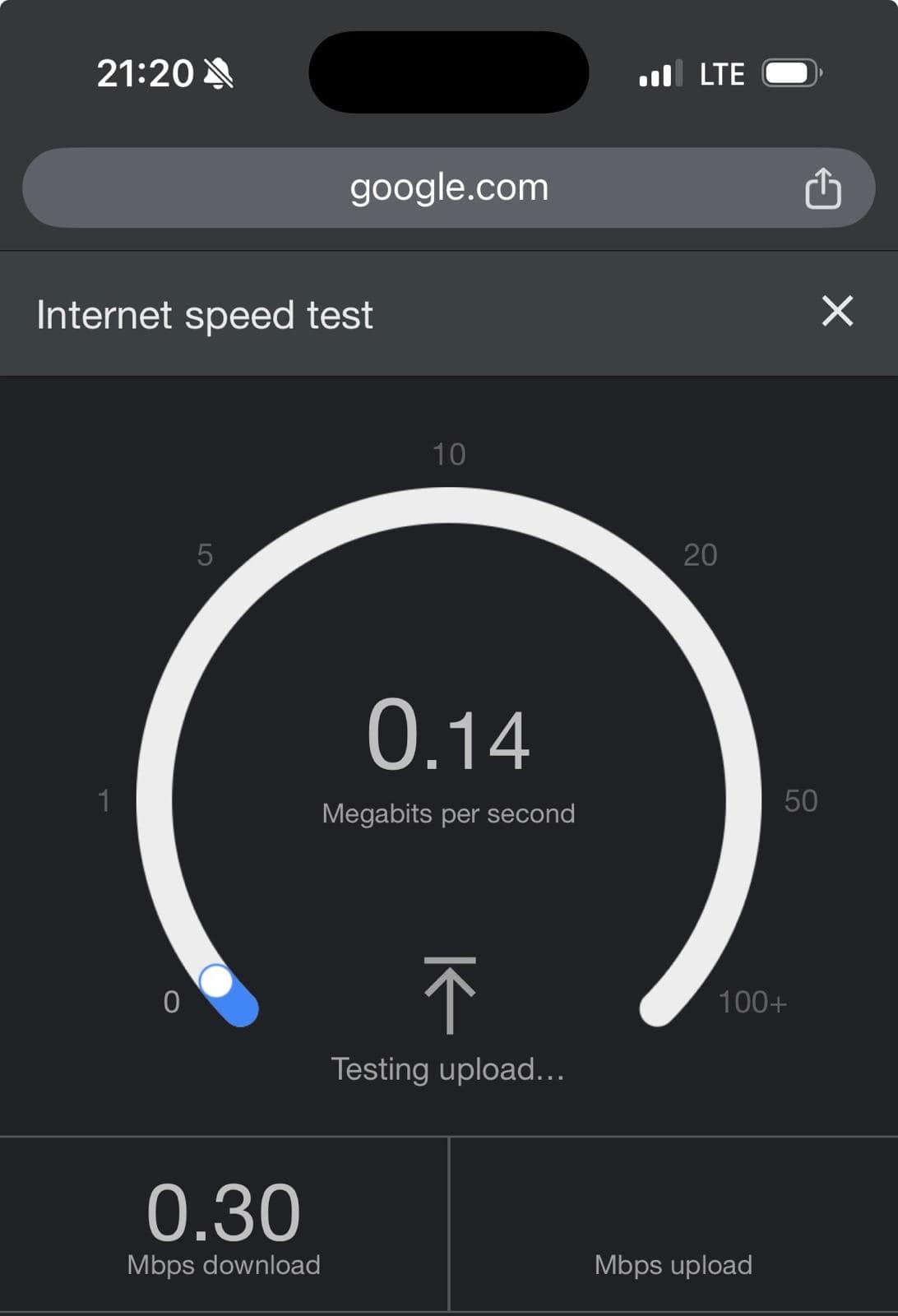
| Dragon Bridge, packed with thousands of people | Aug 22, 9:20 pm | 0.30 Mbps | 0.14, test never completed | no reading |
Every test was done in Da Nang, on an iPhone 17 Pro, using Google’s speed test and Speedtest, and each row tells you which server it ran against. On VinaPhone’s coverage map, Da Nang gets the same 5G as Hanoi or Ho Chi Minh City, so you can apply these figures to any large city in Vietnam. Out in small towns and along the highways the signal falls back to 4G, and even that covers more than you’ll need.

Which carrier Holafly uses in Vietnam, and where there’s coverage
Holafly owns no cell towers in Vietnam. It rides on VinaPhone, one of the three major carriers there, along with Viettel and Mobifone. You can confirm it yourself the moment you land, since the carrier’s name appears at the top of your screen.
VinaPhone’s 5G reaches Da Nang, Hoi An, Hanoi, Haiphong and Ho Chi Minh City, plus the coastal corridor linking them. Beyond the cities the map turns to 4G, and that still handles everything you’ll throw at it.
The detail that will save you some grief
Check the top two rows of the table. Same eSIM, same spot: 324 Mbps measured against a server in Da Nang and 33.5 Mbps against one in Singapore.
The 324 is real, but it’s not what you’ll feel, because almost everything you open online is hosted outside Vietnam. The figure to hold on to is the second one, and 33 Mbps is more than enough for work, video calls and binge-watching a show.
The flip side is ping, which hovers between 81 and 178 milliseconds. You’re half of Asia away, and no eSIM can change that: at work you won’t notice, but playing World of Warcraft or Counter Strike online, you will. If Candy Crush is your vice, relax, that runs just the same.
Worst case: the Dragon Bridge when it spits fire
This is where I tell you what reviews leave out. I went to watch the dragon spit fire and the place was completely jammed: the entire walkway full of people holding their phones up, and gridlocked traffic underneath.
At 9 pm I had signal but no internet. I mean that literally: the bars were all there, and nothing would load. I sat down in the park across the street until 9:20, partly because getting out of there on a motorbike with a European’s instincts for traffic was off the table.
At 9:20 pm I tested again, and here’s what came back: 0.30 Mbps down, with the upload stuck at 0.14 and the test never completing. On top of that, the phone had slipped from 5G to LTE.
Here’s the nuance that matters, because 0.30 Mbps sounds like nothing, but it isn’t quite nothing: WhatsApp messages still arrived and the map still loaded, slowly, but it got there. It’s enough to scrape by, not to get things done.

The eSIM isn’t to blame for any of this
It’s worth understanding, because it will happen to you at any big crowd event, there or in your own city. Signal bars measure the signal reaching you, not how much room is left on the tower. With thousands of people filming at once, the tower is full even if your reception is perfect.
There’s one more reason, and almost nobody mentions it. No travel eSIM is a customer of the local carrier: it joins the network as a roaming guest. When a tower gets saturated, capacity isn’t shared out evenly, and guests are the first to have their lane narrowed. With a SIM bought locally I’d probably have fared a bit better.
The fix is to plan ahead: have the area map saved offline, settle on a meeting spot with your group, and don’t rely on booking a Grab the moment the show ends. That solves it, and no eSIM on earth will solve it for you.
And this isn’t just my impression. That night we were carrying two different eSIMs on two phones, and both went down together, in the same minute. When the tower is full it doesn’t matter who sells you the data, and I can’t think of better proof that the problem was the place and not the eSIM.
2. How to make the eSIM faster
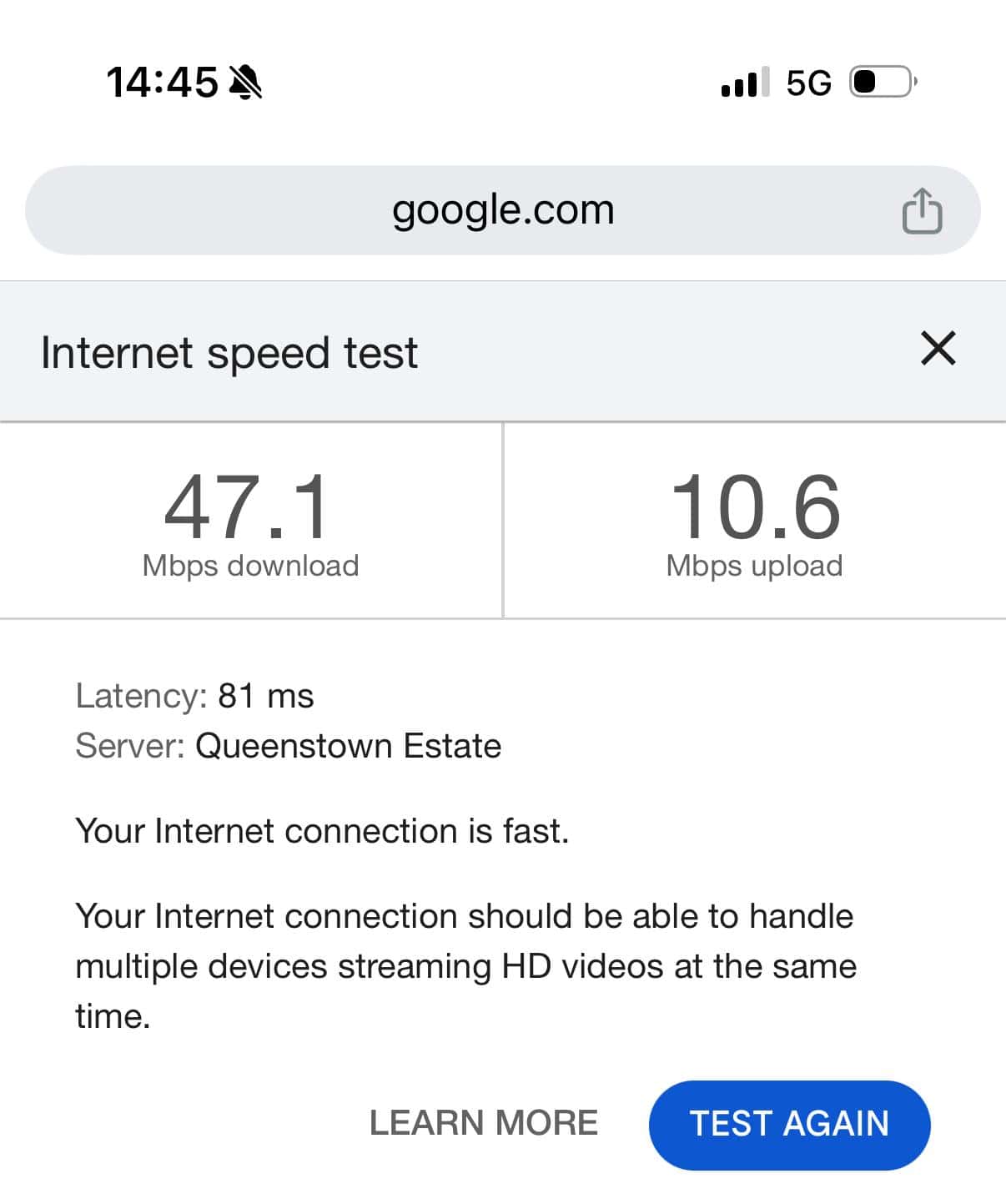
I only found this out halfway through the week, and I’m annoyed I didn’t check sooner, because it has nothing to do with the eSIM: it comes down to a switch on your phone. Out of the box, your phone keeps 5G reined in to use less battery, and with that on, my uploads ran at 10.6 Mbps.
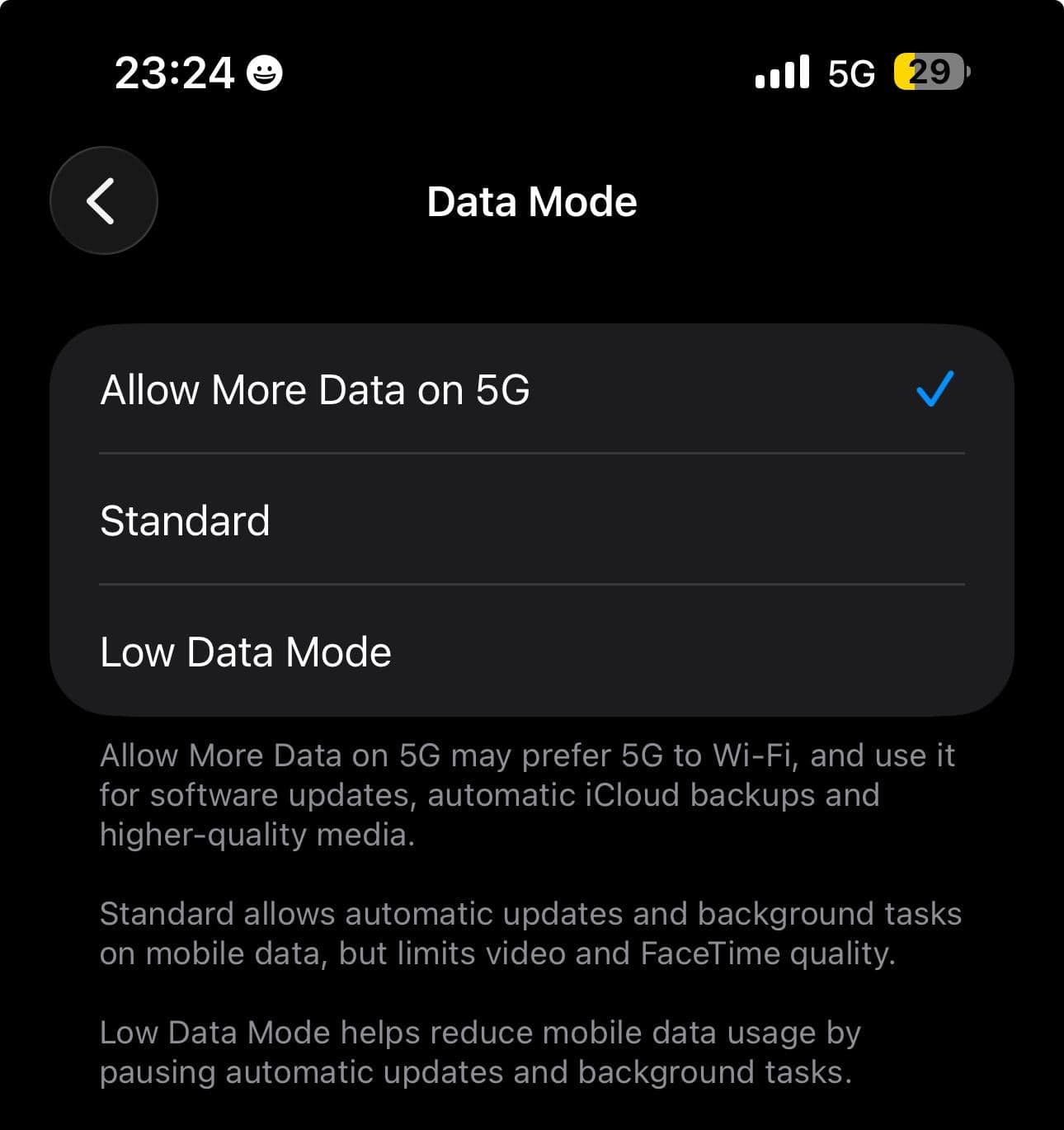
I changed it to the option that lets 5G run flat out and measured again in the same place: upload jumped from 10.6 to 41.1 Mbps. Nearly four times faster, without changing eSIM or location.
On an iPhone it’s under Settings, Cellular, Cellular Data Options, Data Mode, where you pick Allow More Data on 5G. On Android it lives in the network settings. I’m telling you because I haven’t seen it in a single review: you could be blaming the eSIM for something that’s really down to your phone.
But don’t leave it on for the whole trip
Going faster comes at a price, and you should know that before you touch anything. With 5G at full power, Instagram, TikTok and the rest upload and stream video in higher quality by default, so without doing anything differently you end up burning through far more gigabytes.
It also means you hit the fair use cap I explain further down a lot sooner, and it drains your battery faster too. I switch it to full power when I have something heavy to upload and put it back to normal for the rest of the day.
3. Yes, Holafly lets you share the connection in Vietnam
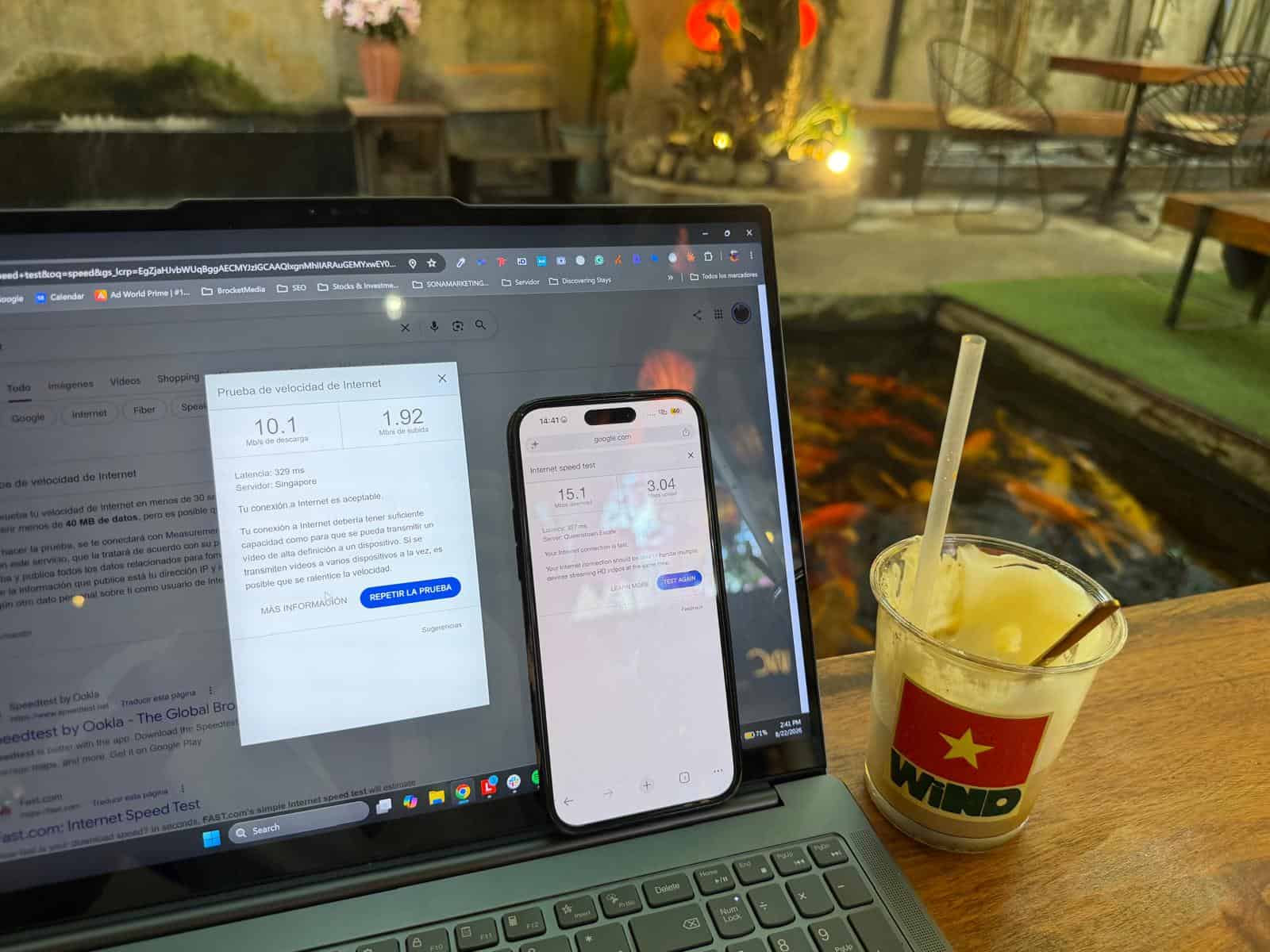
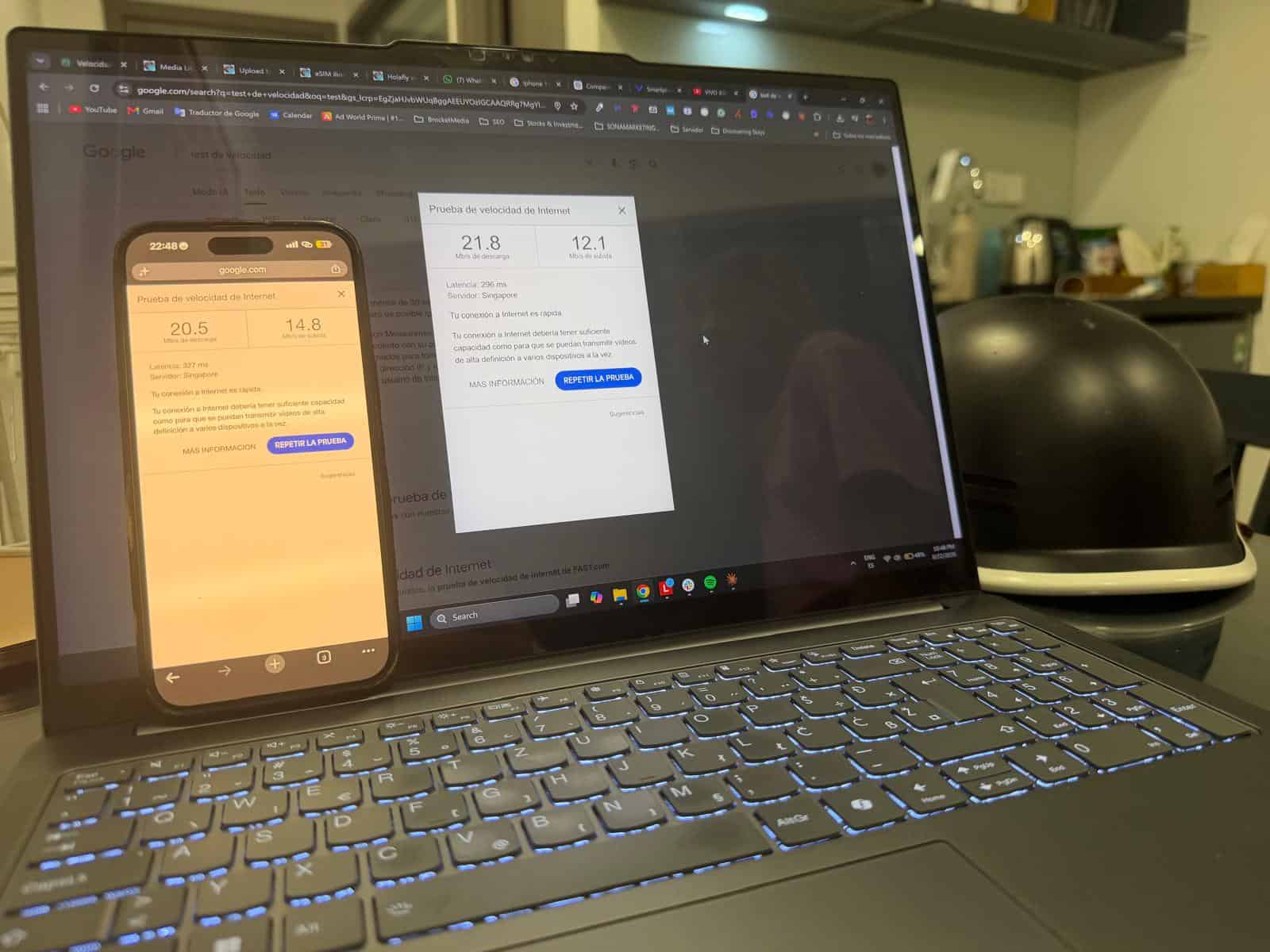
Anyone shopping for an unlimited eSIM asks this first, and rightly so: when two people travel together and only one pays for data, the plan effectively costs each of you half. I ran my laptop and another phone off it simultaneously, and both worked well. The 324 Mbps test above was done exactly like that, with the laptop running off the eSIM.
That’s no small thing, because this is exactly where plenty of unlimited eSIMs cut you off or cap tethering at a handful of megabytes.
I didn’t run into anything like that all week.
4. “Unlimited” isn’t what you imagine
This isn’t a Holafly flaw. It applies to all of them, and you need to know about it before you compare speeds. No eSIM has its own towers: each one rents a local carrier’s network, and that carrier enforces its own fair use rules. In Vietnam, that means once you’ve used roughly 3 to 5 GB within one day, your speed drops. The next day the count resets to zero and your connection is rocket-fast again.
Let’s be clear about what this does and doesn’t mean: your data never runs out; what runs out is the fast lane. You get bumped down to a speed that still works for browsing, messaging and video, just not in ultra HD. You’ll feel it when uploading or downloading something large, and that’s about it.
That’s why I don’t much care whether one eSIM clocks 300 Mbps and another 200. They all end up hitting the same ceiling set by the local carrier.
The things that actually settle it are different: whether you have coverage where you happen to be, and whether tethering is allowed.

5. What I didn’t like
The speed depends on a setting on your phone, and nobody warns you
It’s the most honest complaint I can make, and half the blame belongs to the phone. On the factory setting my uploads ran at 10.6 Mbps, and I started to think Holafly’s upload was average at best. It wasn’t: it was my phone.
With the setting fixed, a gigabyte of video uploads in three or four minutes. On the default, it takes twenty. The difference between an eSIM you can work with and one that drives you up the wall was buried in a settings menu.
You don’t get a Vietnamese phone number
It’s a data plan, not a phone line. WhatsApp and internet calls work just the same, but if something asks for a local number to verify you by text message, you won’t have one.
No other eSIM gives you one either, so this isn’t on Holafly. In practice you won’t need it: if you ever have to phone somewhere, ask at reception and they’ll make the call.
It costs more than a Vietnamese SIM card
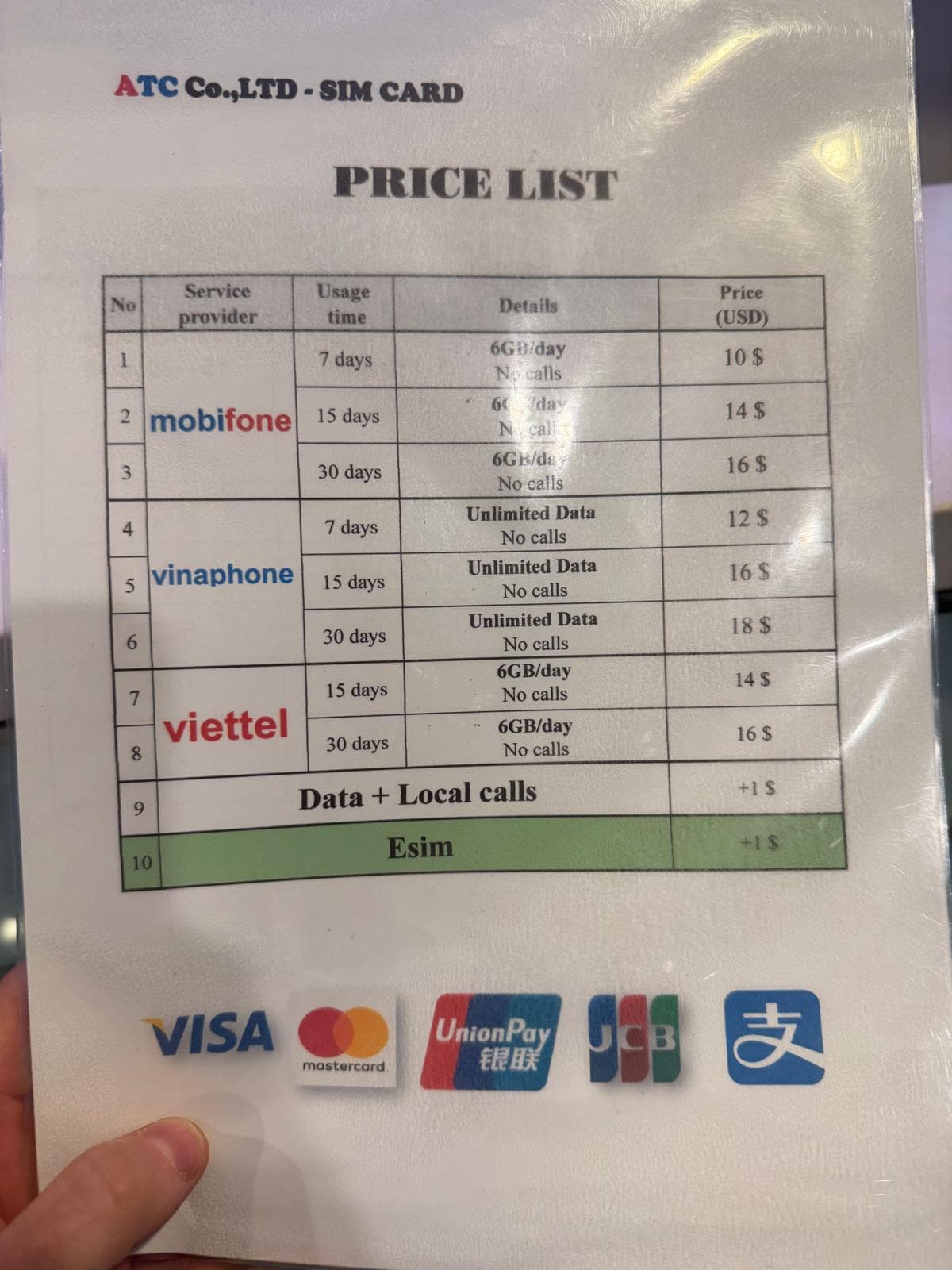
A local Vietnamese SIM is cheaper, no argument there: at Da Nang airport, VinaPhone’s 7-day unlimited SIM costs $12, or $13 if you want it as an eSIM.
Paying double doesn’t buy you more data. It buys you skipping the line, not filling in forms after endless hours of travel, and not letting someone you’ve never met take pictures of your passport.
And to be fair, it isn’t the clerk’s whim: in almost every country in the region, Vietnam and Thailand included, the law requires them to photograph your passport before giving you a line. That photo gets taken no matter what.
And that paperwork is slow. In Southeast Asia, counter procedures involve far more steps than I’m used to, so what would take me a minute in Spain takes fifteen or twenty there, line included. The staff are lovely; the process is simply what it is.
Think about the state you’ll be in: you’ve just stepped off twelve hours of flying if you came direct, or twenty if you had a layover. Standing in line at the terminal to save about $11.40 over the whole trip stops looking like a good idea right there.
Of the people staffing those counters, 99% are wonderful. But nobody will tell you what happens to those photos afterwards, and personally I’d rather Holafly hold on to them than an airport kiosk I wouldn’t know how to complain to if something ever went wrong.
6. How much Holafly’s eSIM costs and when it’s worth it
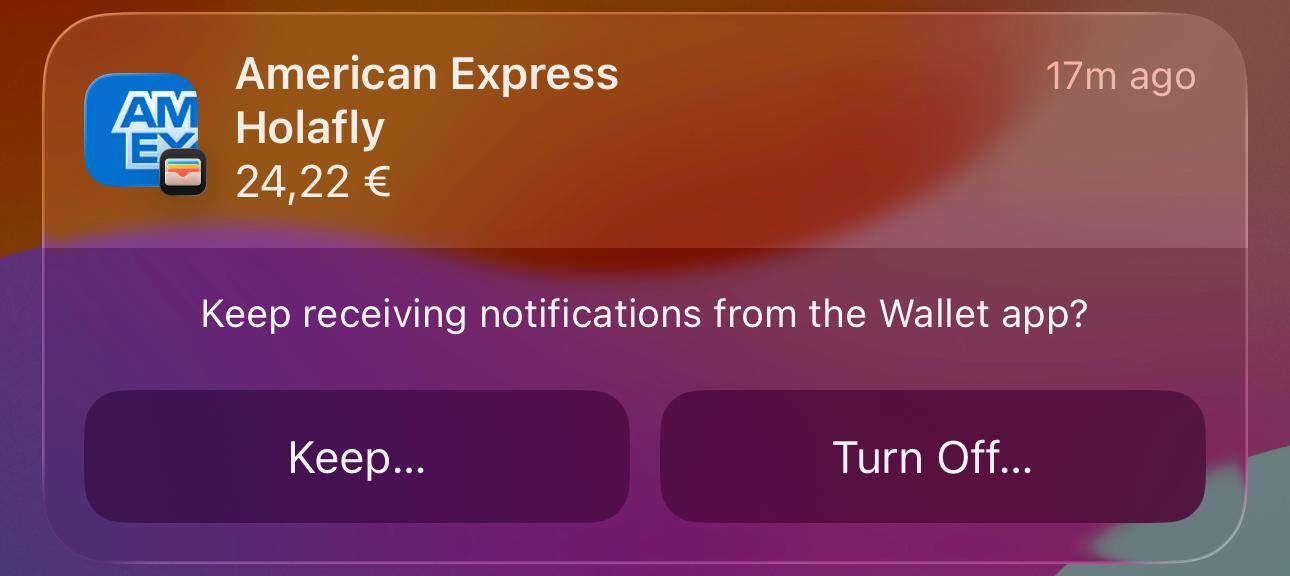
I paid €24.22 (about $28) for seven days using Holafly’s discount code, DESCUBRIENDO. That works out to roughly $4 a day.
The plan I bought isn’t the Vietnam one but the Asia one, which also covers Thailand, Cambodia, Singapore, Laos, Indonesia and Malaysia. If you string several countries together on one trip, and in that part of the world they practically string themselves together, you don’t have to buy twice.
| Option | You pay | You get | Time it costs you |
|---|---|---|---|
| Holafly Asia | €24.22 for 7 days (about $28) | Unlimited data at a good speed across all seven countries | Two to three minutes, from your couch at home |
| VinaPhone SIM from the airport | $12 for 7 days, or $13 for the eSIM version | The same network, and for $1 extra a Vietnamese number too | A line, forms and someone photographing your passport |
| Your own carrier’s roaming | About $11.50 per GB with my Spanish carrier | The number you always use | None, but keep an eye on the bill |
Price isn’t what decides this; hassle is. You save about $11.40 over the whole trip and give up your first hour in return. And there’s one more drawback you don’t see coming: if your phone isn’t dual SIM, you have to pop out your usual card and keep it somewhere you won’t lose it, and every time your bank texts you a verification code you have to swap them again.
The eSIM spares you all of that. It installs alongside your regular line, your number keeps working, and you’re already online when they open the plane door. That’s where the difference lies, not in the megabits.
If there are two of you, don’t buy both at once
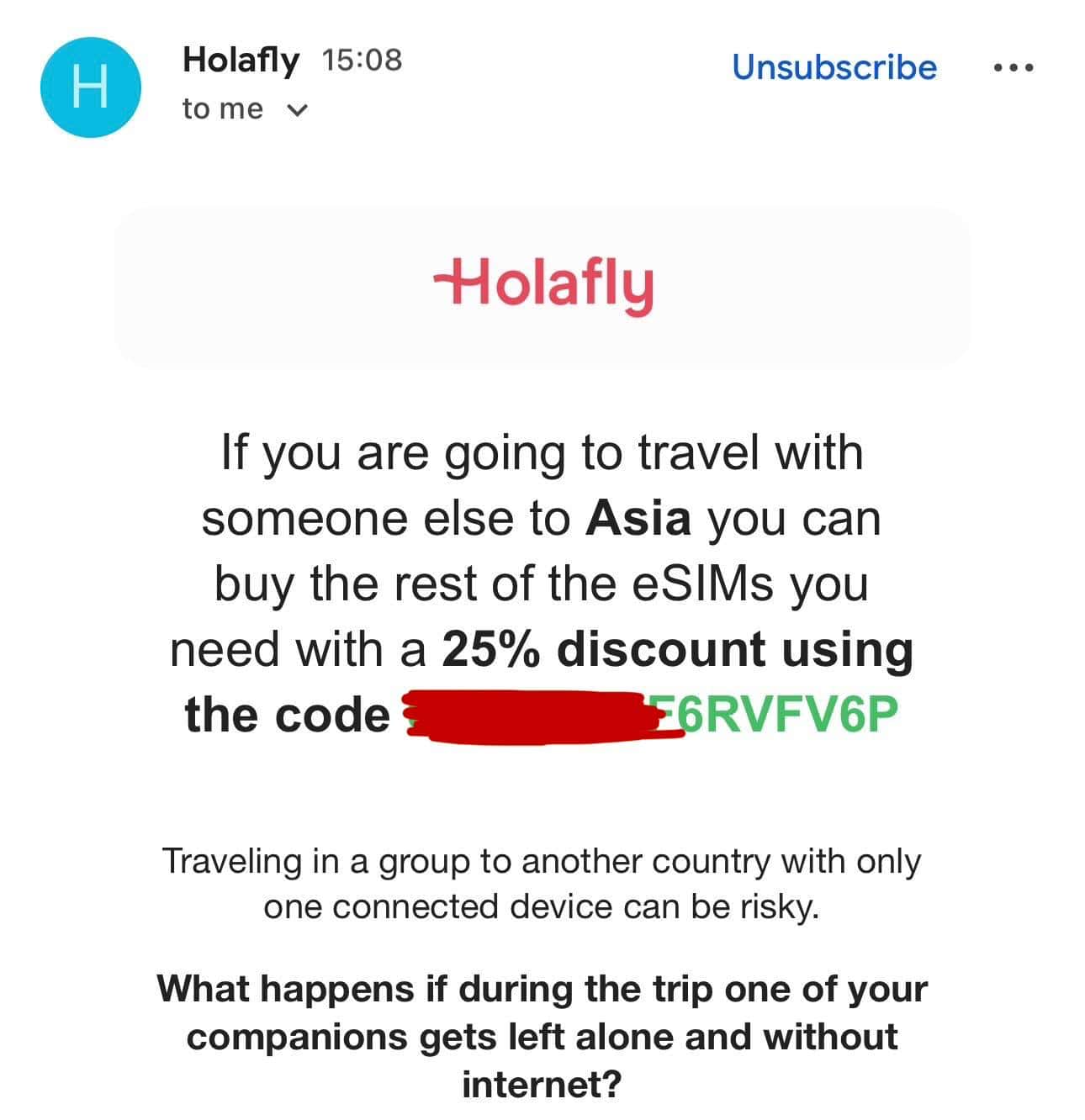
I’m shooting myself in the foot here, and I’m telling you anyway. When you buy an eSIM, Holafly sends you a 25% off code for your next ones, valid for 48 hours. If two of you buy both in one go, that discount lands after you’ve already paid.
Buy one, wait for the email, and buy the second with the code. I’d rather you did that than thought of me a month from now, realizing you could have saved a quarter and nobody told you.
7. Who I wouldn’t recommend it to
- Anyone traveling for several months on a tight budget: there, a local SIM wins hands down.
- Anyone who needs a Vietnamese number to verify a bank or a local app.
- Anyone after the cheapest option above all else who doesn’t mind losing their first morning in a phone shop.
And who I would recommend it to
- Anyone combining several countries in the region, which is exactly the plan I bought: Vietnam, Thailand, Cambodia, Singapore, Laos, Indonesia and Malaysia on one eSIM. If you’re only visiting one of them, a single-country plan isn’t worth it: it costs the same and runs on the same network.
- Anyone who works from their phone and doesn’t want to depend on their accommodation’s Wi-Fi.
- Anyone traveling for less than a month who’d rather land with data.
- Anyone who’s had a scare on an open network and doesn’t want a repeat.

Frequently asked questions
Is the unlimited plan really unlimited, or does it slow down?
The data never runs out, but the speed does: after roughly 3 to 5 GB in a single day, the local carrier slows you down until the next day. That happens with every unlimited eSIM, not just this one.
Can you share the connection with another phone?
Yes. Both my laptop and another phone were tethered to it at once, and they worked fine the whole week.
Do I have to install it before leaving home?
Whenever you like. You choose the days you want it active, and those are the ones that count. You can install it a week ahead without using anything up, because the plan doesn’t start until it connects to the local network, and that won’t happen in your home country.
Does it work at concerts and in crowded places?
No, and neither does any other. On Da Nang’s Dragon Bridge, surrounded by thousands of people, I got 0.30 Mbps, and the upload never even finished. The tower was full. Keep the map downloaded and agree on a fixed meeting point.
Why is my eSIM upload slow?
Look at your phone’s 5G settings before you blame the eSIM. With the default setting I was uploading at 10.6 Mbps, and with 5G allowed to run flat out, at 41.1. Same place, same eSIM, four times the speed.
What network does Holafly use in Vietnam?
VinaPhone. Holafly has no network of its own; it rents one from a local carrier in each country, and in Vietnam that’s the one. It shows up in your status bar the moment you touch down.
How much is a SIM card in Vietnam?
At the airport counter in Da Nang, VinaPhone’s unlimited-data SIM costs $12 for 7 days, $16 for 15 days and $18 for a month. As an eSIM, a dollar more. For another dollar they’ll add local calls.
Holafly or a local eSIM: which is better?
Holafly, unless your priority is spending as little as possible. The local one is cheaper, yes, but over a one-week trip the difference comes to about $11.40 in total, and in exchange you skip the line at the counter, the paperwork after twelve hours of flying if you came direct, or twenty with a layover, and letting a stranger photograph your passport. If you’ll be there for months on a tight budget, buy it locally. For a normal trip, I’m not standing in that line again to save $11.40.
Will it also work in Thailand or Cambodia?
Yes. The regional Asia plan covers Vietnam, Thailand, Cambodia, Singapore, Laos, Indonesia and Malaysia on the same eSIM. If your trip is Vietnam only, get the regional plan anyway: it costs the same as a single-country plan and runs on the same network.
So, is Holafly’s eSIM worth it for Vietnam?
Yes. It installs in two or three minutes, it’s three or four dead-easy steps, it’s fast and it lets you tether other devices, which are the three things I ask of an eSIM.
If your trip lasts one or two weeks, you won’t find fault with it, especially if you give the 5G setting thirty seconds. And that’s my opinion with the eSIM still in my phone, not a memory from six months ago.
There’s also a detail almost nobody mentions, called Always On. It switches on the moment the eSIM is installed and gives you 1 GB a month for the basics, maps and messages.
The best part is that it stays with you even once your plan’s days are used up, and it lasts twelve months. So you start your next trip already connected, without paying a thing.
If you’re heading to Vietnam and want everything else I’ve learned there, it’s all in my Vietnam guide.
Discount code: DESCUBRIENDO (5% off)