Where to Stay in Bangkok? We’ve Spent 34 Nights in the City and We’ll Help You Choose
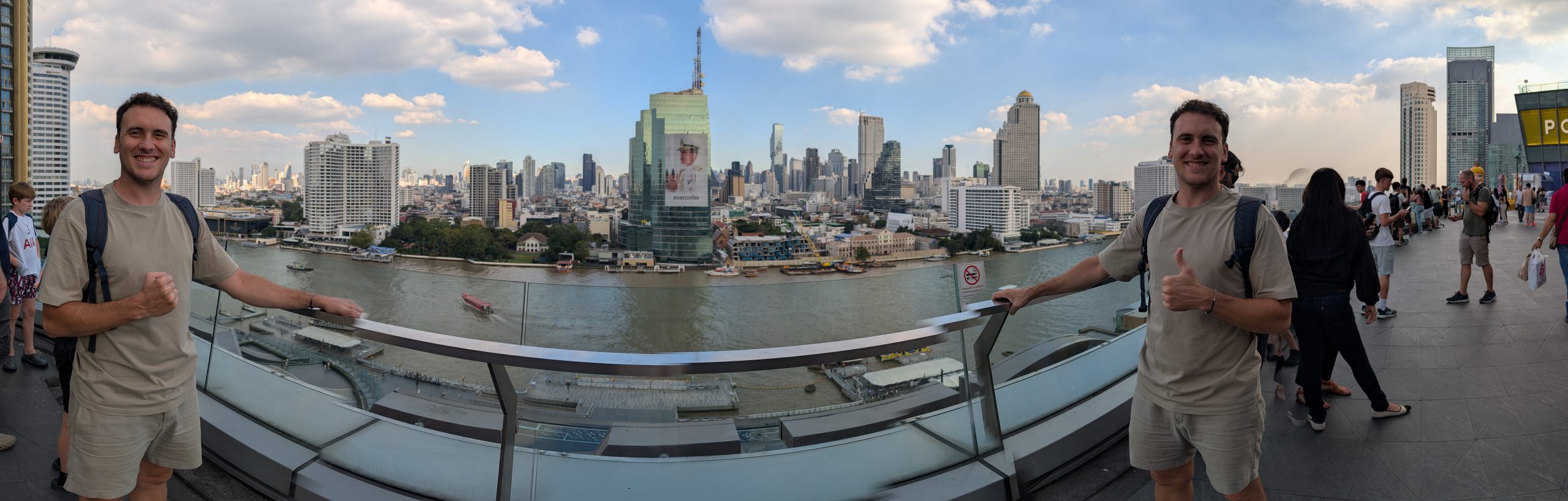
Bangkok from above. Down below is the traffic that decides where you should sleep

Bangkok is not an easy city. You walk out of the airport into a wall of heat, humidity and noise that knocks you sideways for the whole first day. Then you open the map, everything looks a stone’s throw away and you let your guard down. That’s the mistake people pay for here: in Bangkok, distance isn’t measured in kilometers, it’s measured in traffic jams. Eleven million people live in the metro area and around 32 million tourists arrive every year, which makes it the most visited city in the world. With numbers like those, read this before you book so you don’t spend half your stay stuck at a red light.
Ten trips in, one thing is clear to us: “what’s the best area in Bangkok” doesn’t have a single answer, and any guide that gives you one is letting you down. The right area doesn’t depend on what kind of traveler you are. It depends on what you’re there for. Someone with a twelve-hour layover needs something different from someone staying three days, and someone dragging two weeks of Asia behind them needs something different from a conference-goer who will only use the hotel to sleep. We’ve done all four of those trips, and each one called for a different area.
Between the two of us we’ve spent 34 nights in Bangkok across ten places to stay: hotels, a hostel with a private room, an apartment and, twice, a resort right next to the airport. We’ve slept in six of the eight areas in this guide, and for the two we haven’t, we say so in their section instead of padding them out with whatever Booking says.
⚡ Quick summary: which area is yours?
| Area | The vibe | Price | Transport | Best for |
|---|---|---|---|---|
| Sukhumvit | Modern, skyscrapers and cocktails | $$$ | BTS and MRT | First time and nights out |
| Siam and Pratunam | Malls and a young crowd | $$$ | BTS | Shopping and conference trips |
| Silom and Sathorn | Financial district, clean, with a park | $$ | BTS and MRT cross here | A first visit without the hassle |
| Riverside | River, luxury and boats | $$$ | Boat and the Gold Line | A big budget and a special trip |
| Old Town and Khao San | Temples, backpackers and partying | $ | No BTS or MRT | Backpackers and temples on foot |
| Chinatown | Neon, chaos and food | $$ | MRT Wat Mangkon | Eating, but not a quiet night’s sleep |
| Lat Krabang, by BKK | An isolated resort next to the airport | $$ | Hotel transfer | Layovers and the last day of a trip |
| Don Mueang, by DMK | Nothing. Sleep and fly | $ | Grab, 10 minutes | A DMK layover and nothing else |
The price column is only a guide, and it compares the areas with each other. Every area has hotels at about $23 and at about $230: what changes is the average, and what you’ll find when you search.
👇 Tell us why you’re coming and we’ll show you only your areas
Tap the buttons. The table above, the area sections and the sidebar list all filter at the same time.
How much time do you have in Bangkok?
And what are you coming for?
If you’re not going to read the whole guide
We’ve slept in all three of these and would book them again. Each one suits a different trip, so work out which one is yours before you look at the price.
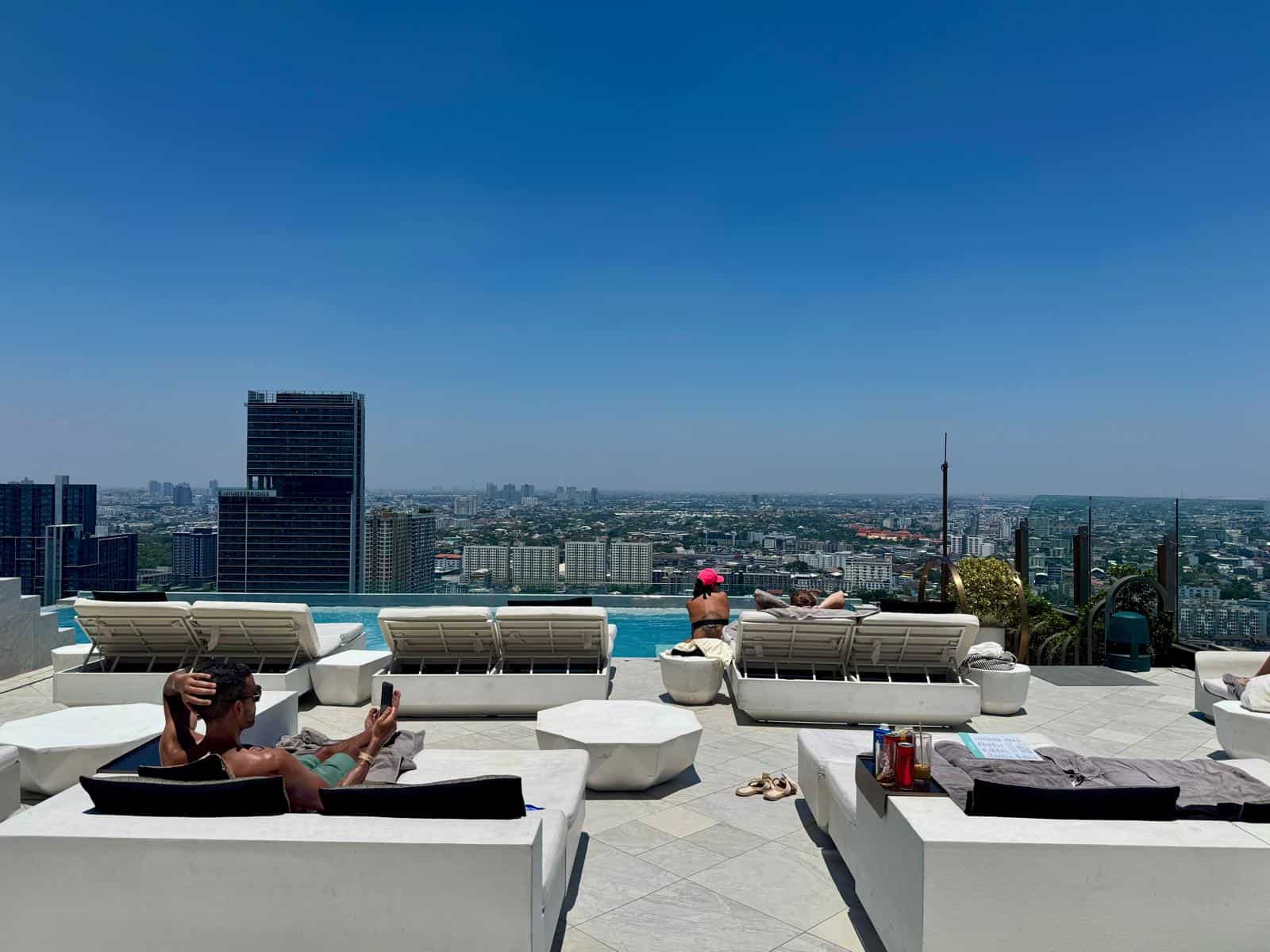 To enjoy the hotel
A rooftop with a pool, breakfast with a view and a lounge for remote work. The hotel is the main event.
Check availability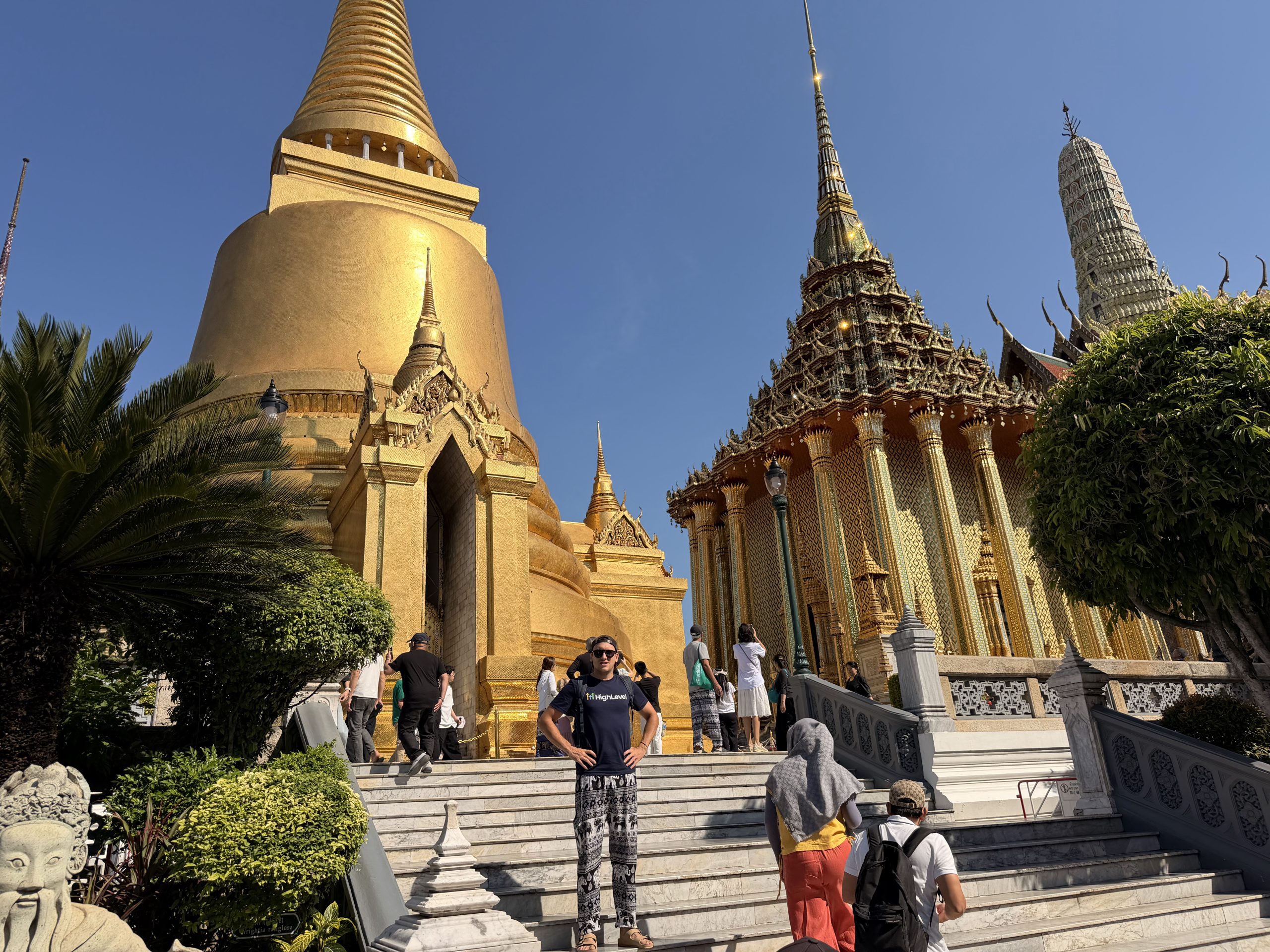 Temples and price
Five minutes from Khao San, with the Grand Palace and the National Museum within walking distance.
Check availability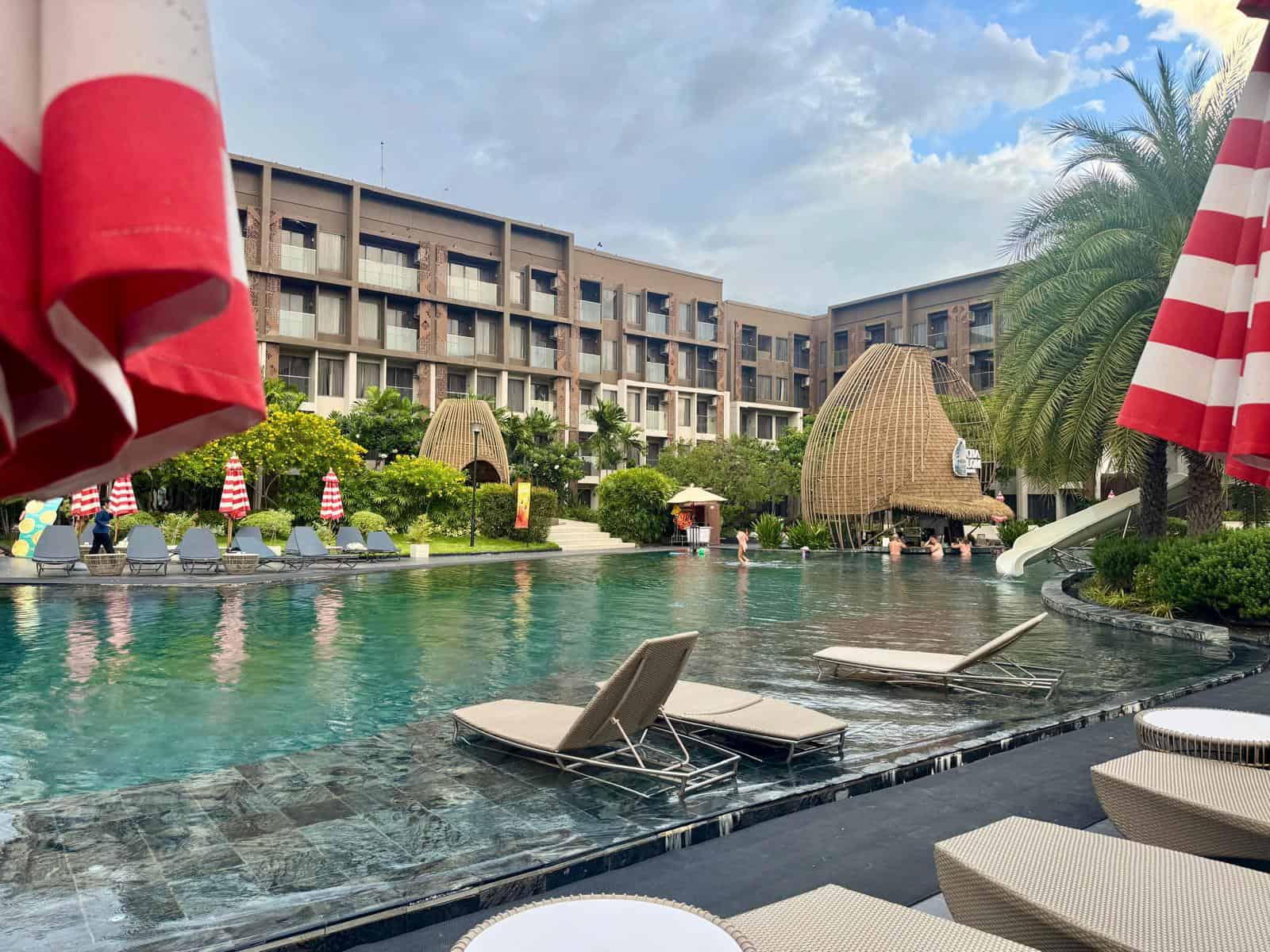 For a layover
A resort 12 km from BKK with a free transfer. So you don’t go straight from one flight to the next.
Check availabilityBangkok in one minute
Before we get into neighborhoods, hold on to one idea, because it settles almost the whole decision: in Bangkok you don’t choose a neighborhood, you choose a station. It doesn’t matter how nice the hotel is. If you can’t walk to the BTS or the MRT, the traffic will eat up your trip.
The one exception is a layover. If you’ve come to sleep and fly, what matters is no longer the metro station but how many minutes you are from the check-in desk. That’s why the last two areas in this guide are the two airports, something we haven’t seen in any other guide.
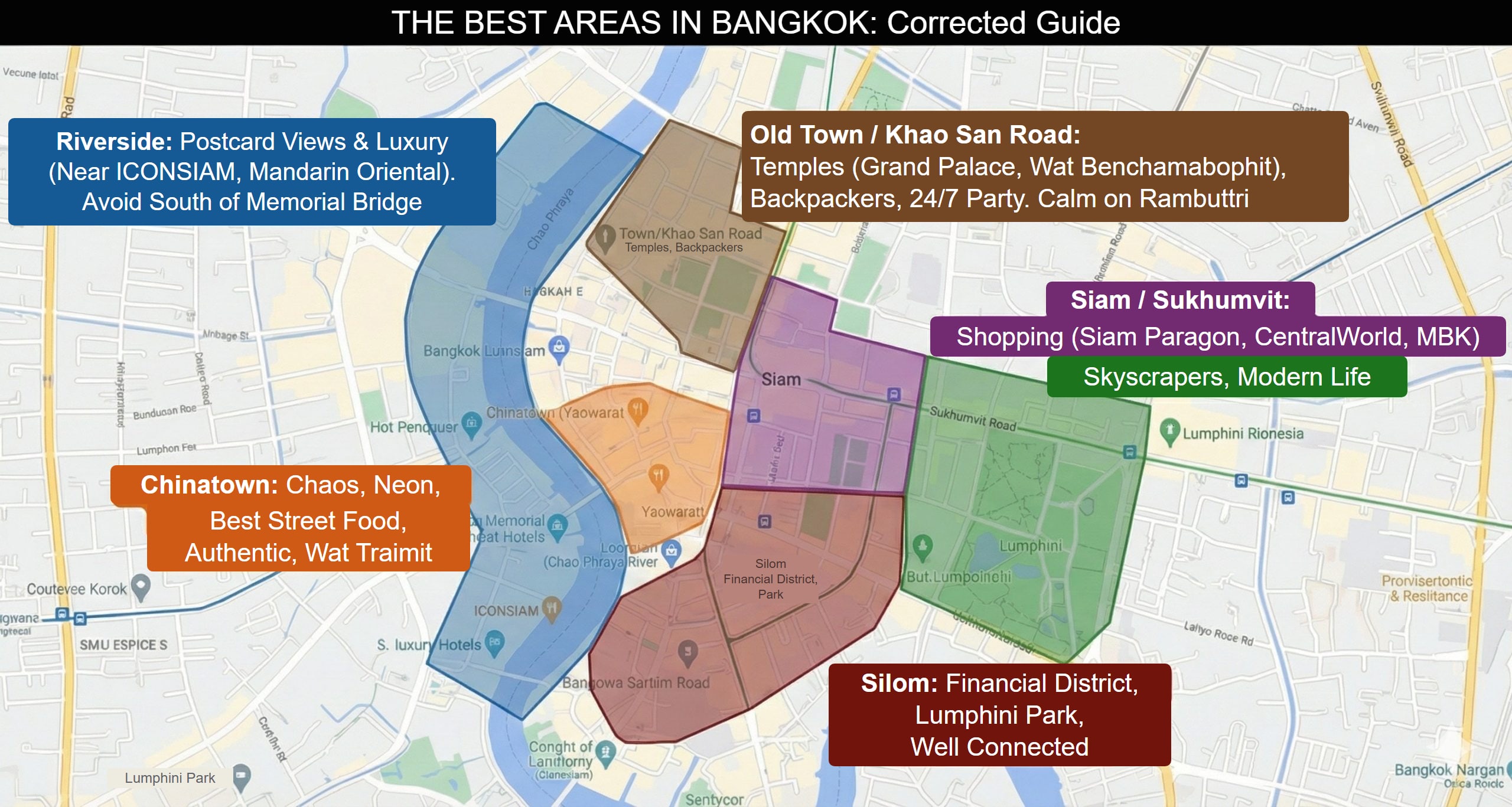
Tap the map to enlarge it. The two airport areas fall outside this frame, and that already tells you something
The practical stuff before you choose an area (miss this and you’ll book the wrong place)
The BTS, the Bangkok Skytrain, versus Grab
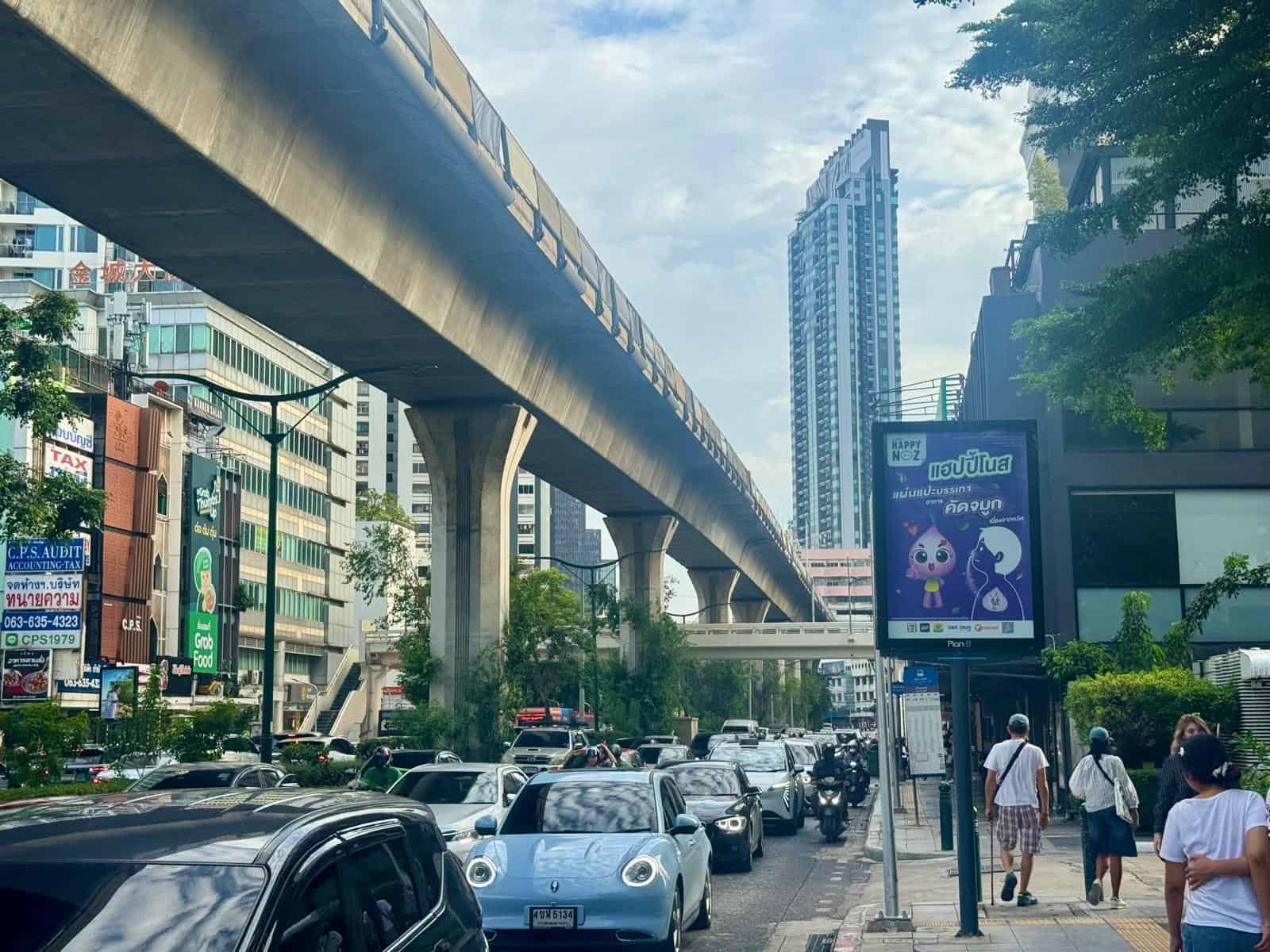
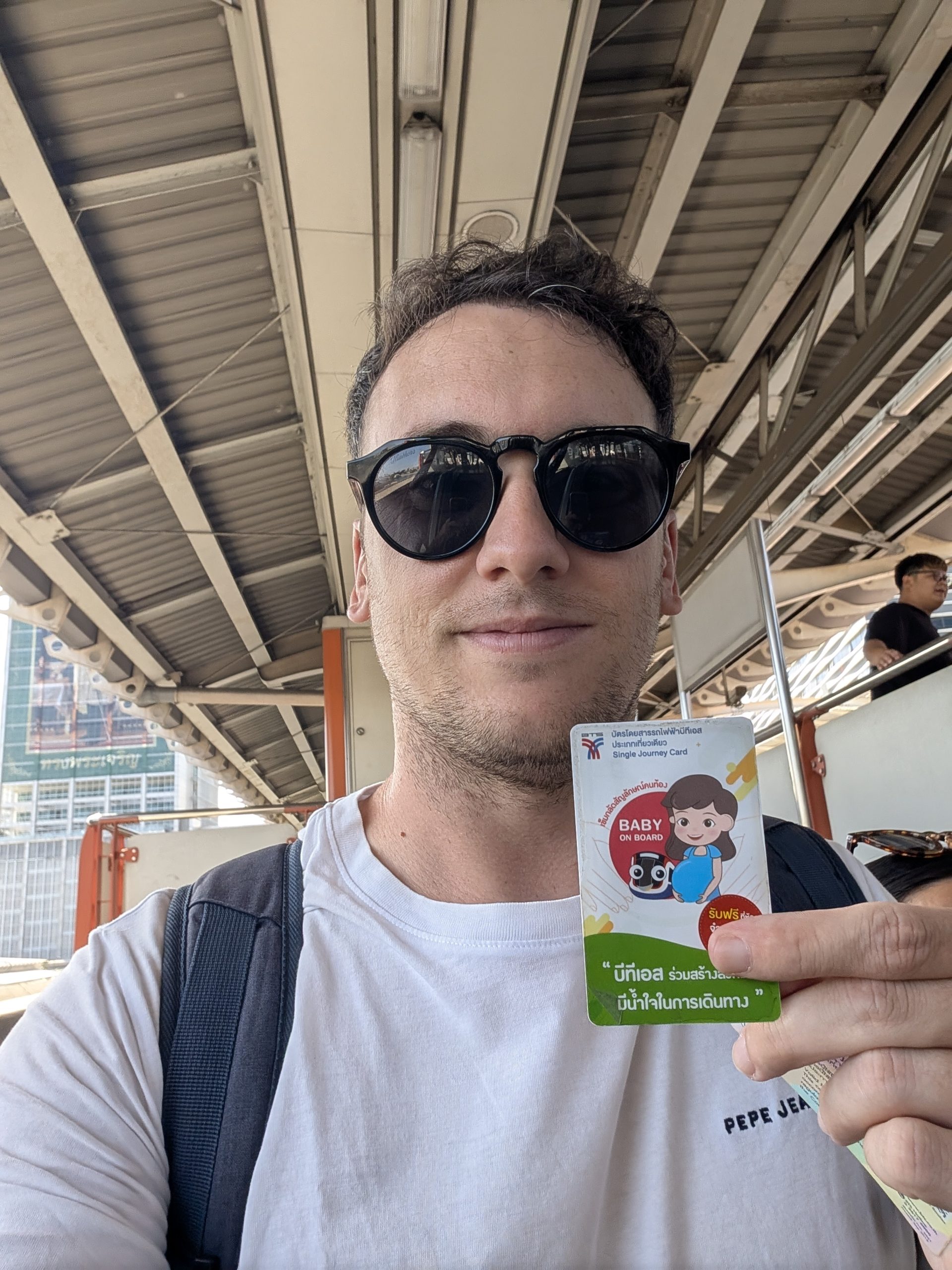
The BTS and the MRT save you from the traffic, and that’s why this whole guide revolves around stations. But there’s one case where they don’t. Before you head out, check on Google Maps how long the drive takes: if the train is fifty minutes with a change and a Grab is thirty, take the Grab, and you get a seat and air conditioning thrown in. Victor walks through it, with the actual Google Maps screenshot, in his guide to how to get around Bangkok.
On tuk-tuks, our view hasn’t changed after ten trips: they’re scary and they’ll overcharge you. Take one for the experience, not as a way of getting around.
The check-in deposit nobody warns you about
Almost every hotel in Bangkok, cheap ones included, asks for a deposit when you check in. It’s usually THB 1,000 or 2,000 ($29 or $57), and you can pay it in cash or put it on a card. If you go with cash, guard the receipt with your life, because without it you’ll struggle to get the money back.
When to go
November to February is the good season: it’s hot, but bearable. March to May is hell, and if you go in those months, book a hotel with a pool without a second thought. From June to October it rains hard and then stops; it’s low season and hotel prices drop, which for plenty of people makes it worth it.
The 8 areas, one by one
They’re listed from most central to furthest out. For each one we tell you whether we’ve slept there or only explored it on foot, because they’re not the same thing, and it shows.
Sukhumvit
- Price$$$
- TransportBTS and MRT, the best in the city
- NightlifePlenty, at every price
- Our nights8, in 3 places
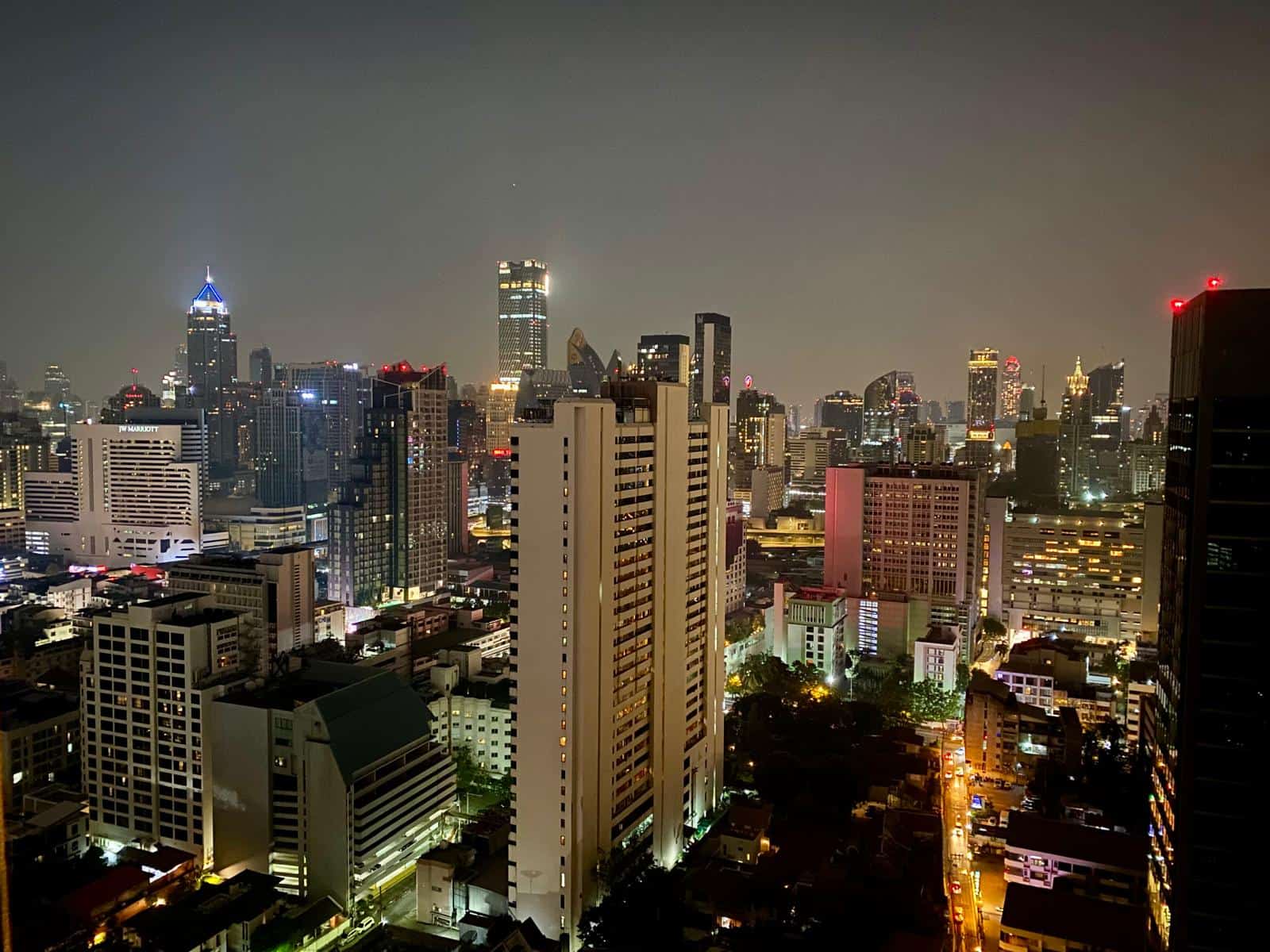
Sukhumvit is the longest road in Thailand, and in practice it works as Bangkok’s modern spine: skyscrapers, malls, restaurants from all over the world, cocktail bars and the BTS running over your head. It’s where we’ve slept the most, and it’s the area we recommend if it’s your first time and you don’t want to overthink it.
It isn’t one single thing, and that’s the beauty of it. The Asok end has the interchange between the BTS and the MRT and is the easiest of all for getting around. Further east, Ekkamai and Thonglor are pricier, quieter by day and more about drinks at night. We spent two nights at the Chill Inn, in Ekkamai, with the BTS at the door, and it does exactly what it promises: you see some of the city during the day and go out nearby without taking a taxi home at three in the morning.
The other two stays tell different stories. In January 2025 we rented an apartment right by Asok station, and we didn’t pick it for the neighborhood: we picked it because Victor was injured and couldn’t walk. That trip is the best proof of what this guide is about. When someone in your group can’t walk, “stay near a station” stops being nice advice and becomes the only thing that matters.
The third was the INNSiDE by Meliá, three nights in April 2026, and it’s a different kind of trip again: the hotel is the main event. Its address, 1472 Sukhumvit, in Phra Khanong, looks a little worrying when you see it on the map, so far from the center. Don’t go by the street number: it’s literally at the Skytrain station, so in practice it’s one of the most convenient, best-connected places we’ve stayed. A chill-out rooftop with a pool, food and drinks up there, a very good breakfast buffet with city views and a lounge where you can read or get some remote work done in peace. If what you want is to see two or three things without rushing and spend the rest of the day at the hotel, this is your pick. The plan here is half enjoying the hotel and half seeing the city, and Bangkok works well that way too.
Why stay here
- The best transport in the city: with the BTS and the MRT you get to any area fast
- A huge choice of hotels, and good hotels at good prices
- For nights out at normal, stylish places, without drunk backpackers
- For eating at any hour, whatever you feel like
We recommend this area if it’s your first time and you want to get around fast, or if you’re planning nights out.
Where to sleep in Sukhumvit
We’ve filtered the hotels so the good ones come up first. If in doubt, stay close to Asok or Nana station.
See hotels in SukhumvitWorth your time around here
- Tichuca: the rooftop with the glowing jellyfish. It gets packed, but the views are worth it.
- Benchakitti Park: raised walkways through the trees and a 360-degree view. Best at sunset.
- Terminal 21: the Asok mall where every floor is themed on a different city.
Siam and Pratunam
- Price$$$
- TransportBTS, with the Siam interchange
- NightlifeNot much. It closes when the malls do
- Our nights15, in 2 stays
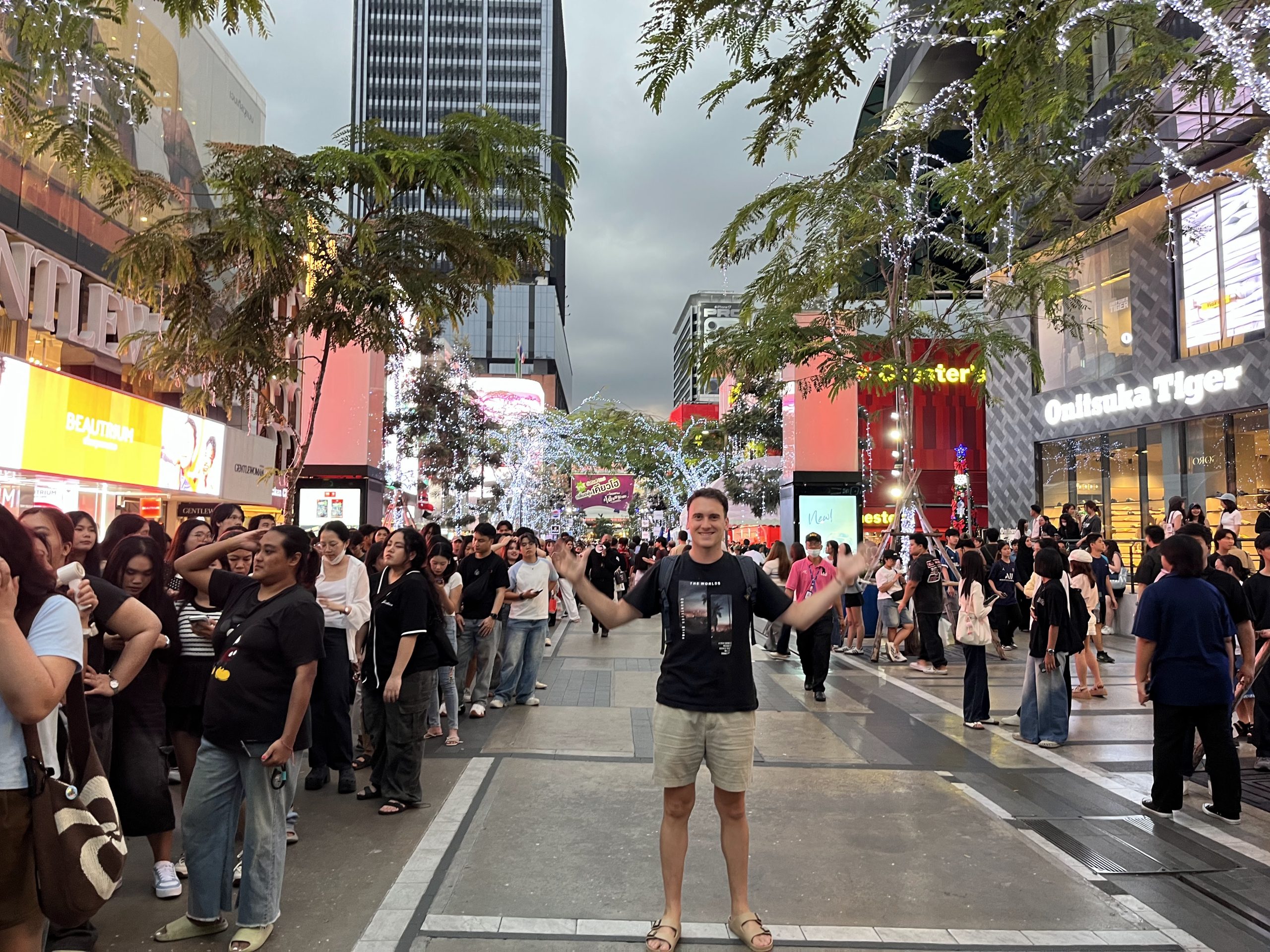
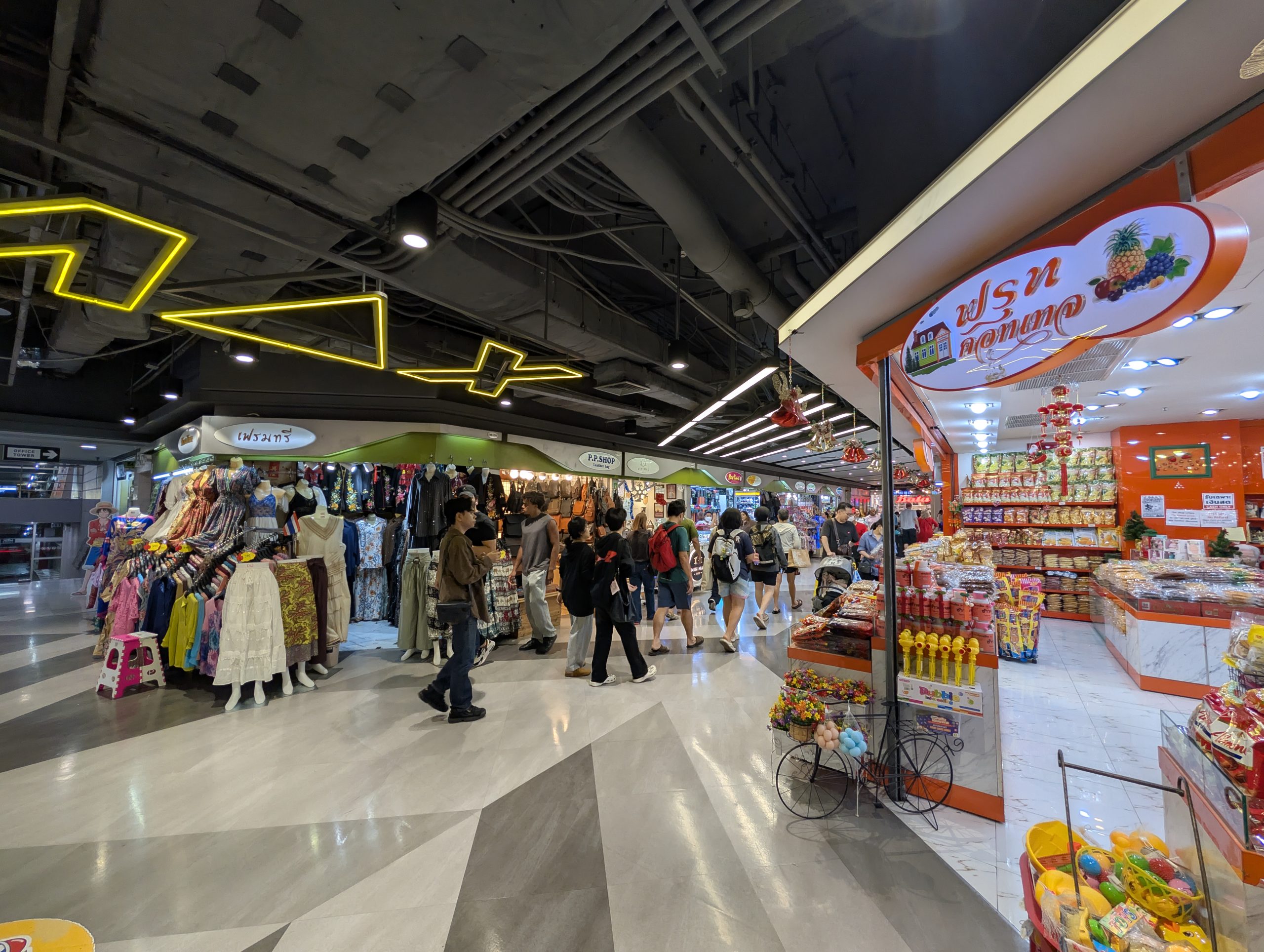
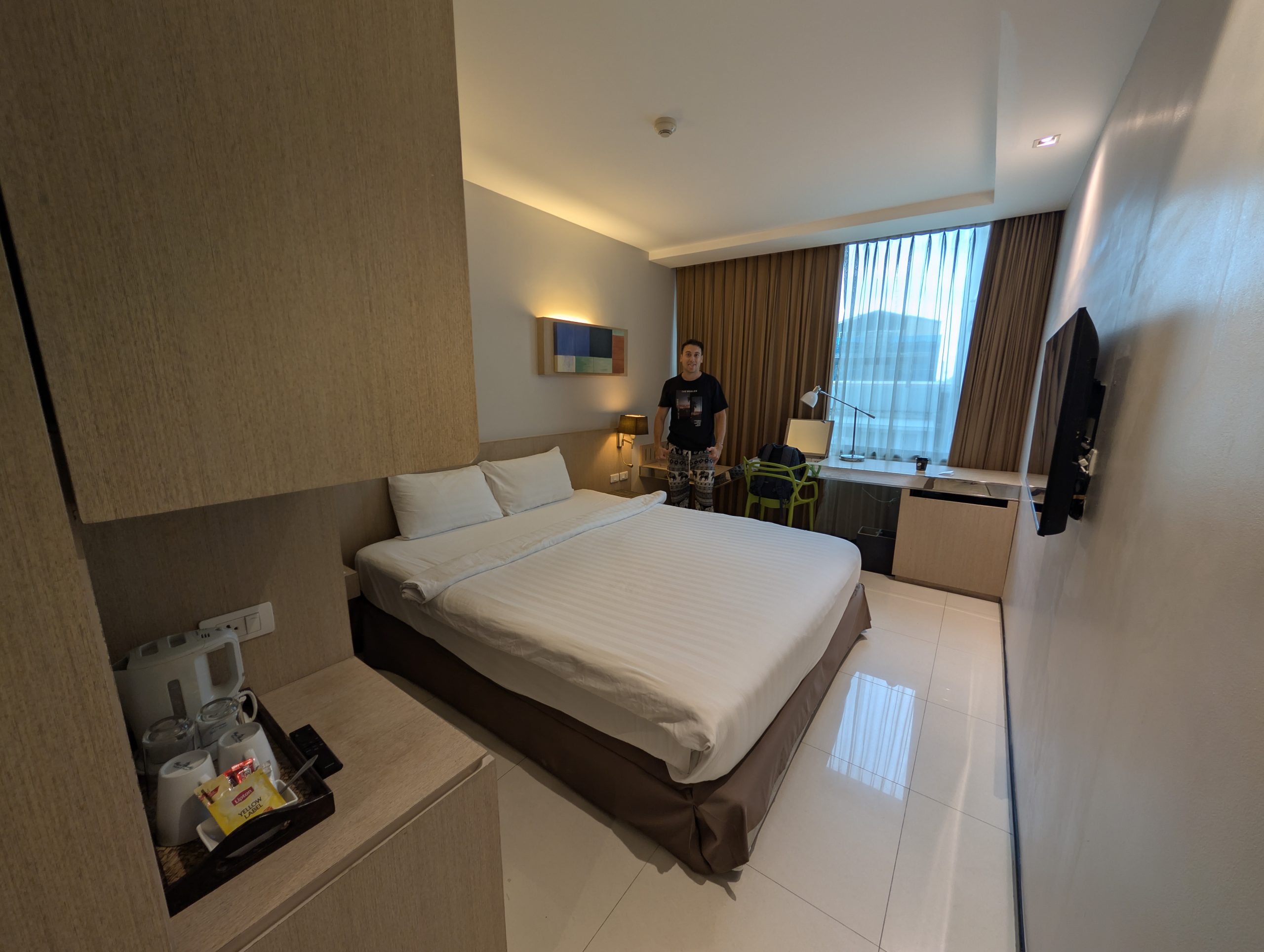
If you’re coming to shop, this is your area, no question. Within a few hundred meters you have Siam Paragon, CentralWorld and MBK, the place for well-made knockoffs and Victor’s favorite. The first time, he ended up buying an extra suitcase there to get everything home.
We spent three nights here at the Klub Hotel, in Pratunam, but we weren’t sightseeing: Javier was in town for Affiliate World Asia, at the Centara Grand, a one-kilometer walk away. That trip gave us a tip we haven’t seen in any other guide: if you’re coming to Bangkok for a conference or for work, stay here. The big venues are in this area or a couple of stops away, and it works out cheaper than Sukhumvit.
The long stay in this area is Victor’s. He spent twelve nights at the VIC 3 Bangkok in December 2025 and paid about $583 for all twelve, around $49 a night in high season. His verdict: a very good room and staff, a cafe, daily cleaning and great transport links. The only downside was a dismal gym.
And that hotel isn’t in Siam or Pratunam: it’s in Phahon Yothin, four hundred meters from Sanam Pao, four BTS stops further north. On paper, an area with no tourist interest at all. In practice it worked for twelve days straight. If you’re on the BTS line, the neighborhood matters much less than you’d think.
The only weak points are that it goes quiet at night and that the car traffic around here is among the worst in the city. Don’t even think about taking a taxi from Siam at rush hour: that’s what the BTS right above you is for.
Why stay here
- All of Bangkok’s shopping on foot, no transport needed
- The Siam interchange takes you to any part of the city
- Good hotels for less than they cost in Sukhumvit
- If you’re coming for a conference or for work, you sleep next to the venue
We recommend this area if you’re coming to shop, or if you’re here for work and want to walk to it.
Where to sleep in Siam and Pratunam
We’ve filtered the hotels so the good ones come up first. Just two streets over, Pratunam works out quite a bit cheaper than Siam.
See hotels in Siam and PratunamWorth your time around here
- MBK Center: good-quality knockoffs and souvenirs. The place to check off everyone’s shopping list.
- Siam Paragon: the luxury one, with the aquarium in the basement.
- Chatuchak Market: a few stops away on the BTS, and weekends only.
Silom and Sathorn
- Price$$
- TransportBTS and MRT cross at Sala Daeng
- NightlifeYes, of every kind
- Our nights5, our longest stay
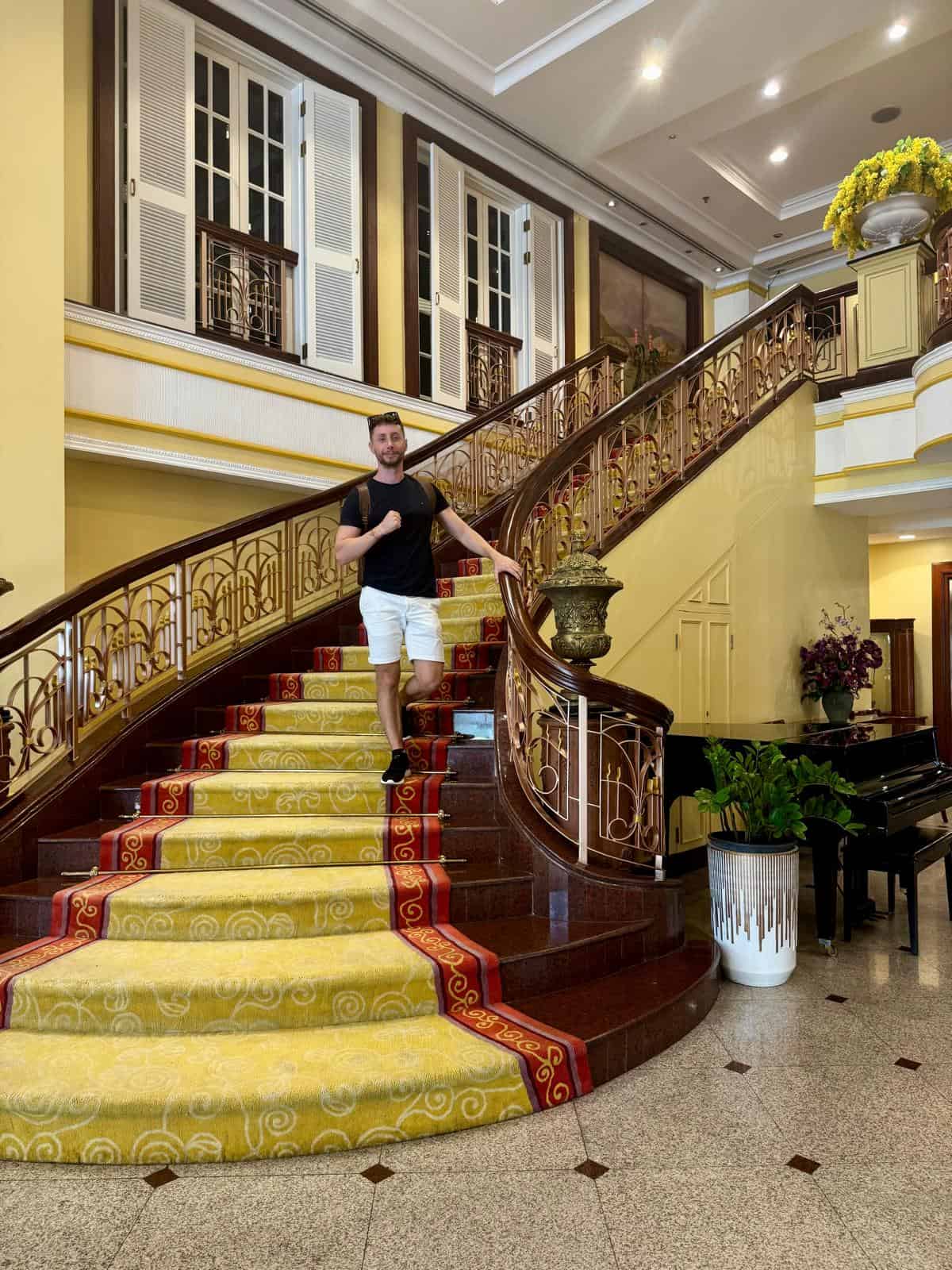
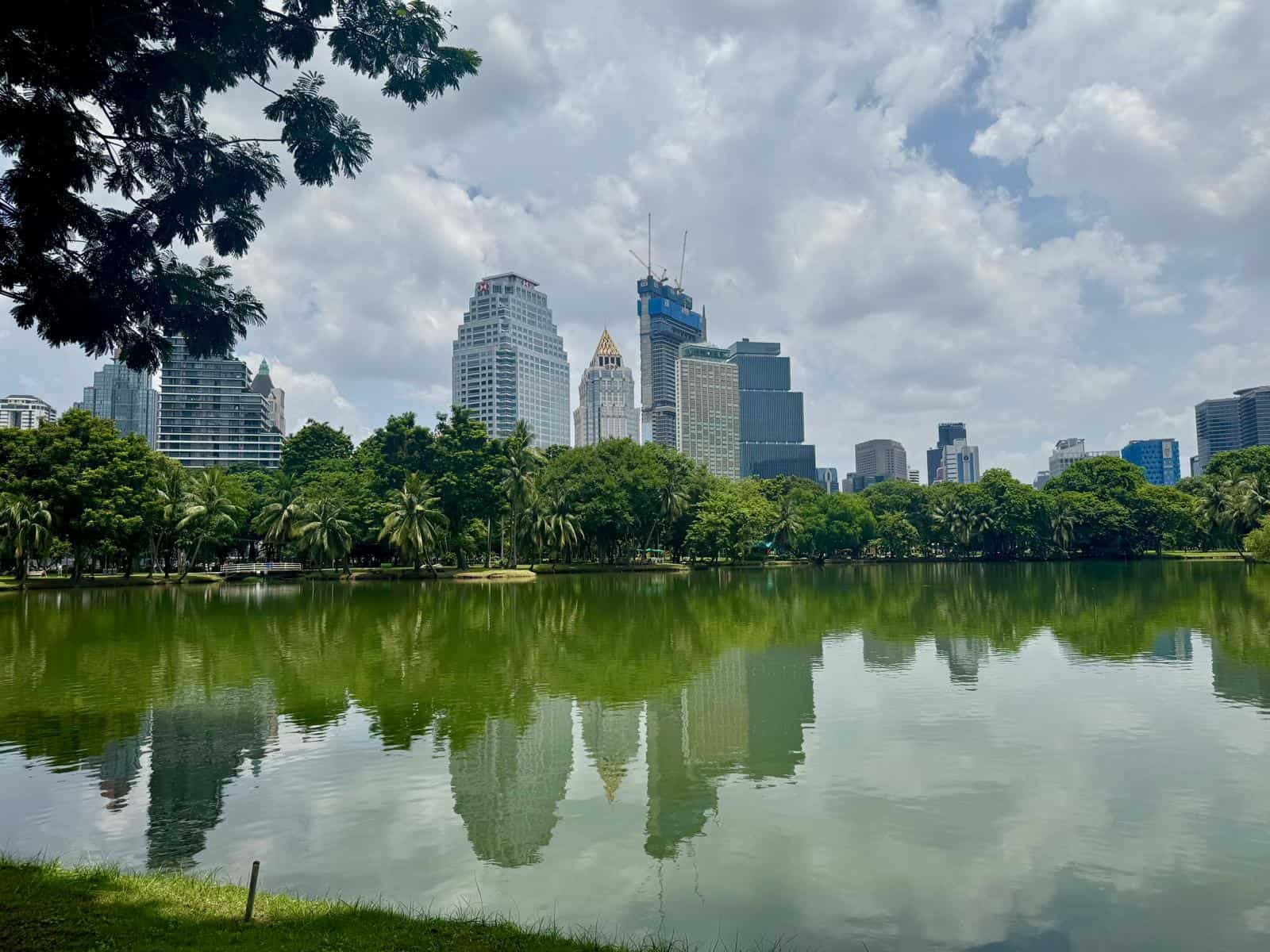
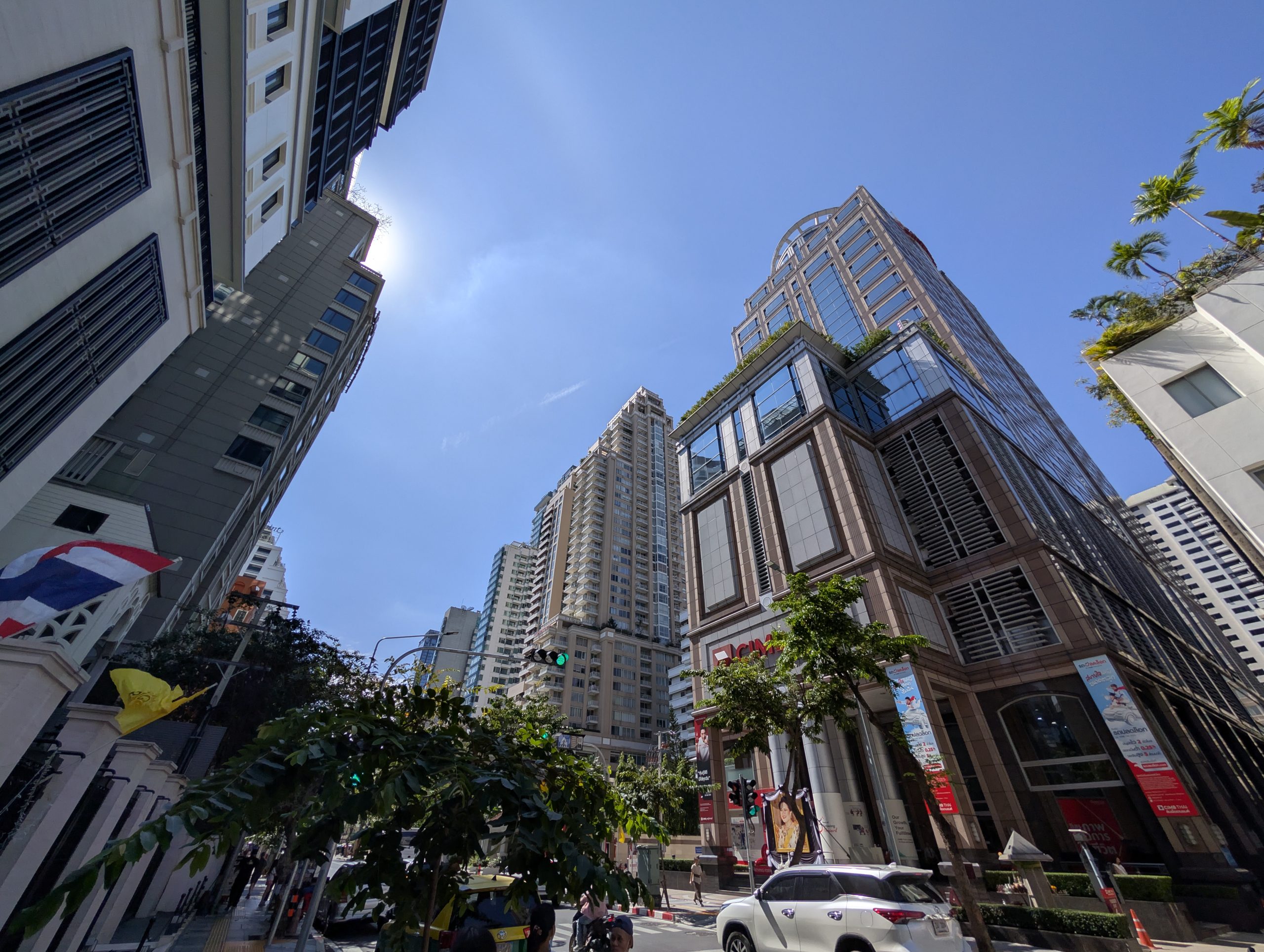
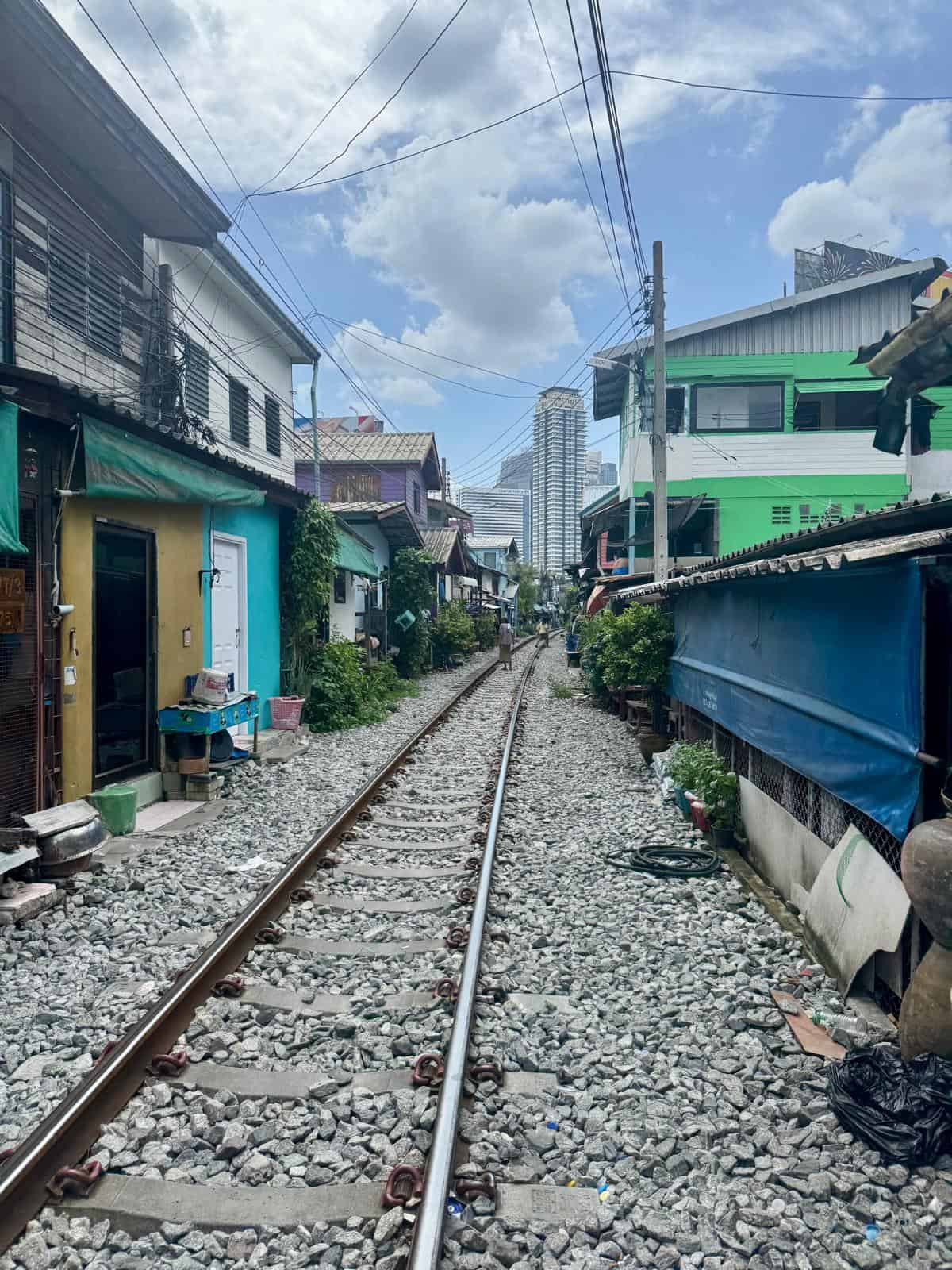
If it’s your first time in Bangkok and you want to keep things simple, this is the safest answer of the eight. Silom is the financial district: by day you see executives and offices, and at night it fills up with food stalls and nightlife. It’s clean, it’s safe and it’s connected to everything, because the BTS and the MRT cross right here. And Lumphini Park is a short walk away, which after a day on the concrete feels better than you’d expect.
Our longest stay in Bangkok was in this area, with one caveat worth spelling out: we slept in Sathorn, which is right next to Silom but isn’t the same thing. Five nights at the Evergreen Laurel Hotel, on North Sathorn Road, in July 2025. It’s a beautiful hotel with a pool, a gym and good food, and it’s a five-star.
And here’s the figure, because without it “good price” means nothing: we paid about $177 for the five nights with breakfast, which works out to about $35 a night. It’s one of the cheapest nightly rates we’ve had in Bangkok, and the one with the most stars. Keep that number in mind, because further down you’ll compare it with the airport resort, and the comparison will surprise you.
The plan we followed from here is the one we’d repeat if we came back with two or three days: a couple of days seeing the city, a walk in Lumphini, a massage and off to the plane. For exactly that, this area is unbeatable. The only downside is the traffic on the avenue at rush hour, and you already know the fix: the BTS is right up there.
A heads-up about the Evergreen Laurel, in case you go looking for it. At the time of writing the hotel is still open, but it no longer appears on Booking: not through its old link and not when you search for it by name. It’s still listed on other booking sites and on its own website. We mention it because the price we paid is the best argument for this area, and we don’t want you wasting half an hour hunting for a link that doesn’t exist.
Why stay here
- The best connections in Bangkok: the BTS and the MRT cross here
- The best value: we stayed in a five-star for under $36 a night
- Lumphini Park a short walk away when you need a break from the concrete
- Clean, safe and easy if it’s your first time
We recommend this area if you’re coming for two or three days and want to keep things simple.
Where to sleep in Silom and Sathorn
We’ve filtered the hotels so the good ones come up first. If in doubt, stay within five minutes of Sala Daeng, Chong Nonsi or Lumphini.
See hotels in Silom and SathornWorth your time around here
- Lumphini Park: Bangkok’s green lung, with a lake, rowing boats and monitor lizards a meter and a half long.
- Patpong: the night market and the area’s nightlife. Haggle, and haggle hard.
Riverside, the Chao Phraya River
- Price$$$
- TransportBoat and the BTS Gold Line
- NightlifeQuiet, mostly in the hotels
- Our nightsNone. Explored on foot only
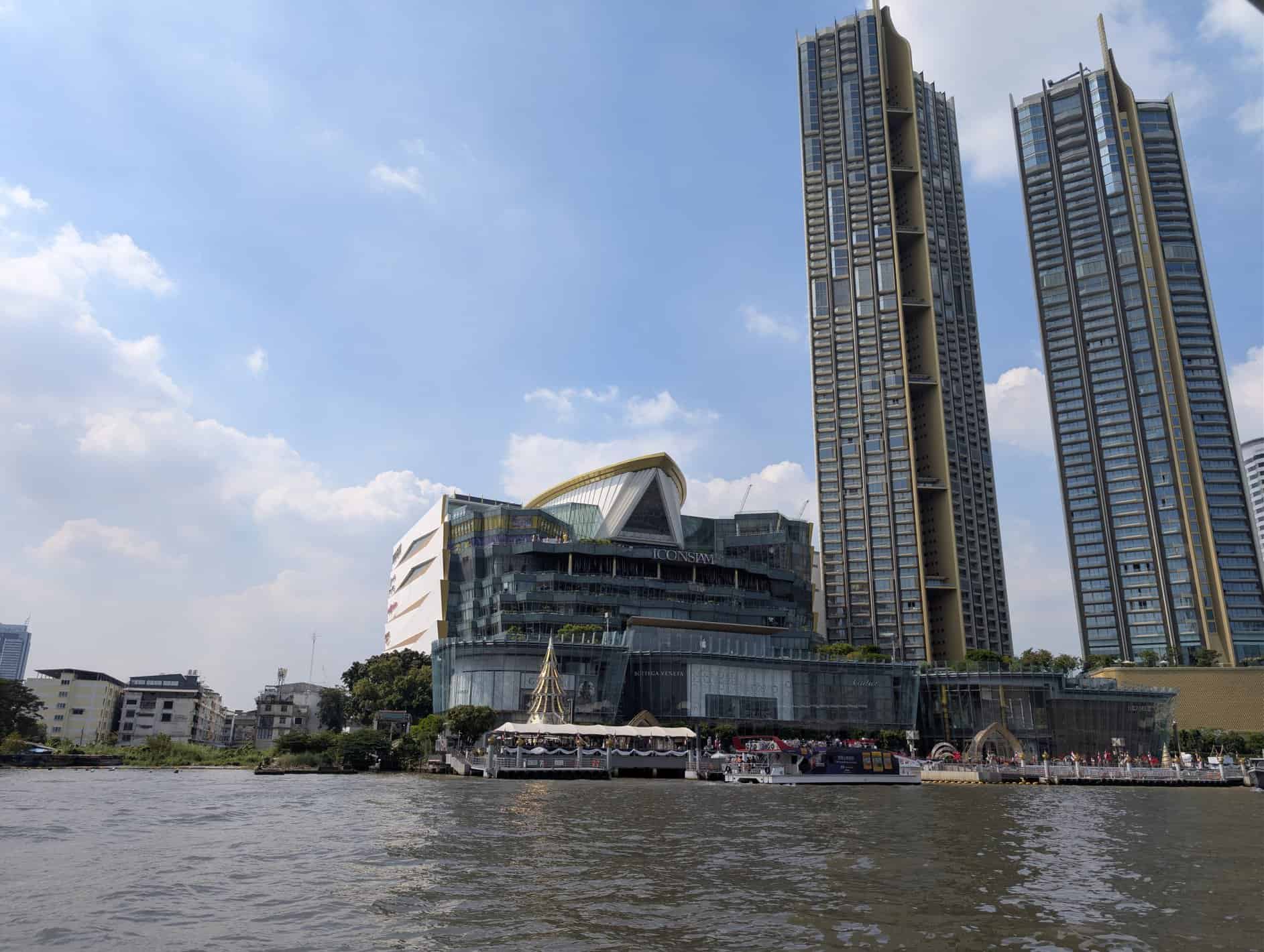
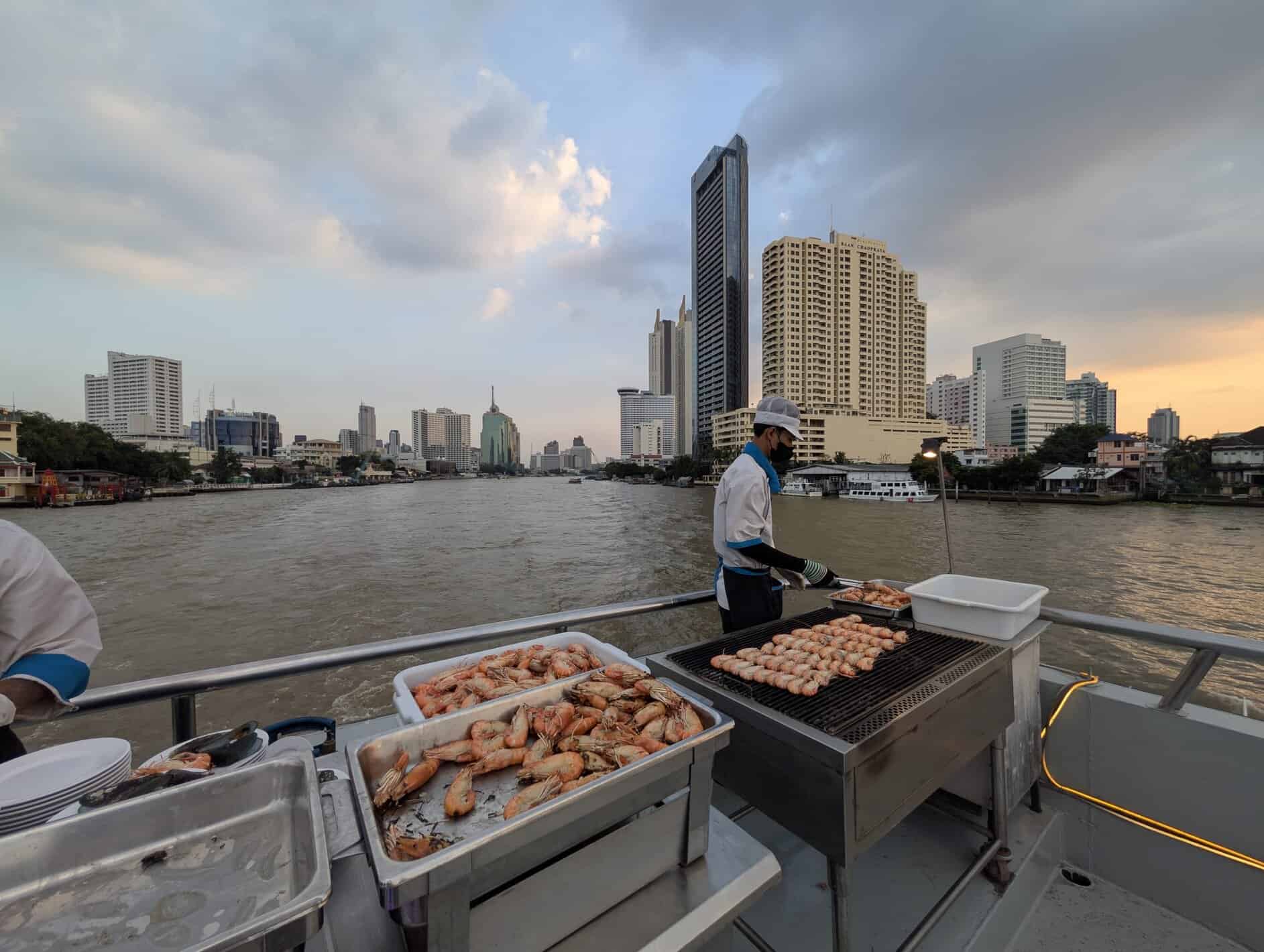
We haven’t slept here, and we’d rather say so. Victor explored the area on foot on both of his trips, and that’s where the photos and what follows come from, but neither of us has spent a night in a riverside hotel. When we do, we’ll update this section.
If you’re after the postcard shot of Bangkok, it’s here. Lit-up skyscrapers reflected in the water, a river breeze, which in this heat is no small thing, and boats coming and going all day. It’s the most romantic and most upscale area of the city, and also the most expensive by far.
But the river is very long and not all of it is the same, and that’s the key point of this section. The good stretch is the one around ICONSIAM: right next to you are Bangkok’s most spectacular mall, the BTS Gold Line and the boats, which work like a bus line with stops all along the river. If your budget allows and it’s a special trip, this part is the winner.
The other stretch is a different story, and you’ll find it under the areas to avoid, at the end. A preview: from Memorial Bridge toward Wat Arun, Victor’s experience was bad and we don’t recommend sleeping there.
Why stay here
- The views and the river breeze, which no other area has
- The boats are real transport, not a tourist attraction
- ICONSIAM next door, the most spectacular mall in the city
- Bangkok’s best hotels are on this bank
We recommend this area if it’s a special trip and your budget allows it.
Where to sleep in Riverside
We’ve filtered the hotels so the good ones come up first. Stay on the stretch around ICONSIAM and Sathorn Pier: beyond it, the river stops being an advantage.
See hotels in RiversideWorth your time around here
- ICONSIAM: the riverside mall, with its indoor street food floor.
- Sathorn Pier: where you catch the boats that run up and down the river.
Old Town, Khao San and Rambuttri
- Price$
- TransportNo BTS or MRT. Boat, taxi or Grab
- NightlifeAs much as you want, 24 hours a day
- Our nights3
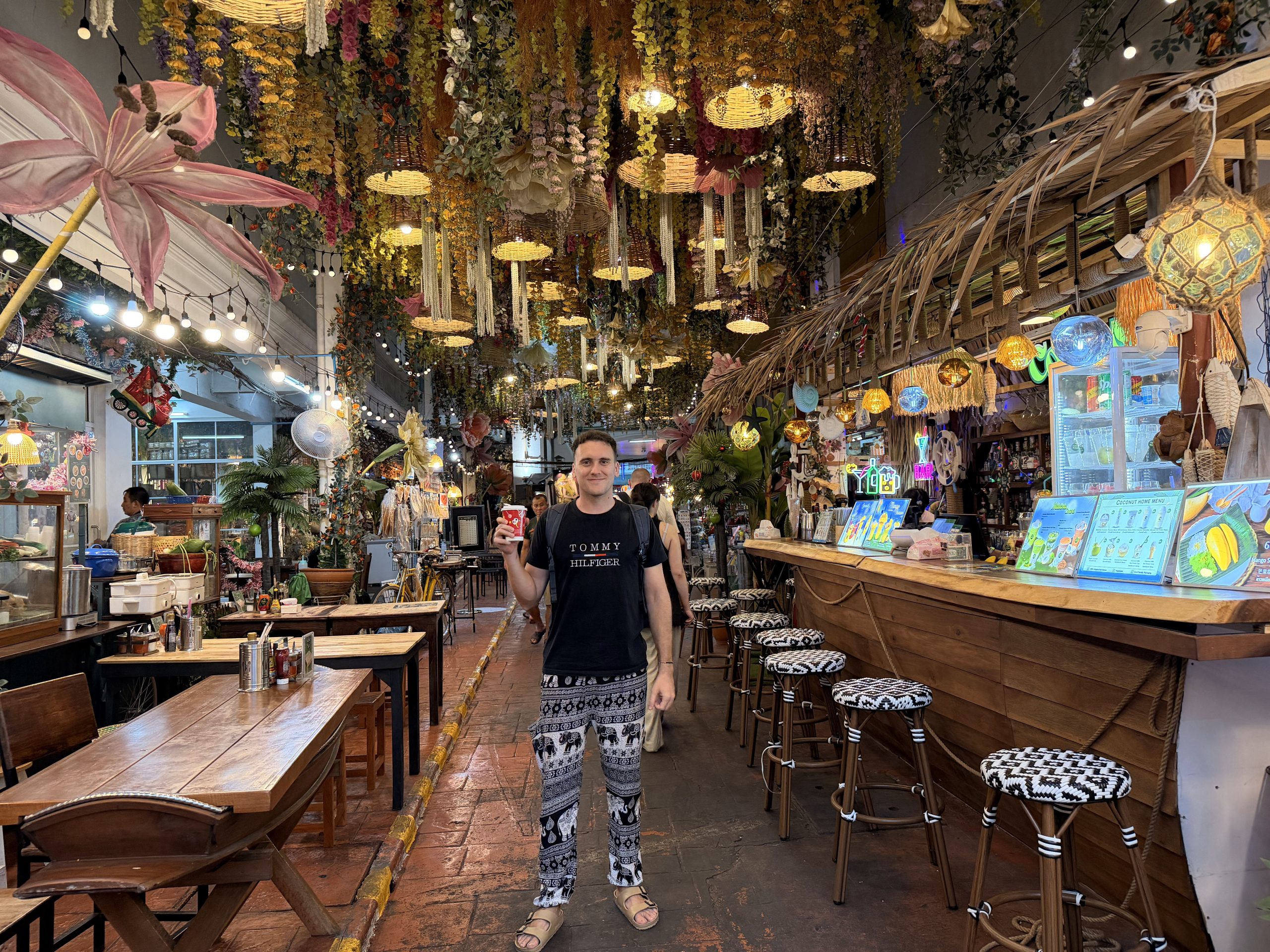
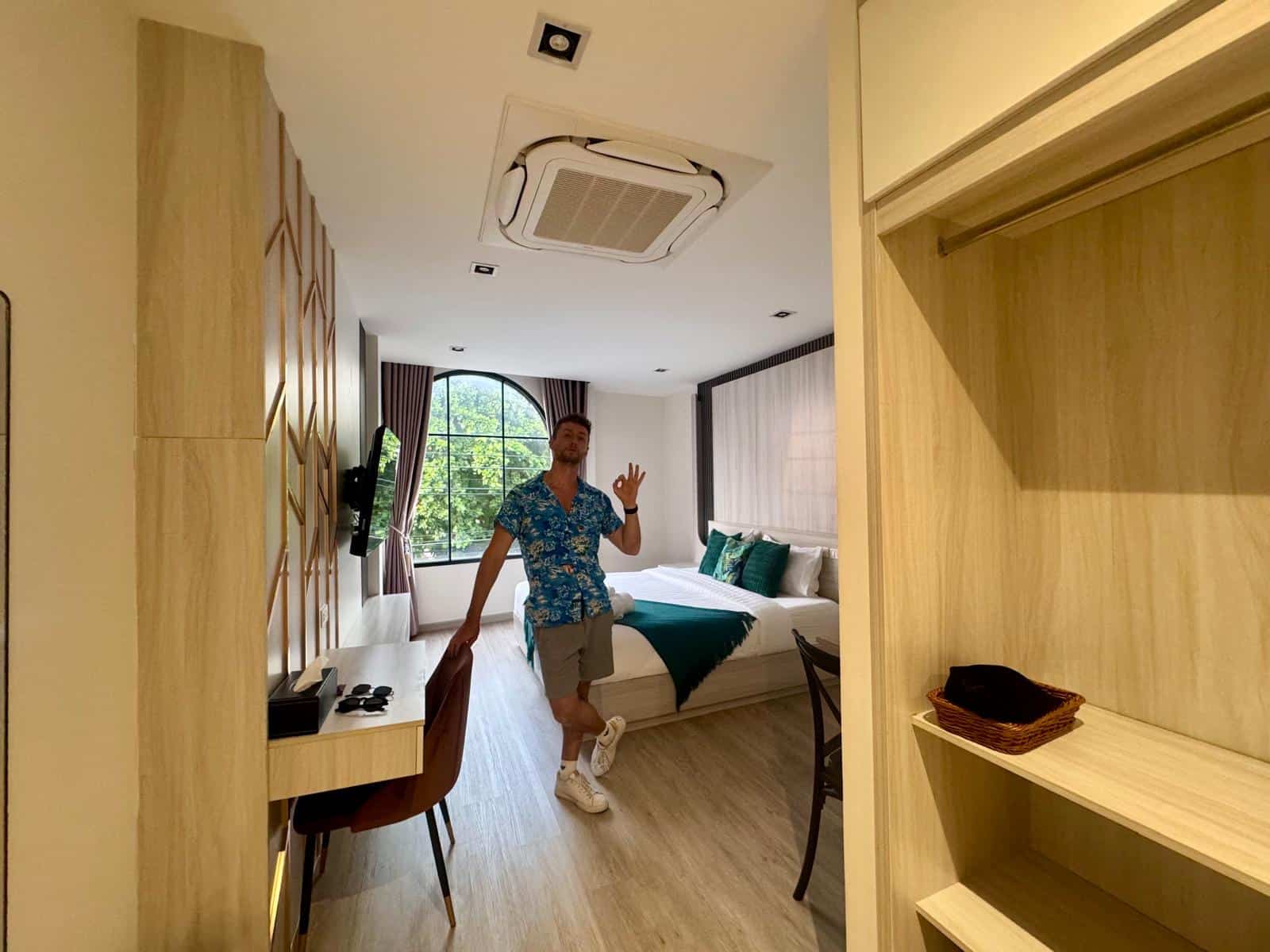
This is where backpacker travel in Southeast Asia started, and you can still tell. Khao San Road is a party at all hours, with buckets of booze, deafening music and young people from all over the world. The real advantage of this area, though, isn’t that: it’s that you can walk to the Grand Palace, Wat Pho and the National Museum, which in a city like Bangkok is worth far more than it sounds.
We spent three nights here in August 2026 at the Diff Apartel in Banglamphu, on Phra Sumen Road, just around the corner from the chaos. And here we have to disagree with almost every guide you’ll read. They all tell you Khao San is impossible to sleep in and that the only solution is Soi Rambuttri, the next street over, which is quieter, has trees and fairy lights and is two minutes away. Rambuttri really is a great option, but saying you can’t sleep in Khao San is an exaggeration: there are parts of the neighborhood itself where you can have a quiet drink and get some rest. We did.
What is true, and this is the important warning, is the transport: neither the BTS nor the metro reaches this area. To get anywhere else you depend on the river boats, a bus or a Grab, and you already know what the traffic is like. From the airport we took the Airport Rail Link to Phaya Thai and a taxi from there, and that last leg cost us THB 156 (about $4.50) and nineteen minutes.
As a bonus, the location is fantastic for walking: the National Museum is next door and the river is steps away, and from the piers around here you cross by boat to Wat Arun, the Temple of Dawn with its stone guardians. Careful, though, because it’s across the river: you can’t walk there, even if the map makes it look that way.
Why stay here
- The cheapest area of Bangkok, by far
- The big temples and the National Museum, on foot from the hotel
- A real traveler atmosphere, and people to talk to
- Soi Rambuttri, to have the buzz next door and still sleep
We recommend this area if you’re backpacking or coming mainly for the temples, and you don’t mind not having the metro.
Where to sleep in Old Town and Khao San
We’ve filtered the hotels so the good ones come up first. Our advice: Banglamphu or Soi Rambuttri, not Khao San Road itself. You’re a five-minute walk from the chaos and you get to sleep.
See hotels in Old Town and Khao SanWorth your time around here
- Grand Palace: and the warning that comes with it. If a tuk-tuk driver tells you it’s closed today, he’s lying.
- Wat Arun: the Temple of Dawn, across the river by boat. You can rent traditional Thai clothes for the photos.
- National Museum: a short walk away, and one of the few places around here with shade and quiet.
- Soi Rambuttri: the next street over, with trees and outdoor tables, for dinner without having to shout.
Chinatown, Yaowarat
- Price$$
- TransportMRT Wat Mangkon
- NightlifeNoisy until late
- Our nightsNone. Explored on foot only
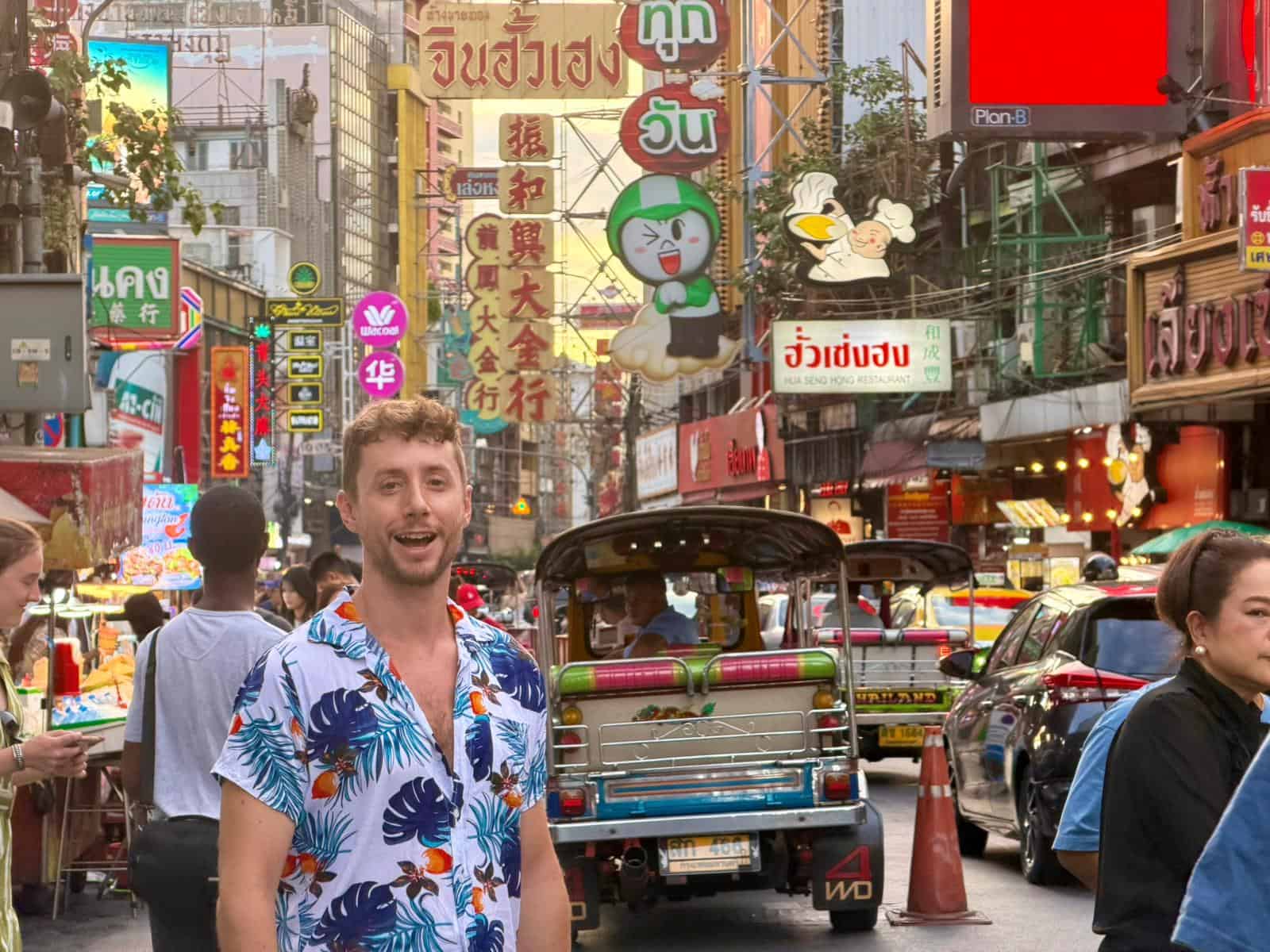
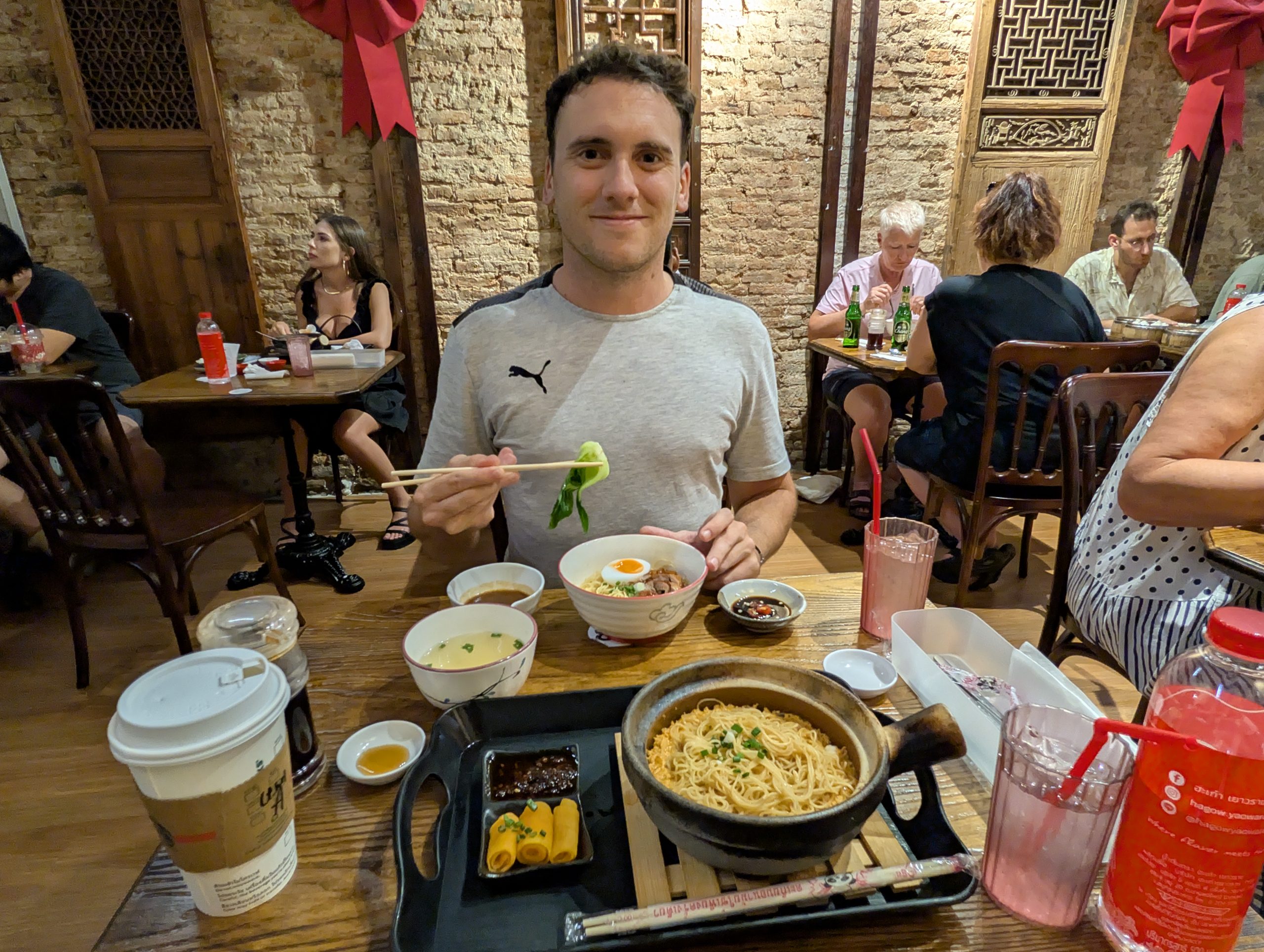
We haven’t slept here either. We’ve both explored it thoroughly on foot and the photos are ours, but neither of us has spent a night in Yaowarat. We mention it because it changes what we can tell you: about the atmosphere, yes; about the hotels, no.
Chinatown is Bangkok’s most authentic, loudest and most delicious area. Neon signs in Chinese, steaming food stalls, tuk-tuks dodging cars and a mix of spices and exhaust fumes you won’t forget. It’s total immersion, and you have to come no matter what, even if you sleep somewhere else.
You come here to eat, and that’s the reason anyone would choose to sleep nearby: having the city’s best street stalls and restaurants with decades of history right at the hotel door. If you’re the kind of traveler who plans the trip around food, it makes complete sense.
What you need to know before booking is the obvious part: this is not an area for relaxing. The sidewalks are packed, the noise goes on until late and the chaos never stops. It’s wonderful for three hours and exhausting for three days. Our advice, if it’s your first time in Bangkok, is to come for dinner and sleep somewhere else.
Why stay here
- Bangkok’s best street food, at the hotel door
- The neighborhood with the most character in the city
- Lower prices than in the modern areas
- The MRT has run here since 2019, so you’re no longer cut off
We recommend this area if you plan your trip around food, and not if you’re coming to rest.
Where to sleep in Chinatown
We’ve filtered the hotels so the good ones come up first. Look for a side street away from Yaowarat and close to Wat Mangkon station, because the main avenue won’t let you sleep.
See hotels in ChinatownWorth your time around here
- Yaowarat at night: the neon avenue. Go after seven.
- Thipsamai: the most famous pad thai in Bangkok. There’s a line, and it’s worth it.
Lat Krabang, the resort right next to Suvarnabhumi airport
- Price$$, we paid about $40
- To the airport12 km. 29 min by taxi, or free
- TransportNo BTS or MRT, and you don’t need them here
- Our nights2, on 2 different trips
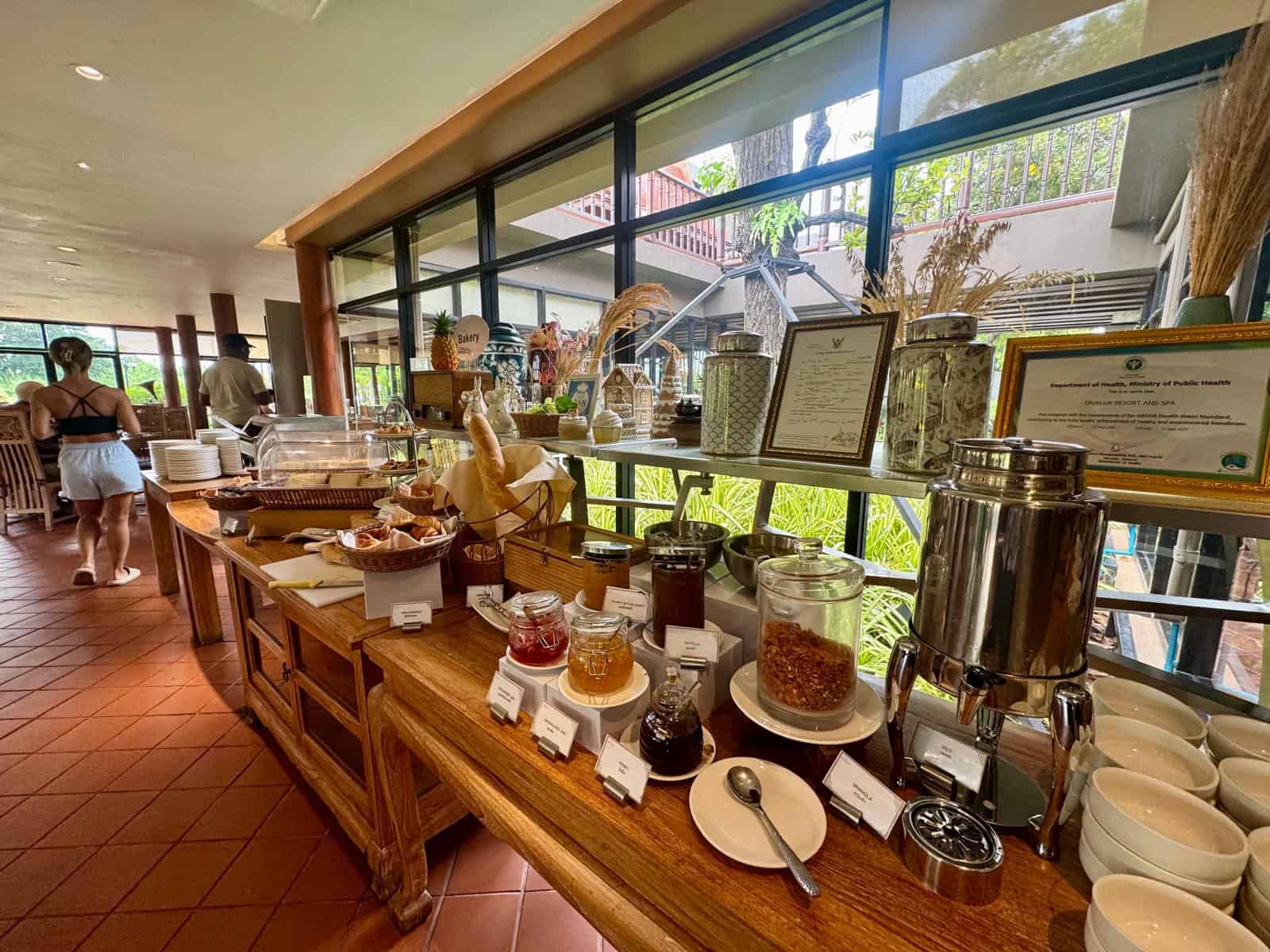
None of the Spanish-language guides that come up first when you search for where to stay in Bangkok include this area. Not one. And yet we’ve used it more than once, because it solves a problem far more people have than you’d think: you land and have another flight the next day, and it makes no sense to sit through an hour of traffic into the center only to make the same trip in reverse twelve hours later.
The reasoning is simple. If you’re coming for three days to see temples, sleeping here is a bad idea, and we say so just as clearly in the areas to avoid. But if what you have is a layover, or the last day before a long-haul flight, what matters is no longer the metro station but how many minutes you are from the check-in desk.
Both times we stayed at the Divalux Resort & Spa, and for different reasons each time. The first time, in October 2025, we were just passing through. The second, in August 2026, was after flying in from Spain: a day and a half here before carrying on to Vietnam, so we didn’t stack another flight on top of a body that was already wrecked. But the use we’re most sold on is a third one: on the way home. We’d rather spend the last day recharging by a pool than reach the plane worn out from walking, which is how most people end up.
It’s a big, quiet resort with pools, a gym, a good breakfast and good food. It feels like a beach resort even though there’s no beach anywhere near, because it’s inland. We paid about $40 one time and about $42 the other, both with breakfast, and it’s worth pausing on that for a second: the five-star in Sathorn we recommend above cost us about $35 a night. In other words, the airport resort isn’t the cheap option, it’s the comfortable one, and anyone who tells you otherwise hasn’t looked at the prices.
As for getting there, here are our numbers. We took a taxi from the terminal to the hotel: THB 199 ($5.69) and twenty-nine minutes. To get back to the airport we used the hotel transfer, which is free and takes twenty to thirty minutes depending on traffic and time of day. It’s the same trip, and one of the two directions costs nothing, so use it on the way in too if you can. Just remember to tell them the time when you book: you can’t turn up at reception at six in the morning expecting a car to leave.
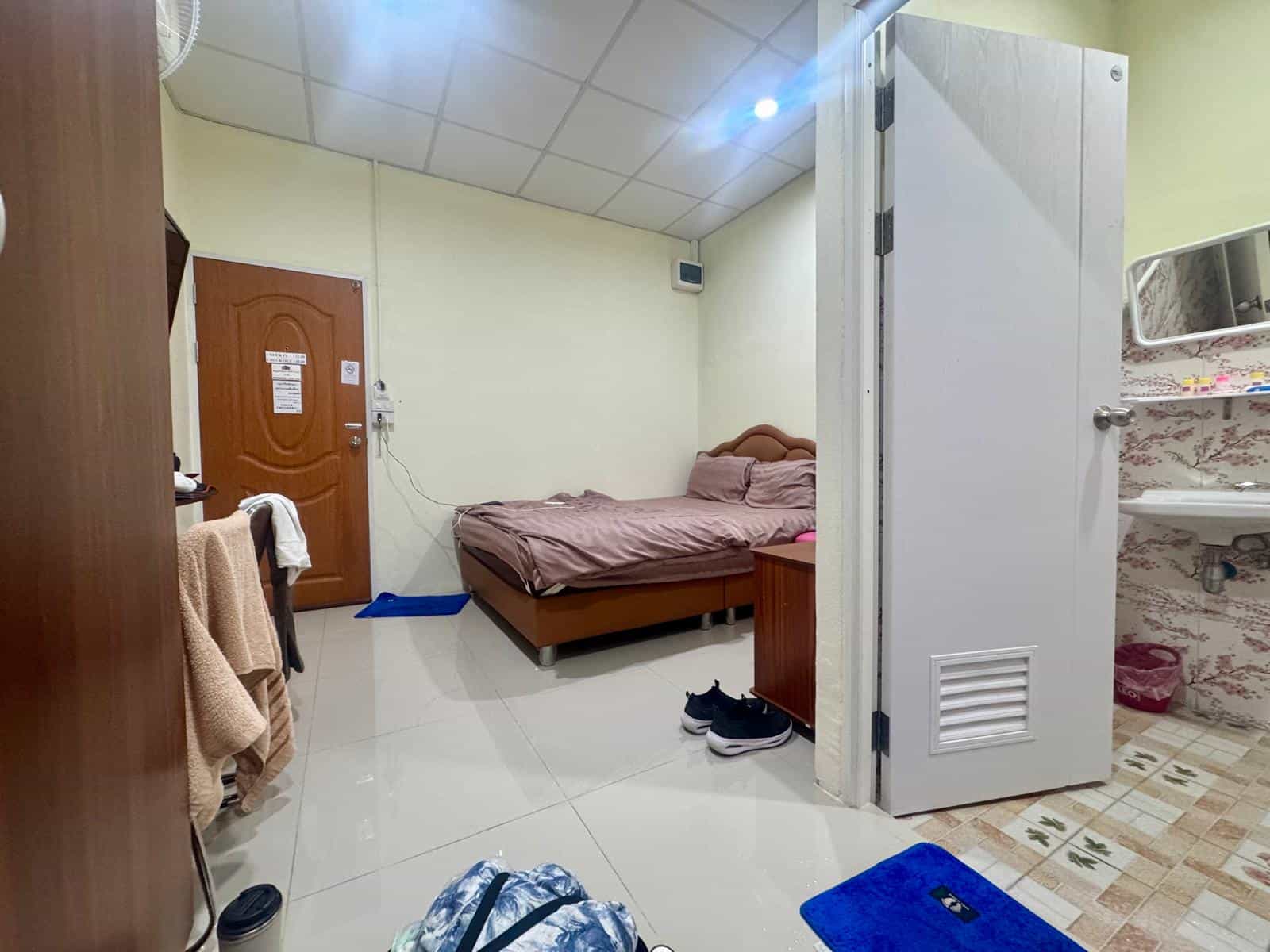
The lesson from our first time. Back then, we booked a place around here for about $23, cheaper than the Divalux, and it was more of a roadside motel. Paying about $12 more gets you a far better night’s sleep, and over a whole trip, $12 is nothing.
One last practical point: you’re isolated. You eat at the hotel or order in on Grab, and lunch or dinner comes to about $9 to $12 per person. It’s fine for what it is, but factor it into your budget, because there won’t be a pad thai stall on the corner here.
And one thing we’d rather say up front: we’ve stayed one night each time, not three. So we can tell you about the resort, but not how a longer stay here feels. It’s one of the few things in Bangkok we still have to try.
Why stay here
- The airport transfer is free and solves the problem outright
- A real resort, with pools, a gym and a good breakfast, for about $40
- Silence, which after a week of Bangkok is more welcome than you’d think
- To finish a long trip without dragging yourself onto the plane
We recommend this area if you have a layover or you’re flying the next day, and only for that.
Where to sleep next to Suvarnabhumi airport
Our place is the Divalux, and the one filter that really matters here is whether the hotel has an airport transfer, and what time it leaves.
See the Divalux Resort & SpaWorth your time around here
- To be honest, nothing. What this area has is the airport and the resort, and that’s exactly why you come. If you’re here to see Bangkok, this isn’t your area, and there are six above that are.
Don Mueang, the other airport
- Price$
- To the airport10 min and THB 161 ($4.60) by Grab
- TransportTo the center, a very long way
- Our nights1
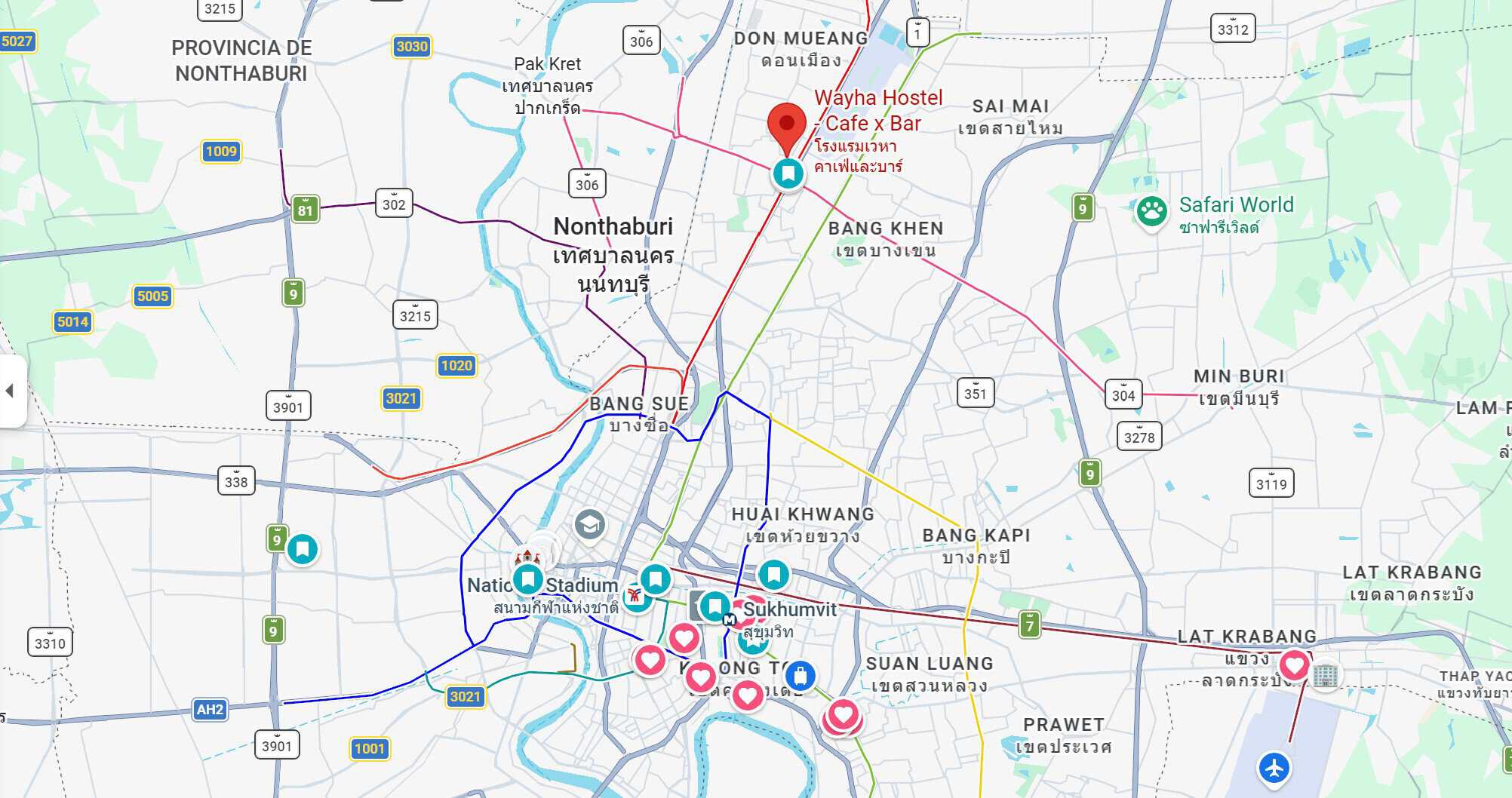
Don Mueang is Bangkok’s old airport and today it’s the one the low-cost airlines use, so if you’re traveling around Southeast Asia, chances are you’ll fly in or out of here. And since DMK is in the north and Suvarnabhumi in the east, the same hotels don’t work for both. That’s why this is an area of its own and not a paragraph in the previous one.
We spent one night at the Wayha Hostel in July 2024, and the logic was exactly that: not going straight from one flight to the next. We arrived, dropped off our bags, went into town to see a bit of the city, had lunch, had dinner and came back to sleep. The next day we were at DMK in ten minutes, and the Grab to the terminal cost us THB 161 (about $4.60).
One detail that changes who this recommendation is for: it’s a hostel, but it has private rooms. If you read “hostel” and picture eight-bed dorms, you’ll decide this isn’t for you, and that would be a mistake, because what you actually get here is a small, cheap hotel with the bonus of being next to the airport.
Let’s be clear about what it isn’t: this area is for flying, not for getting to know Bangkok. Don’t come here to sightsee, because you’re a very long way from the center and there’s nothing around to justify the trip. It’s the answer to one very specific problem, and for that problem it’s the best one we’ve found.
Why stay here
- Ten minutes to the terminal, for THB 161 ($4.60)
- The cheapest option in this whole guide
- It breaks up back-to-back flights and lets you see some of the city during the day
- There are private rooms, not just bunks
We recommend this area if you’re flying out of Don Mueang the next day, and to no one else.
Where to sleep next to Don Mueang
We’ve filtered the hotels so the good ones come up first. The only thing that matters: being less than fifteen minutes from the terminal and able to check in whenever you land.
See hotels near DMK🚫 Where not to stay in Bangkok
The stretch of river from Memorial Bridge to Wat Arun
This one is Victor’s, and it’s the one you’re least likely to read about in other guides. On the map it looks central and charming, because you’re on the river and next to the most photographed temple in the city. The reality is that it’s an ugly area, full of construction work and with nothing interesting to stay in, and his experience there was bad. If you’re after romantic riverside Bangkok, it’s further along the river, in the ICONSIAM area, not here.
Don’t mix the two up: the warning is about not sleeping on that stretch, not about skipping Wat Arun. You have to see the temple, and you cross to it by boat from the old town.
Any hotel without a BTS or MRT station within walking distance
It’s the rule that sums up the whole guide. You’ll see beautiful, dirt-cheap hotels on Booking sitting on some random avenue with no station nearby. Whatever you save on the room, you pay for in traffic jams and sanity, and with two or three days in the city it’s the difference between seeing Bangkok and seeing the back seat of a taxi.
The exception, and the only one, is the old town: the metro doesn’t reach it, but the temples are within walking distance, so the trade-off is worth it.
The airports, if you’re coming to sightsee
Here the two of us give different advice, and we’d rather explain it than hide it. Victor recommends not staying near the airport, and the numbers back him up: from the airport to the center it’s forty-five minutes to an hour depending on traffic, so if you’re coming for three days to see temples you’d be throwing half the trip away on the road.
What Javier adds, having slept next to a Bangkok airport three times, is that this only holds if you’ve come to see the city. If you’re on a layover or it’s your last night before a twelve-hour flight, the distance to the center isn’t a problem; it’s irrelevant. It isn’t a disagreement: they’re two different trips, and that’s exactly what this article is about.
From the airport to your bed: what we paid
You won’t find this table in any other guide, and it’s the first thing you need once you’ve picked an area. These are our own trips, with what we paid. The exchange rate we use throughout the article is 35 baht to the dollar.
| Route | How | Price | Time |
|---|---|---|---|
| BKK to Lat Krabang | Taxi | THB 199 ($5.69) | 29 min |
| Lat Krabang to BKK | Hotel transfer | Free | 20 to 30 min |
| BKK to Banglamphu | Airport Rail Link plus taxi | THB 45 + 156 ($5.74) | 24 + 19 min |
| Don Mueang, from the hotel | Grab | THB 161 ($4.60) | 10 min |
Notice one detail in the table, because it settles one of the eight areas: getting to the airport resort cost us THB 199 ($5.69) and getting to the historic center THB 201 ($5.74). Two baht apart, and the resort ride was fourteen minutes shorter.
And an Airport Rail Link trap that almost nobody mentions: the train ends at Phaya Thai and doesn’t reach Khao San or the Grand Palace. We paid THB 45 ($1.29) for the train and THB 156 ($4.46) for the taxi on the last leg. The taxi costs more than three times as much as the train, so if someone tells you “just take the ARL,” they’re only telling you half the story.
You might wonder why you’d pay for a train and a taxi when you could take a taxi straight from the terminal. Because leaving the airport by car is much slower than it looks: Suvarnabhumi is huge, it has several floors, the driver gets lost looking for you and sometimes ends up canceling. We used to take taxis. Now we always leave on the Airport Rail Link, and if the hotel is still far, that’s when we take a taxi. It’s cheaper and quicker.
Frequently asked questions
What’s the best area to stay in Bangkok?
If it’s your first time and you want a single answer, Silom and Sathorn. It’s where the BTS and the MRT cross, Lumphini Park is right there and it’s the best value: our five-star there came to about $35 a night with breakfast. If you’re also planning nights out, Sukhumvit.
How many days do you need to see Bangkok?
With three full days you can see the essentials without rushing: one for temples and the old town, another for shopping and Chinatown, and a third for the river, parks or a nearby day trip. You’ll find it planned hour by hour in what to see in Bangkok in 3 days. With less than two days, ask yourself whether heading into the center is worth it or whether an airport area suits you better.
Where should I sleep if I only have a layover in Bangkok?
Near the airport you’re flying out of, not in the center. If you’re flying from Suvarnabhumi, the Lat Krabang area: we’ve stayed twice at the Divalux, which is 12 km away and has a free transfer. If you’re flying from Don Mueang, a hotel ten minutes from the terminal: we paid THB 161 ($4.60) for the Grab. Either way you’ll have time to head into the city in the afternoon and come back to sleep.
Is it worth staying near the airport in Bangkok?
It depends on one thing only: what you’ve come for. If you’re sightseeing for three days, no, because you’re forty-five minutes to an hour from the center. If you’re on a layover or it’s your last night before a long-haul flight, yes, very much so.
Do hotels in Bangkok ask for a deposit?
Yes, it’s very common, even at the cheap ones. It’s usually THB 1,000 or 2,000 ($29 or $57), and you can pay it in cash or put it on a card. If you go with cash, keep the receipt they give you, because without it you’ll struggle to get it back when you leave.
Khao San or Sukhumvit for a night out?
They’re not the same party and they don’t draw the same crowd. Khao San is backpacker territory: buckets of booze, loud music, young people from all over the world and prices of about $2. Sukhumvit is cocktail bars, rooftops and European prices. If you’re over thirty and don’t want a bunk bed, Sukhumvit. If you’re on a long trip and want to meet people, Khao San.
Is Bangkok safe at night?
Much safer than it looks. You can head back to your hotel in the early hours without feeling unsafe. The real danger is the traffic: look four times before you cross. And the classic scam is the tuk-tuk driver who tells you the Grand Palace is closed today for a ceremony. He’s lying, and he wants to take you to a suit shop.
When is the best time to visit Bangkok?
November to February is the good season: it’s hot but bearable. March to May is hell, with extreme heat and humidity, so if you go in those months, look for a hotel with a pool. June to October is the rainy season, with downpours that come hard and stop, and it’s when hotels are cheapest.

Book with free cancellation and leave us a comment: we’ll tell you whether you’ve picked the right area and hotel.
Leave a comment
Need a hand?
We've stayed here ourselves and experienced it firsthand. If you have any questions, leave a comment below and avoid the typical first-timer mistakes.