How to Get Around Bangkok? The 3 Scams and When Grab Wins
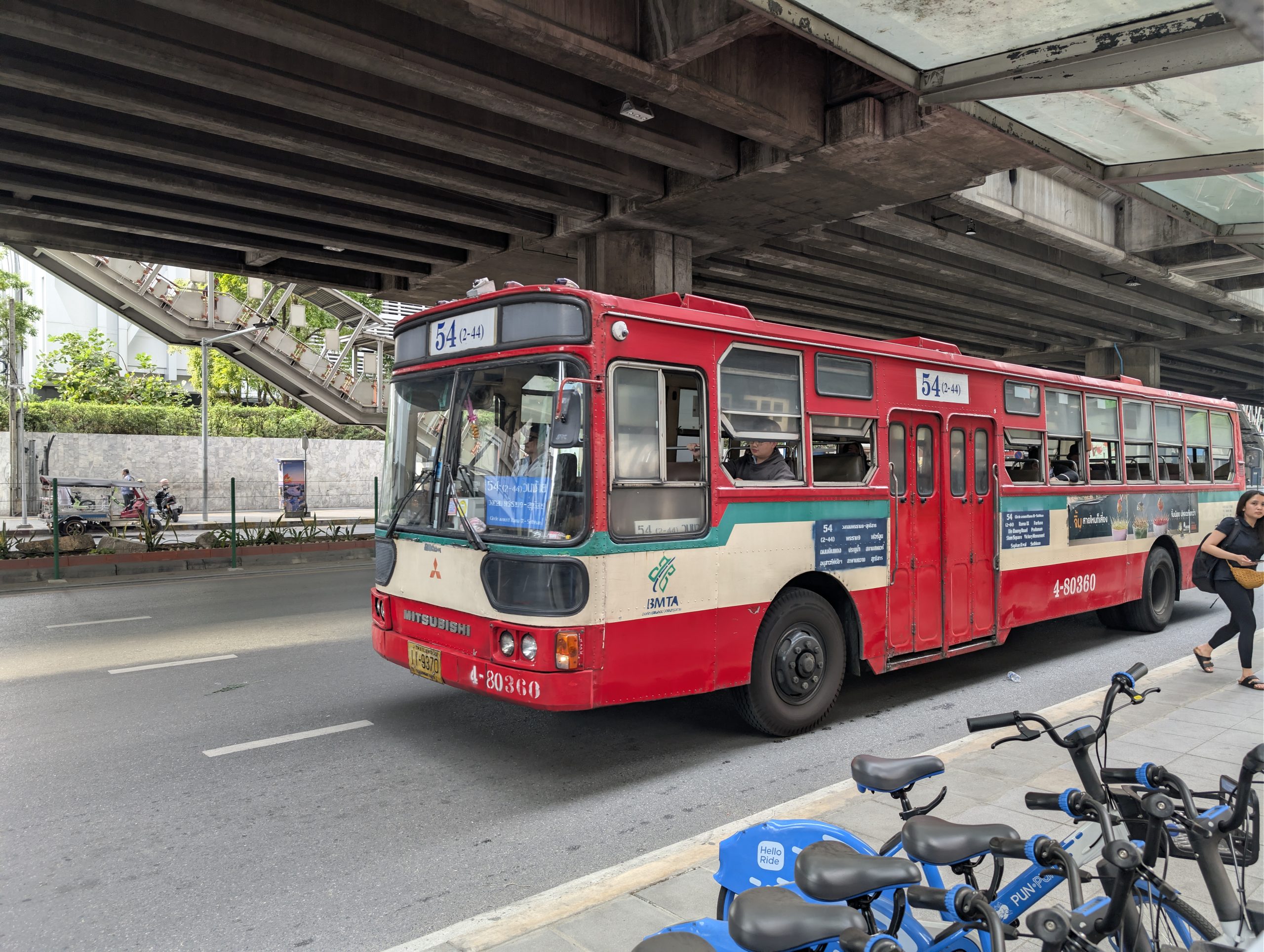
A bus, the BTS overhead and rental bikes by the curb. Bangkok has no shortage of transport: the hard part is picking the right one
🚦 The short version, so you don’t have to scroll: the BTS and the MRT win almost every time, but not always, and knowing when they don’t is what saves the day.
The rule: if the train gets you there in twenty minutes, take the train. If the train says an hour, check the driving time on Google Maps before you decide, because a Grab will often knock twenty minutes off the trip.
Let me get this out of the way first: the hardest thing about Bangkok isn’t the heat, it’s the traffic.
The city is enormous, and getting around it can be a breeze or a real nightmare that wrecks your whole day. On my trips I’ve tried a bit of everything, paid for a few rookie mistakes and taken rides where I honestly feared for my life.
So here’s how to get around fast, safely and cheaply, and along the way I’ll flag the classic scams so nobody takes you for a ride.
1. Grab vs tuk-tuk: what nobody tells you
Everyone lands in Thailand dying to ride a tuk-tuk. My advice: do it once for the photo and the experience, then forget about them as a way of getting around.
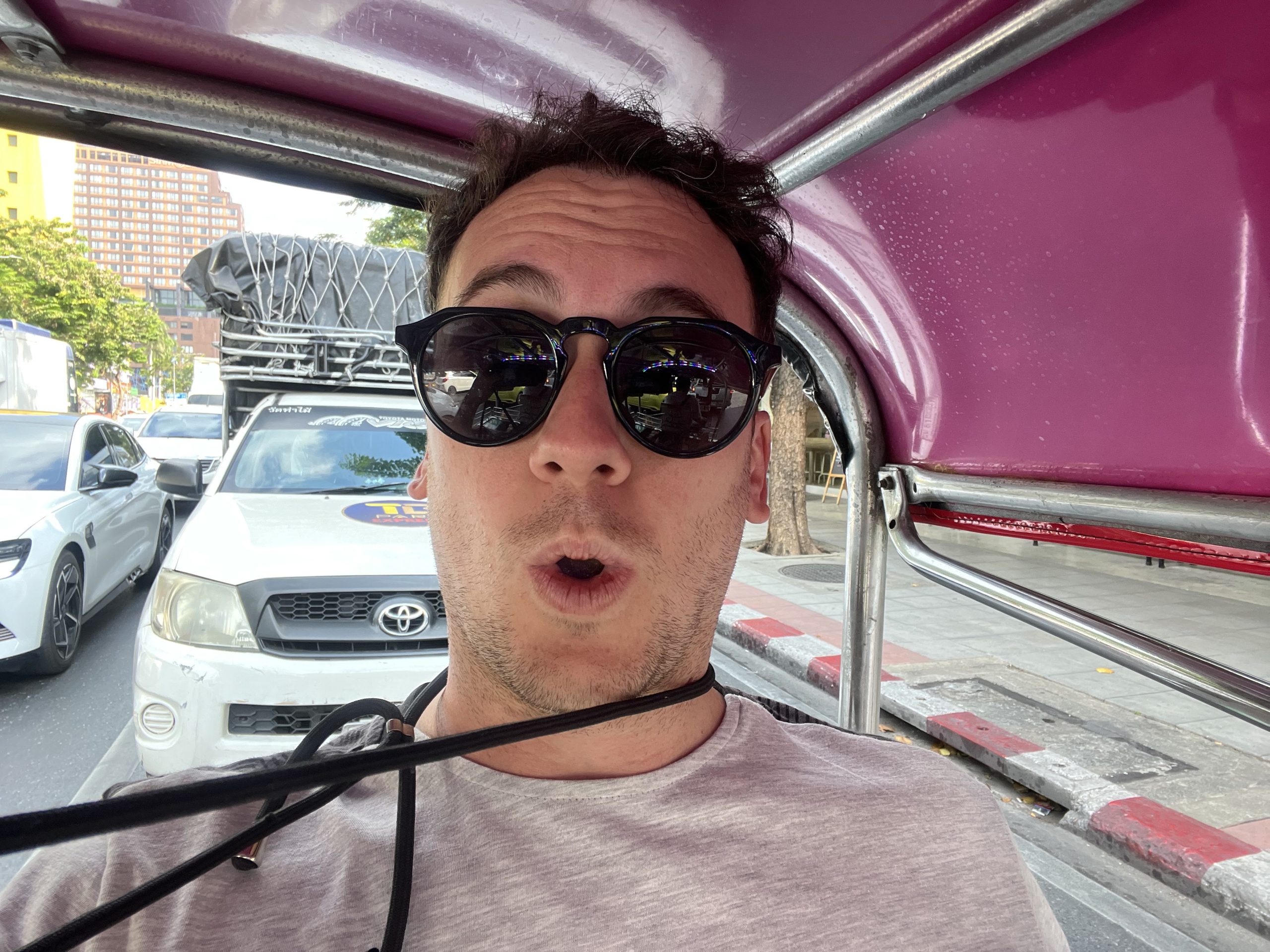
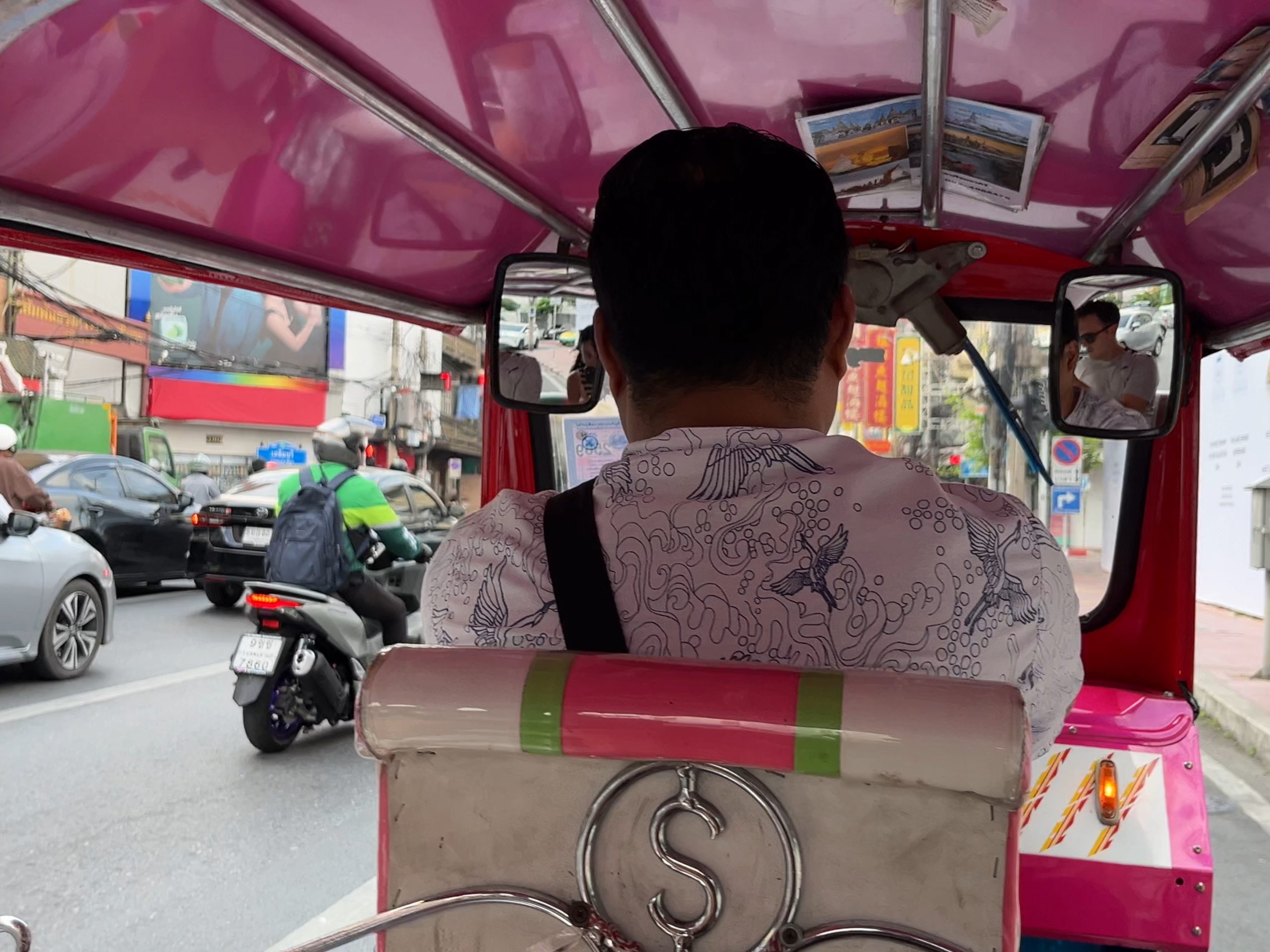
- The tuk-tuk nightmare: as a tourist you’ll always get quoted inflated prices, so you have to haggle hard. Once I got a driver down to THB 200 (about $6), the same as a Grab would have cost me, and I regretted it within a minute. They drive like maniacs, you breathe in all the exhaust fumes from the traffic, and you feel horribly exposed. They’d literally swing into the oncoming lane to overtake. Never again.
- The lifesaver, Grab and Bolt: get the Grab app on your phone before you fly. It works like Uber. You see the price before you book, you ride with air-con and nobody rips you off.
💡 My Grab trick: I pay for everything by card in the app, but paying the driver in cash is a really handy option, especially in your last few days, to use up whatever baht you have left.
Grab delivers food, too. If you drag yourself back to the hotel at 10 p.m. and everything nearby is shut, it’s a godsend.
2. The Skytrain (BTS) and the metro (MRT), your best friends
The Skytrain, Bangkok’s elevated railway, is the best thing the city ever built. It lifts you clean out of the traffic, and the air-con is set to Arctic.
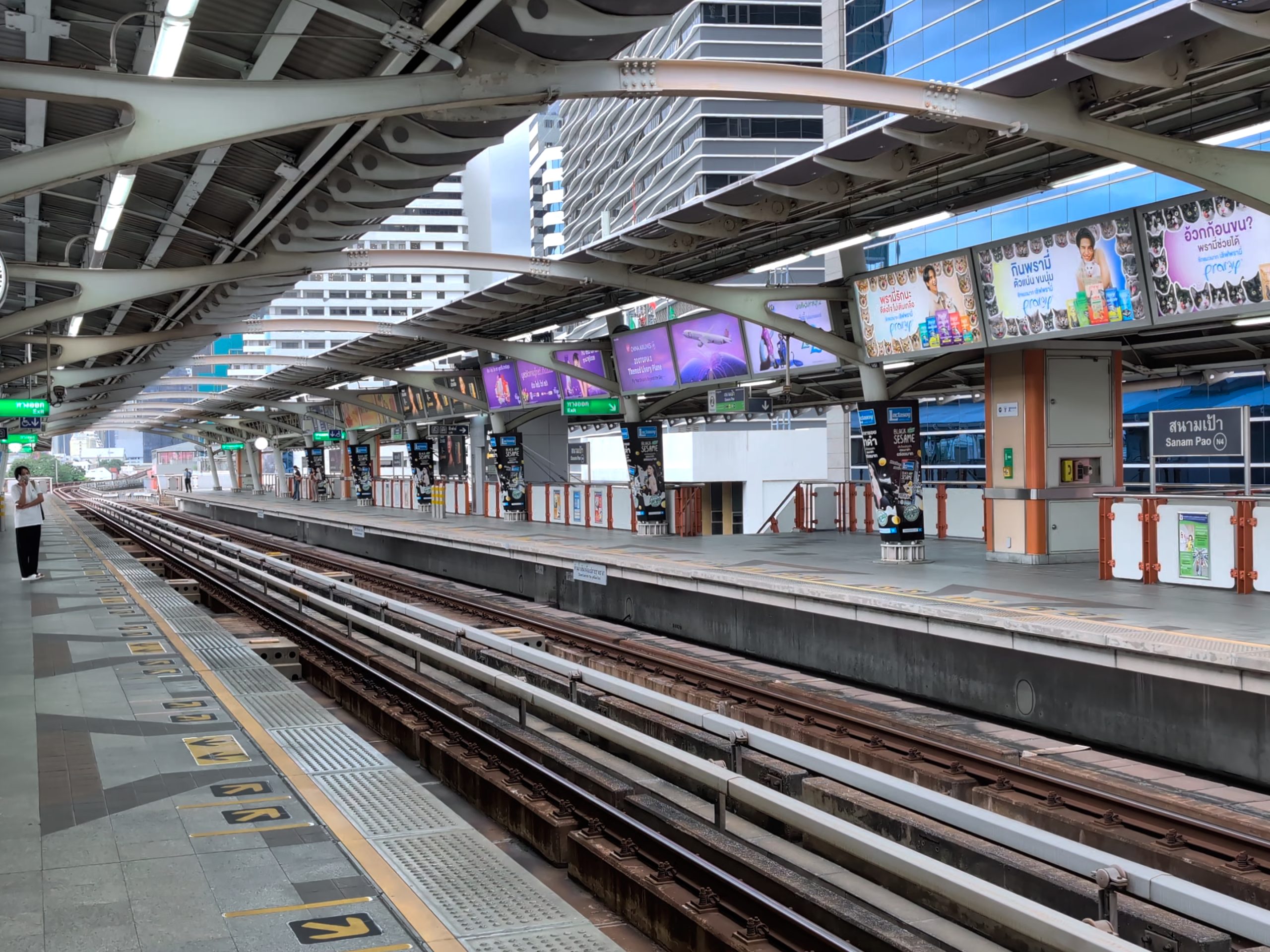
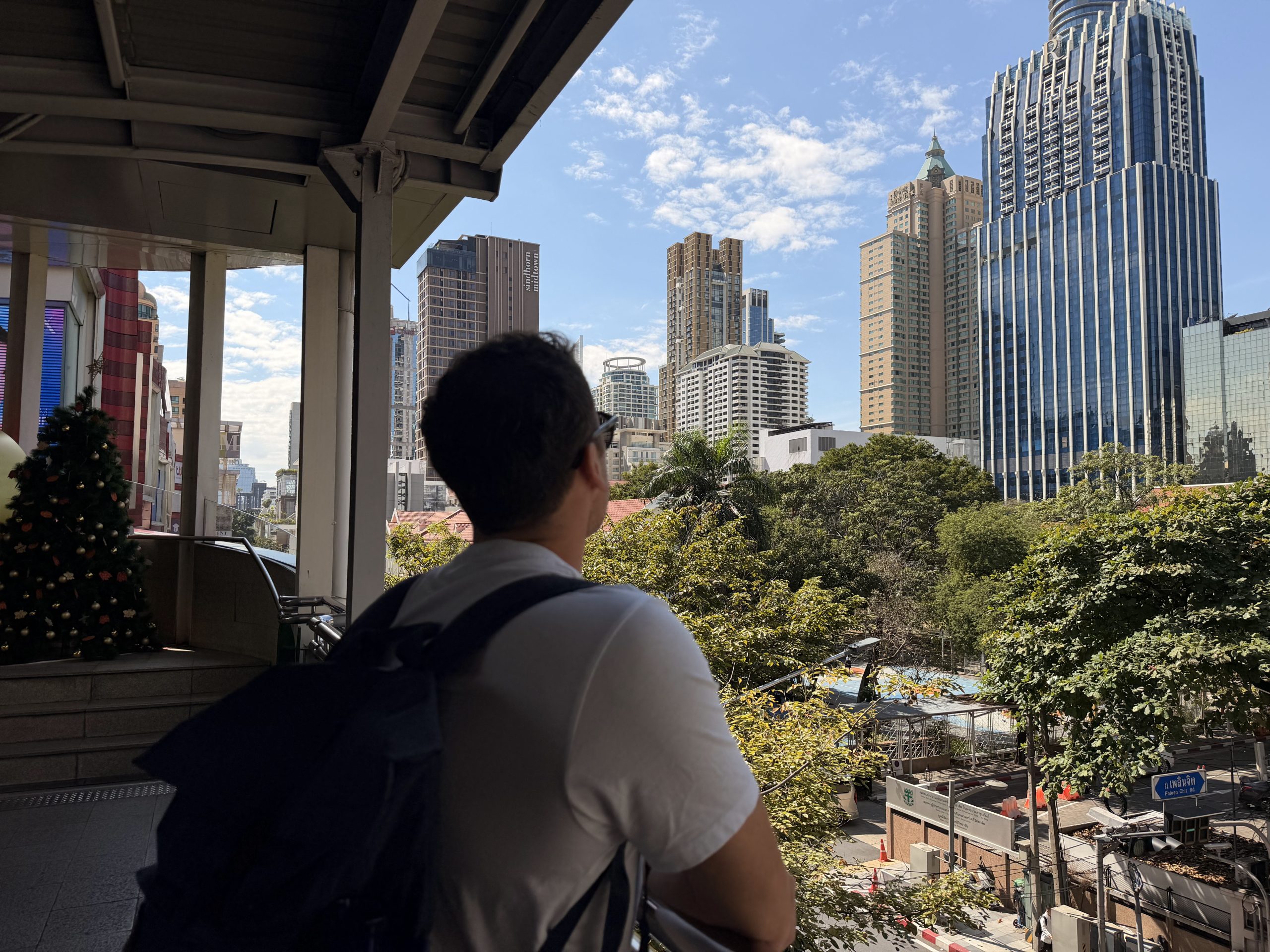
- Single tickets or a Rabbit Card? I skipped the famous top-up card, which needs a THB 100 deposit (about $3). The lines for single tickets usually move fast: the one time I had to wait, it took 5 minutes.
- Watch out when you pay: the ticket machines almost never take cards, so always carry cash, coins included.
- The exception: the Rabbit Card only makes sense if you’re staying next to a really busy station, like Siam or Asok, and you’re losing 10 minutes in line there every day. Otherwise it isn’t worth the bother.
3. My golden rule: the Google Maps trick that saves time
Before I head out of the hotel to any temple or restaurant, this is how I think it through:
- If the BTS goes there direct and takes about 20 minutes: take the train, no second thoughts. It’s the fastest way and it skips all the traffic.
- The trick, when the train says an hour: if you’re going somewhere further out and the BTS route adds up to an hour, because of line changes or walking in the sun, stop and check the driving option on Google Maps.
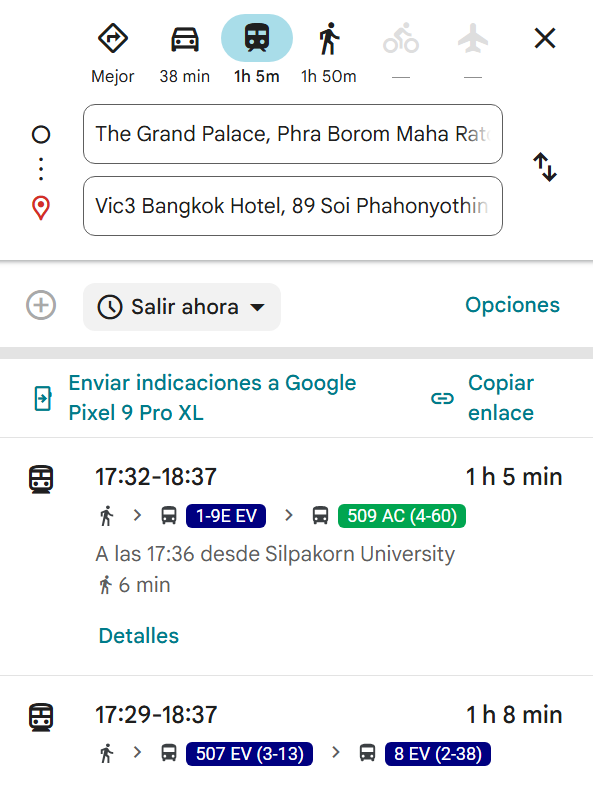
The surprise: depending on the time of day, a Grab often works out far better. Even with some traffic, the car might take 35 or 40 minutes. That’s twenty minutes back in your pocket, no sweating up and down station stairs, and you sit in the back enjoying the air-con.
Don’t assume the metro is always the fastest option.
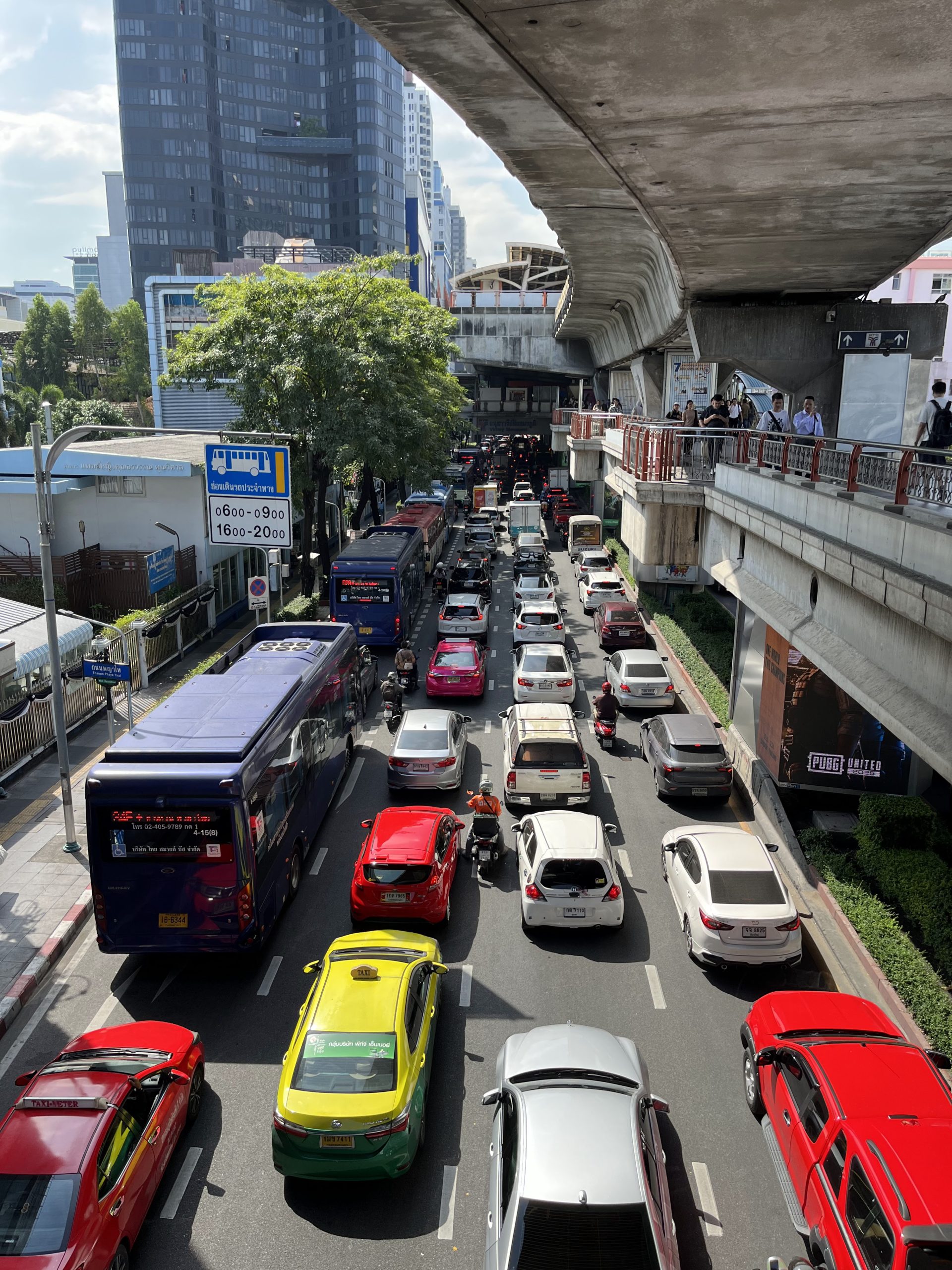
And this is what you skip by riding overhead. I took the photo from a station walkway
4. Getting around by river: the Chao Phraya boats
If you’re off to see Wat Arun or ICONSIAM, the boat is really convenient and dirt cheap. I was expecting chaos and it turned out to be dead easy.
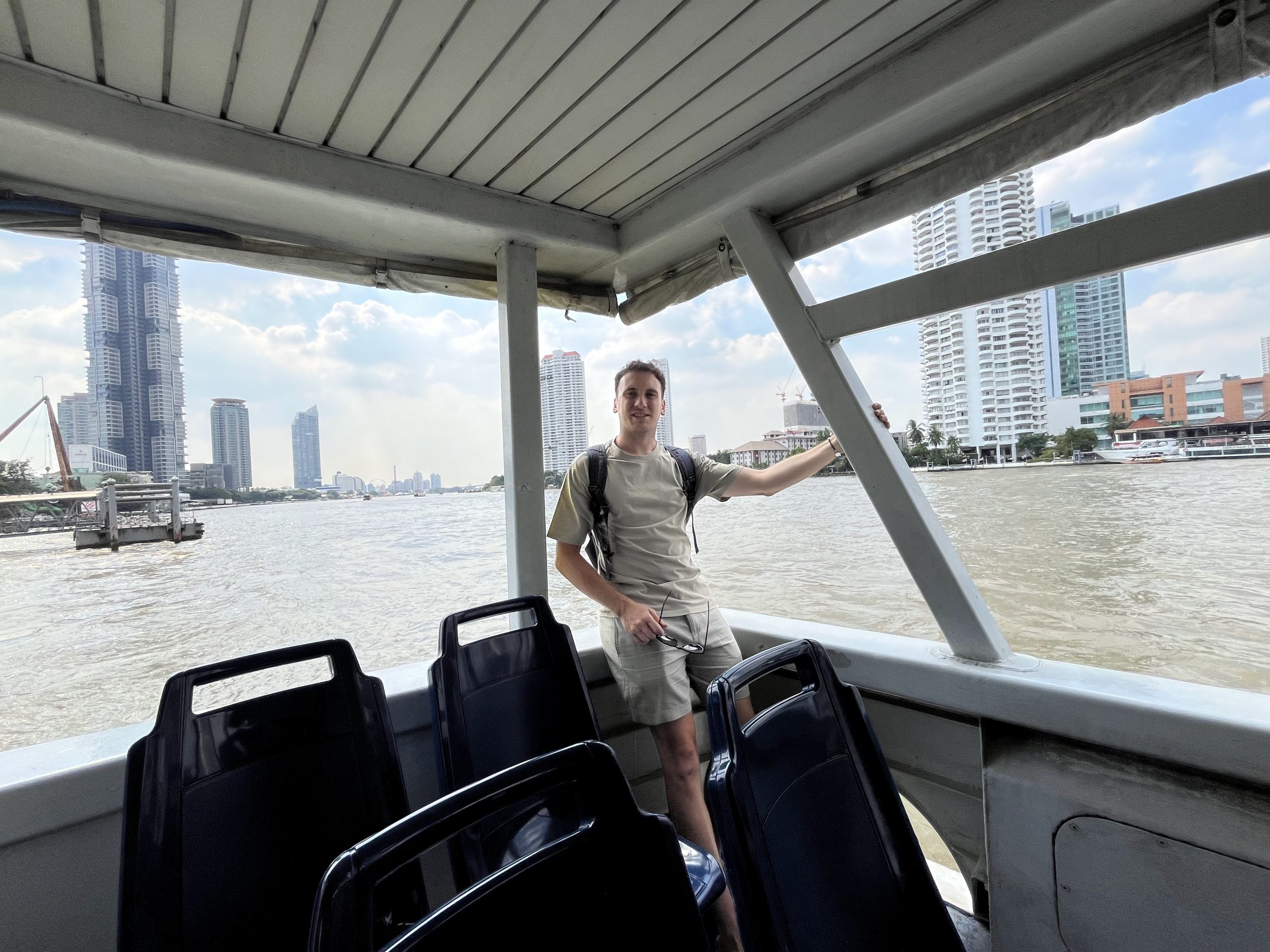
A seat, a breeze and a view. After a day pounding the Bangkok pavement, this feels like a treat
- How it works: head to the pier, buy your ticket in person, always with cash, and ask at the ticket window. They’ll tell you exactly when your boat is due and which line to wait in.
- What it’s like: the rides are short, and so are the waits. Best of all, you get a seat. After a whole day on your feet, sitting down with the river breeze on your face is pure luxury.
5. From Suvarnabhumi airport to downtown: zero stress
Plenty of blogs tell you to take the airport train, the Airport Rail Link, to save a bit of money, and plenty of others tell you to stay away from it. Both answers miss the point, because it comes down to one thing: whether your hotel has a station nearby. It’s the same logic that applies to all of Bangkok, and you’ll find it broken down area by area in the guide to where to stay.
- If your hotel is close to a station, the train wins by a long way. It’s THB 45 per person (about $1.30), and twenty minutes later you’re downtown. A taxi takes quite a bit longer, and before that you have to find the official taxi line, which takes fifteen minutes at the very least because Suvarnabhumi is a maze of floors.
- If your hotel is nowhere near a station, take a Grab. Expect to pay around $12 to $17. It drops you right at your hotel door, and you avoid dragging suitcases up and down stairs and changing lines in Bangkok’s sticky heat.
And if you land wiped out after a twelve-hour flight, that’s all the more reason to take the train. Tired is exactly when waiting for a Grab is hardest to take, because that’s another fifteen minutes of working out whether it’s on the floor above or the floor below, and whether it cancels on you and you have to book again. The train is easy to get to, it’s comfortable and it leaves on schedule.
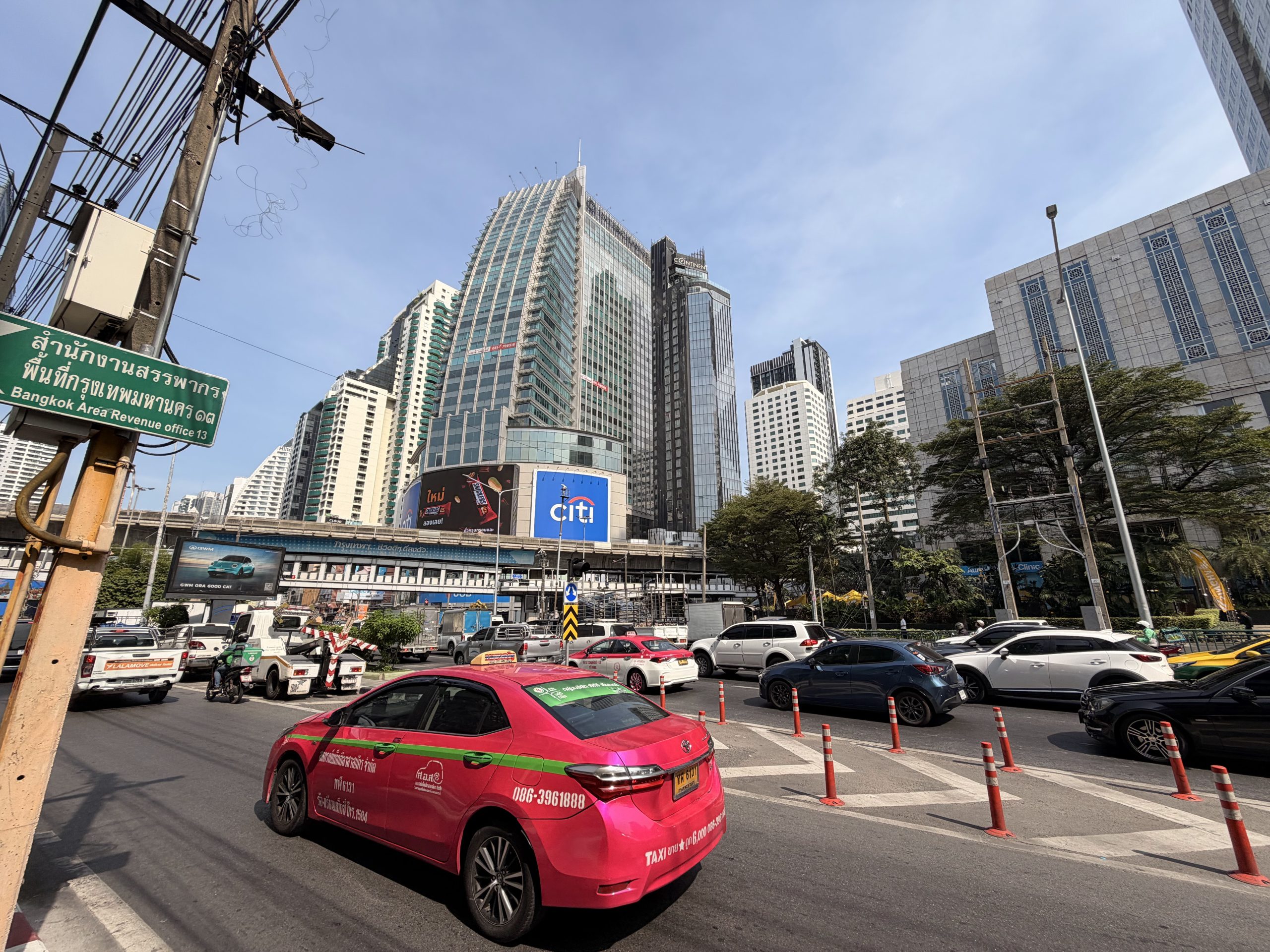
Bangkok taxis come in every color. The color tells you nothing about the fare: what matters is that the driver turns the meter on
The 3 classic Bangkok scams ⚠️
Bangkok is a very safe city and nobody is going to mug you, but people will try to squeeze a few extra baht out of you with a trick or two.
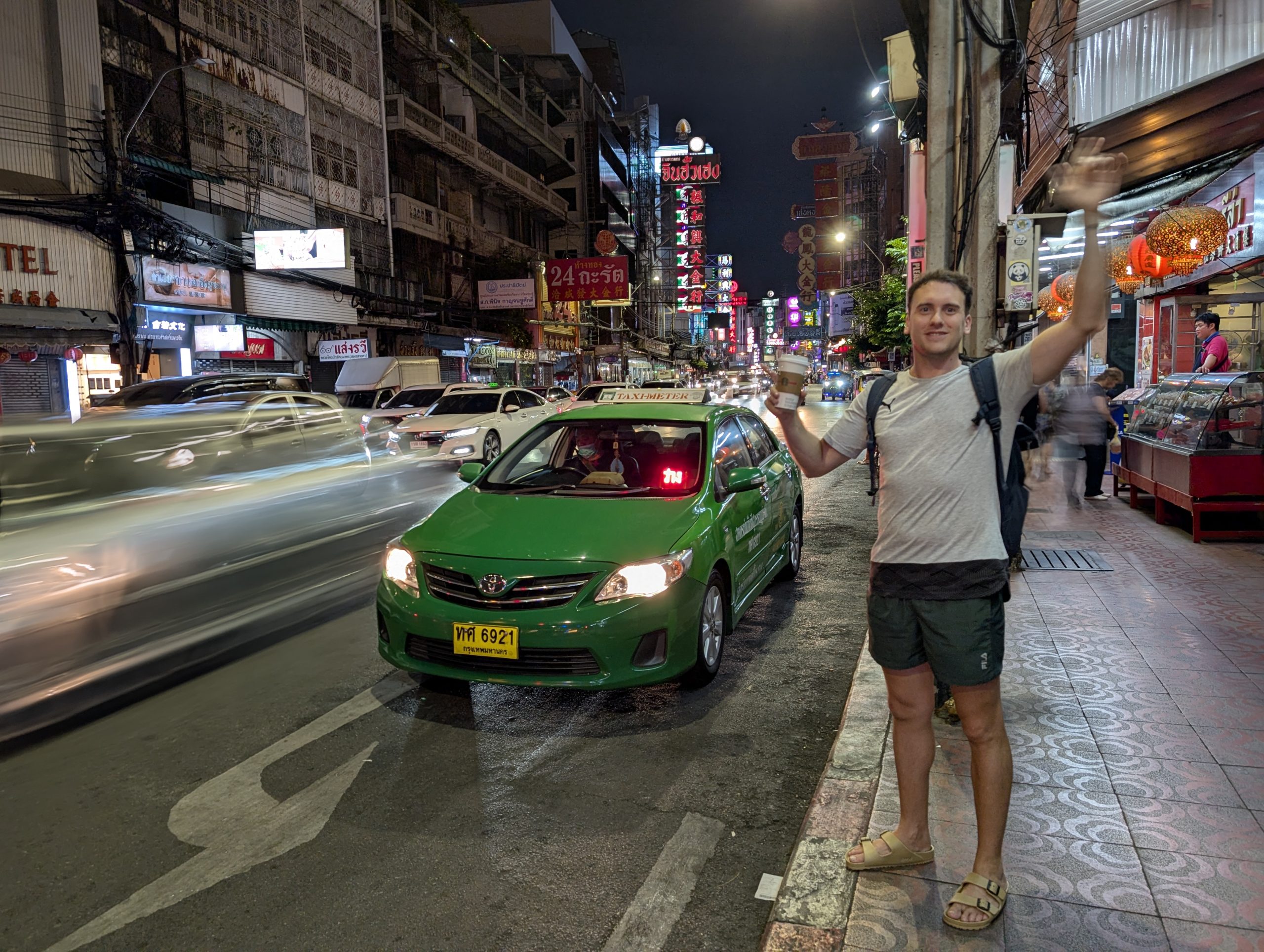
Check the sign on the roof: Taxi Meter. If the driver tells you the meter is broken once you’re in, get out
- “The Grand Palace is closed today.” Scam number one. You’re walking toward the Grand Palace or Wat Pho when a very friendly man, usually a tuk-tuk driver, stops you to say there’s a Buddhist ceremony on and it’s closed for the day. It isn’t. He wants to drive you out to temples further away and stop along the way at shops that pay him a commission. Smile, say thank you and keep walking.
- The THB 20 (about $0.60) tuk-tuk. If a driver offers you a half-hour ride for pocket change, be suspicious. You’ll end up at a custom tailor or a jewelry store, and he won’t let you go until the owner stamps a slip that earns him free fuel.
- The driver who won’t use the meter. When you flag down a cab on the street, get in and say “Meter, please.” If he names a fixed price, which will be three times the normal fare, or tells you the meter is broken, get out and find another one. Or better still, use Grab and skip the argument altogether.
Keep reading before you book
- Where to stay in Bangkok and which areas to avoid, because in Bangkok you don’t choose a neighborhood, you choose a station: the 8 areas and how each one connects
- What to see in Bangkok in 3 days, an itinerary planned so the traffic doesn’t eat it alive
- Where to eat in Bangkok, places to stop for a meal without going out of your way
All my Thailand guides are in the Thailand hub.
Need a hand?
We've stayed here ourselves and experienced it firsthand. If you have any questions, leave a comment below and avoid the typical first-timer mistakes.