Is Vietnam Safe? 41 Nights There and the 3 Things That Actually Happened to Me
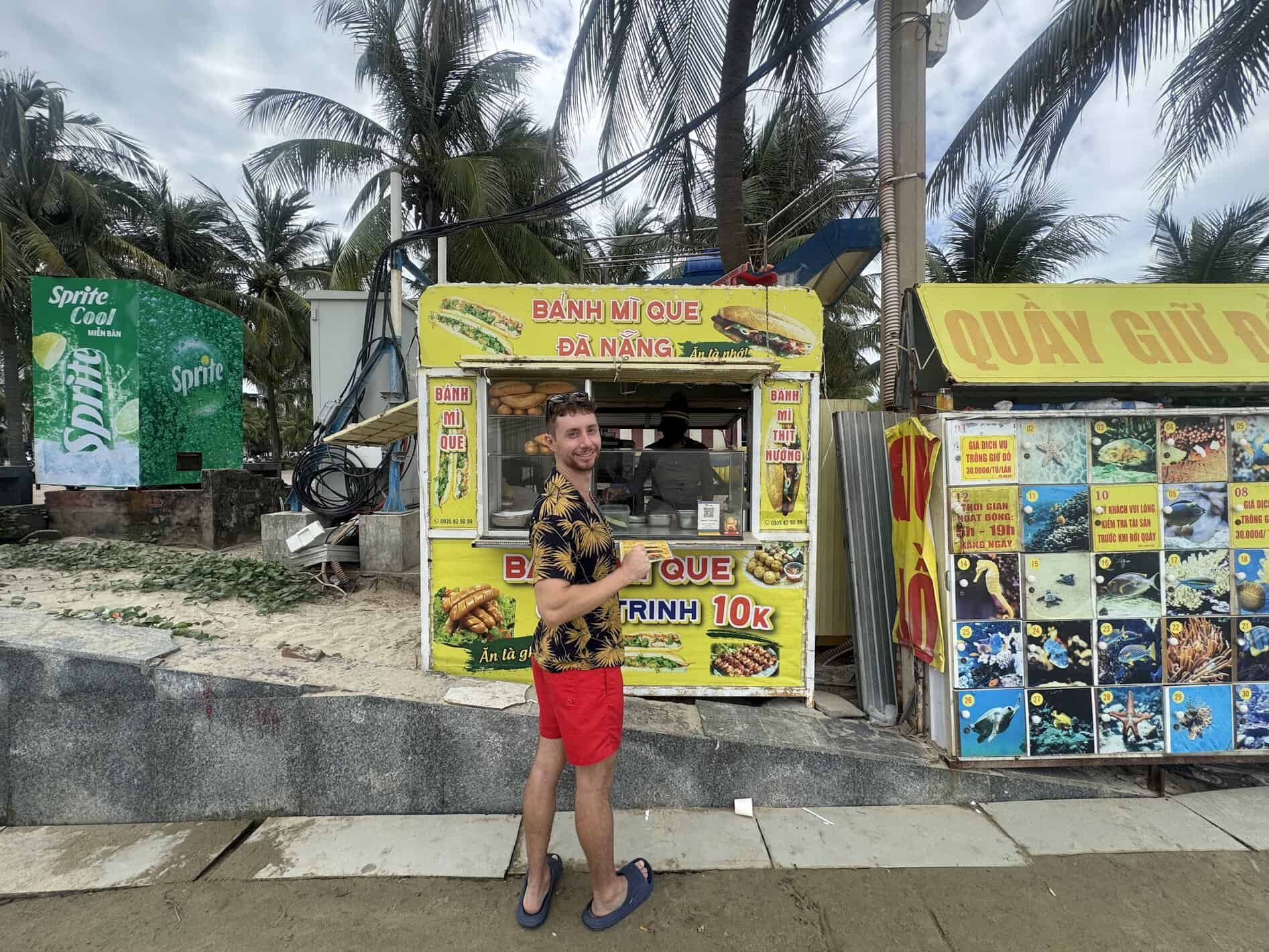
A 10,000 dong bánh mì from a stall right on the beach in Da Nang. Weeks of eating like this and not one problem

Yes, Vietnam is safe. I’ve been three times, with 41 nights in Da Nang alone plus a week in Hoi An, and I’ve walked at night through places where back home in Spain I’d be on my guard.
Nobody has robbed me. Nobody has tried to scam me in any aggressive way. And on the beach, people leave their things on the sand and go for a swim. If you’re here wondering whether you’ll get mugged, the short answer is no, and you can stop reading now.
The long answer is more interesting, because things did happen to me. Three, to be exact. And none of them is what you picture when you type “is Vietnam safe” into Google.
Nobody stole my backpack: I found a perfect 10 review of a hotel, posted under my account, that I had never written.
I wasn’t run over: I found out that with a Spanish license like mine, almost nobody who rents a motorbike there is riding legally.
And I didn’t get food poisoning from street food, which is what everyone worries about. I got it at a Mexican restaurant aimed at tourists.
This isn’t a list of tips copied from other guides. It’s what happened to me, with the dates, the real prices in dong and the screenshots. And also what I don’t know, which will come up more than once, because in an article about safety, saying “I don’t know” is part of the job.
A word on scope, because it feels more honest than pretending I know the whole country: everything I tell you here comes from Da Nang and Hoi An, which is where I’ve slept all those nights.
I haven’t set foot in Hanoi or Ho Chi Minh City, so I won’t talk about either. The motorbike and food parts apply to all of Vietnam, because the law is the same everywhere and so is the common sense. The beach part is about Da Nang.
⚠️ The quick answer: Vietnam is a safe country for travelers, and the real risk isn’t where you’d think.
What can actually ruin your trip, from most to least likely:
- The traffic: risk number one, by a long way. And the one most people shrug off when they rent a motorbike without a valid license.
- The food: not from the street, but from the wrong place. Two days in bed.
- The sea: only one stretch is marked as safe, red flags fly over the rest, and there isn’t a lifeguard every five meters.
- Your data and your cards: the most boring one, and the only one that has actually cost me money, even though I got it back.
The 3 things that happened to me, at a glance
| What happened | Where and when | What it cost me | What I do now |
|---|---|---|---|
| A 10/10 review from my account that I never wrote | Da Nang, August 2024 | Nothing, but the hotel vanished from Booking | I travel with my own data and stay off Wi-Fi networks I don’t know |
| Finding out that a rental doesn’t make you legal | Da Nang, August 2026 | Nothing | Electric only, under 4 kW, with the specs in writing |
| Diarrhea and fever, two days in bed | Hoi An, April 2026 | Nothing, just paracetamol and water | I always carry activated charcoal and a diarrhea kit |
| Card cloned and used 14,000 km away | Bali, not Vietnam | Fully refunded by the bank | I check my transactions every few days while traveling |
The 10/10 review I never wrote
July 2024. Seven nights at a hotel on Đỗ Bá Street in Da Nang, for about $24 a night.
I didn’t like the place: you could hear everything, from the neighbors to the hallway. Nothing serious, just one of those hotels you never go back to and that’s that.
I checked out and, once outside, opened Booking to see its score. I did it precisely because I hadn’t liked it and wanted to know if it was just me.
I saw a review signed by someone called Javier. That Javier was me.
My account showed this, and it still does: “You reviewed Maison Hotel. Aug 1, 2024. 10 Exceptional”. A perfect ten.
I’d handed in my key only minutes earlier. I didn’t write that review, or any other: I don’t usually write reviews on Booking.
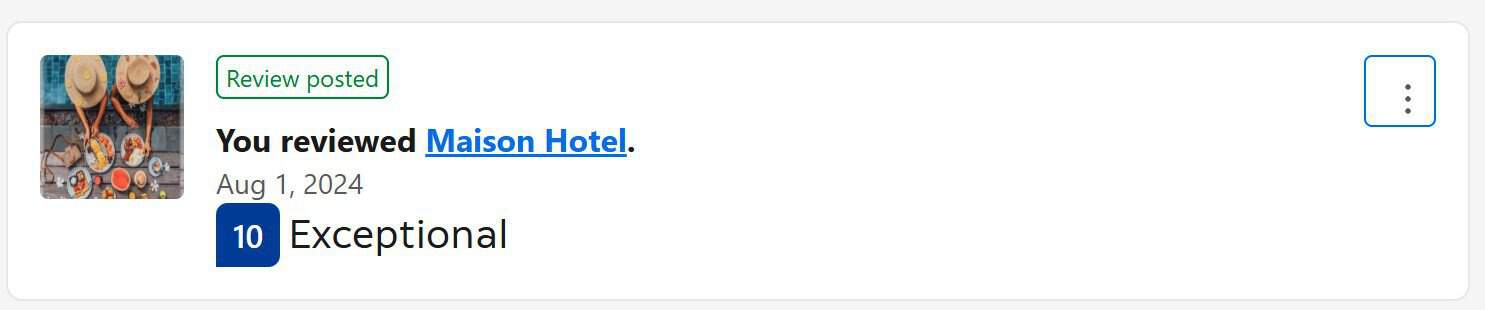
The screenshot from my account. A 10, without a single written word.
Those few minutes matter a lot
Booking sends its “how was your stay?” email about 48 hours after you leave.
If the review was already live minutes after I checked out, it couldn’t have come from that email. The email didn’t exist yet.
What had just happened at that exact moment was something else: the hotel was closing out my stay in its dashboard.
The other detail that changes everything: there’s no text
The review has no comment. It’s a bare score, a 10 and nothing else.
And when I looked at the hotel’s page more carefully, it turned out there were dozens of tens posted on those same days, all just as silent.
That might look minor, but it’s the key to the whole thing. Someone who bothers to rate a hotel usually writes something, even if it’s one line.
A 10 with no text is the fastest thing to submit, it leaves no trace of writing style or language that could give the sender away, and it gives nobody anything to moderate.
Dozens of silent tens in a few days on a single listing aren’t happy guests: they’re an operation.
I reported it, and the hotel disappeared
I wrote to Booking’s customer service to tell them there was a review under my account that I hadn’t written, and that it didn’t look like the only one.
They replied that they were passing the case to the team that investigates reviews. A few days later, the hotel’s listing had disappeared from Booking.
They gave me no explanation and didn’t tell me what they found. But Booking removes listings for review fraud, and that’s not me saying it: it’s their own policy.
And now the honest part: I don’t know how they did it
For a long time I assumed they’d gotten in through the hotel Wi-Fi. It’s the first thing you think of, and it’s what everyone says.
When I sat down to piece it together, that explanation fell apart. The Wi-Fi doesn’t explain all the others.
The dozens of people who showed up giving a 10 on those days weren’t all connected to the same network at the same time.
And even if they had been, a Wi-Fi network, password or not, doesn’t let anyone read what’s inside encrypted traffic. Whoever runs it sees which sites you connect to, not what you do on them.
I went through every other possible way in on my side, and they fell apart one by one. I didn’t show or print my confirmation at reception. Nobody handed me a tablet or a QR code when I left. I didn’t click any link in any message.
And I log into Booking with my Google account, so I don’t even have a Booking password anyone could steal or guess.
The only thing left standing is the property’s side, which is also the only thing that explained the dozens of reviews.
But how they actually got in there, I don’t know, and I’m not going to make it up. I didn’t draw the conclusion: Booking did, by taking the hotel down.
What I did change after that
I never found out how they did it. What I changed was everything else: since then I travel with an eSIM and I don’t connect to Wi-Fi anywhere I don’t know.
I use Holafly almost every time, because the plans are unlimited and I’m not counting megabytes while I’m on Grab, maps and the translator all day.
I won’t tell you an eSIM would have saved me from that, because I don’t know. I’ll tell you something else: since I started carrying my own data, I don’t have to trust anyone’s router.
It’s the same reason I don’t make a transfer or log into my bank on airport or café Wi-Fi. Not because I know someone is listening, but because I have no way of knowing nobody is.
A note on which plan to buy, because almost everyone gets this wrong: I use the Asia plan, not the Vietnam-only one.
People who come out to this side of the world rarely stay in one country. If you’re going to combine Vietnam with Thailand, Cambodia or Indonesia, a regional eSIM works out better than buying a new one at every border, and you don’t have to remember anything when you cross.
Discount code: DESCUBRIENDO. And if you want to know whether the unlimited plan really holds up before you pay for it, I tested it for seven days straight, and the screenshots are in my review of the Holafly eSIM in Vietnam. And if you’re torn between Holafly and Airalo, I paid for both and tested them side by side.
How I do it, in case it helps
I install it at home the day before I fly, on my own Wi-Fi, and I land with data before I’m even off the plane.
That spares me the classic moment of standing in the Da Nang terminal at eleven at night, hunting for an open network to order a Grab. And airport Wi-Fi is exactly the kind of network I’m trying not to use.
And even if you do use it, there’s a practical detail nobody mentions.
A lot of the time your Grab or Bolt is waiting for you in the airport parking lot. And do you know where the terminal Wi-Fi doesn’t reach? The parking lot.
So the moment you land, the Wi-Fi is already making things harder: you order the car inside, walk out to find it and lose your connection right when the driver is calling you.
And the same goes for cafés and coworking spaces
In Da Nang I work from cafés and from a coworking space, and there I have no choice but to share a network with half the neighborhood.
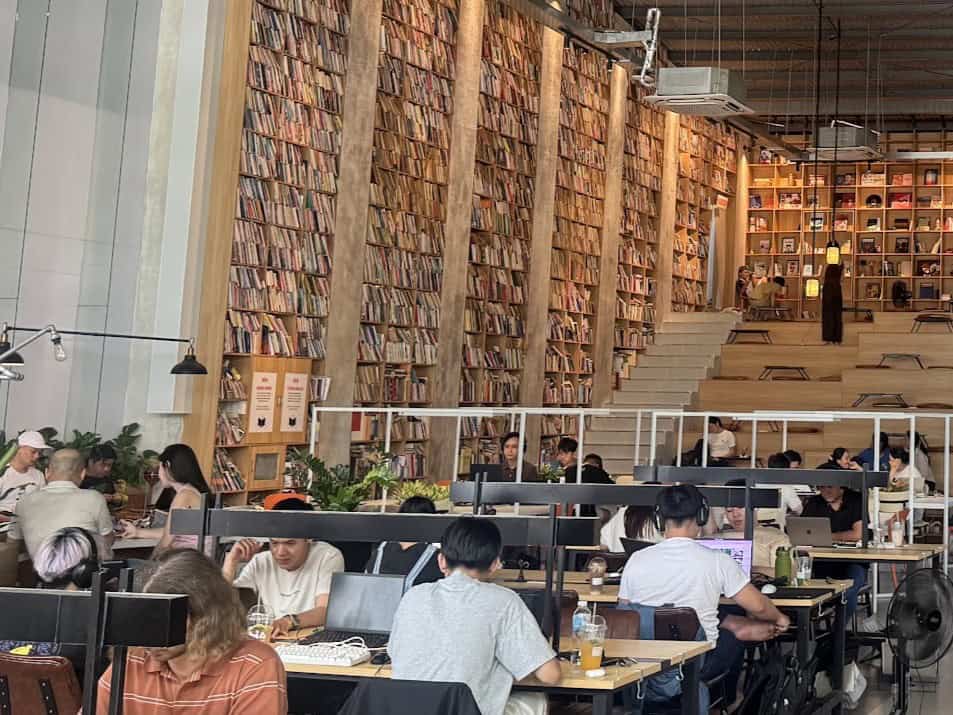
One of the coworking spaces in Da Nang. Wi-Fi shared with fifty strangers, so here I connect through a VPN
There I do two things. First, I use my own data whenever I can, which doesn’t hurt on an unlimited plan.
Second, when I do use their Wi-Fi because I’ll be there for hours, I connect through a VPN.
It’s not tech-geek paranoia. On a shared network you don’t know who’s on the other end, and a VPN costs less than one of the pricey coffees here.
The motorbike: the real risk, and the legal mess almost nobody mentions
If something is going to happen to you in Vietnam, it’ll be on the road. That’s not an opinion or a cautious exaggeration: it’s the only section of this article where the stakes are serious. Everything else is scares and paperwork.
I’ll start with what I do, because it changes how you should read everything that follows.
In Da Nang I get around on an electric motorbike, and it costs me 120,000 dong a day (about $4.60). They swap the battery when you need it, and it has a range of about 100 km.
Top speed is 35 to 40 km/h in sport mode, which could just as well be called speedy grandma mode, but fine, they call it sport.
Around town I ride at 20 km/h, which is what the traffic allows: cargo tricycles carrying half an eyewear shop, trucks, motorbikes and taxis.
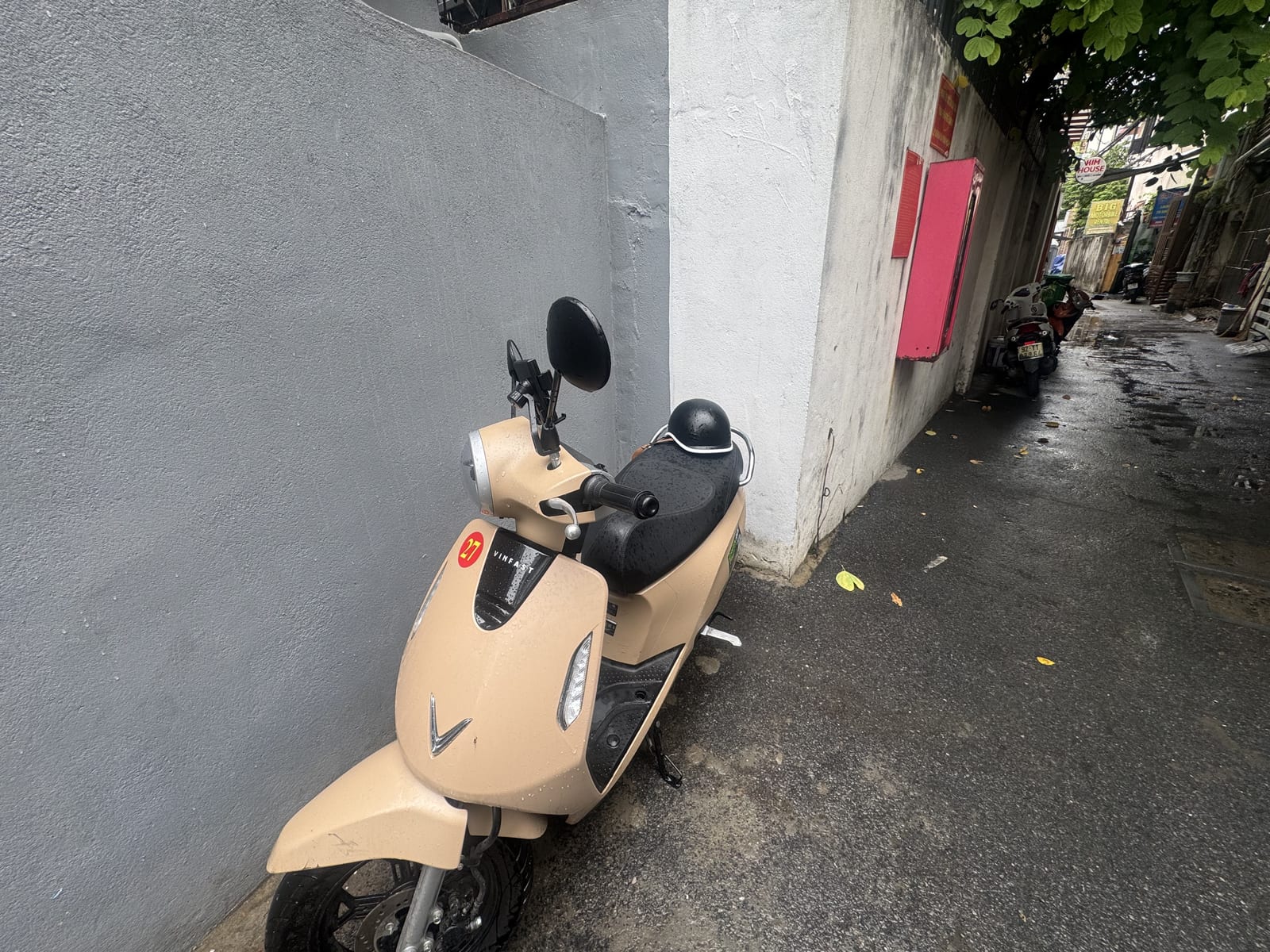
The electric one I rent for 120,000 dong a day, helmet on top. Legally this is a moped, not a motorbike
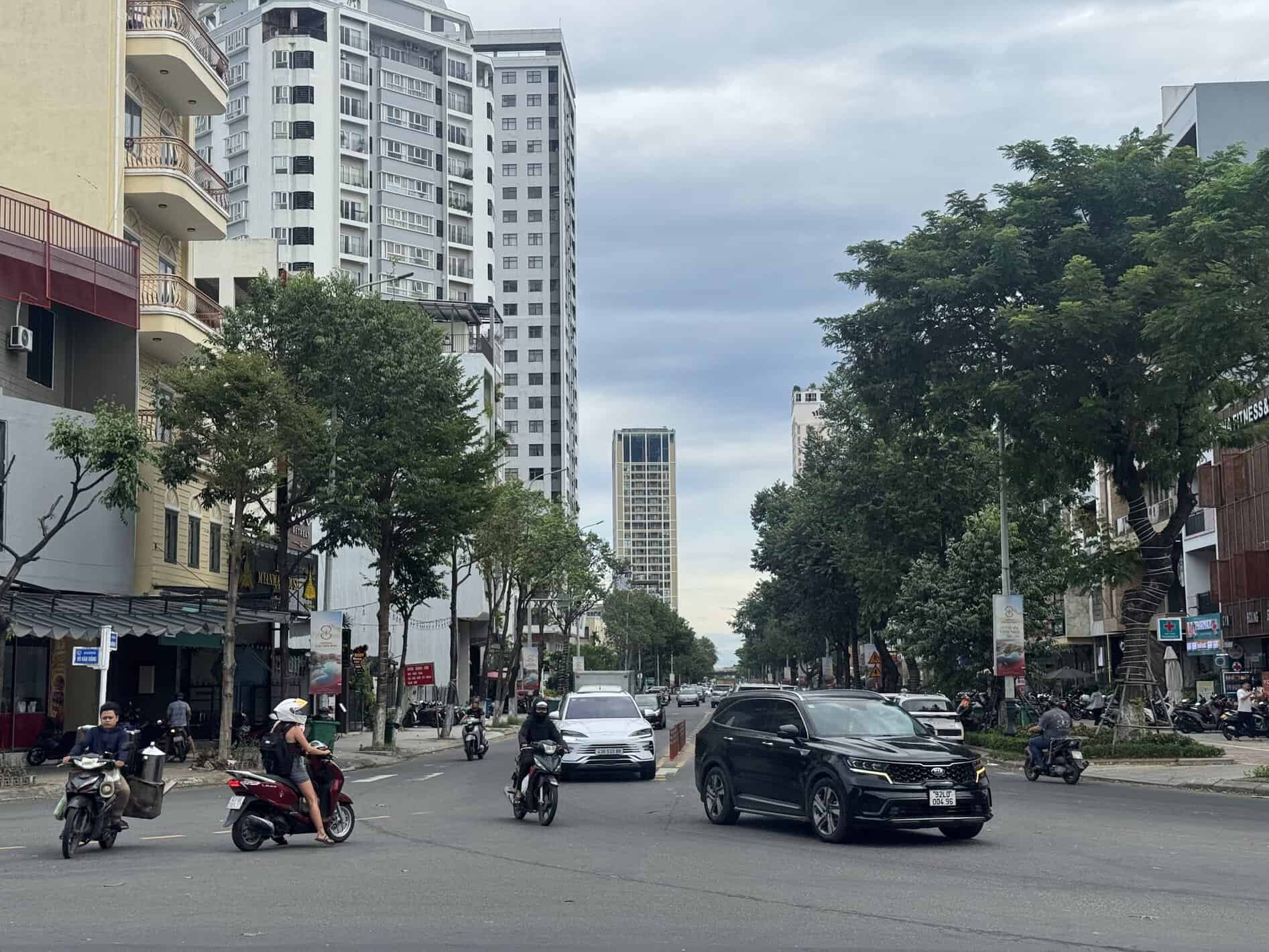
And this is what you have to get through. Here everyone goes wherever they like, which is why I ride at 20 km/h
⚠️ Let me be clear, because it’s not the same thing: I have never ridden a gas-powered motorbike in Vietnam.
Only the electric one, which legally isn’t a motorbike but a moped. And it’s not for lack of practice: back in Spain I owned a 125 cc motorbike.
It’s because I don’t want any trouble. The best-case scenario is that I fall off. The worst is getting caught up in an accident with someone else and ending up in a Vietnamese jail. That’s not exaggeration, it’s common sense.
What Vietnamese law says, chapter and verse
Law 36/2024/QH15, in force since January 1, 2025, and Decree 168/2024/NĐ-CP define a moped as a vehicle with a design speed of up to 50 km/h and an engine of up to 50 cc if it runs on gas, or up to 4 kW if it’s electric.
To ride a moped in Vietnam you only need to be 16 or older: you don’t need a driver’s license of any kind.
My electric one is around 2 hp, roughly 1.5 kW, and it doesn’t go above 40 km/h. It sits comfortably inside that bracket.
And here’s what you didn’t see coming
The funny thing is that the person with a legal problem in Vietnam isn’t the one riding an electric without a license. It’s the one riding a regular gas motorbike on a Spanish license, like mine.
Vietnam only recognizes the International Driving Permit issued under the 1968 Vienna Convention.
Spain signed that convention, but it issues its international permit in the 1949 Geneva Convention format, which is the one Vietnam doesn’t accept.
The practical consequence is an uncomfortable one: a Spaniard with every document in order back home may not be riding a motorbike, or driving a car, legally in Vietnam. If your license is from somewhere else, the question to ask is the same: which convention is your international permit issued under?
The fact that the rental shop doesn’t ask you for anything changes nothing. Being able to rent a motorbike doesn’t mean you’re riding it legally, let alone that you’re covered if you crash.
That’s the detail that can cost someone far more than a fine: a travel insurer can refuse to cover a motorbike accident if you were riding without a valid license for that vehicle.
I checked this in the policy of SafetyWing, the travel medical insurance we chose for long trips: without a valid license for that motorbike, it doesn’t cover the accident.
⚠️ Before you get on a motorbike in Vietnam:
- Ask your insurer, in writing, what it covers and with which license. Don’t trust a blog, this one included: get it from them.
- If you rent an electric one, get the specs in writing: power in kW and top speed. If they give you a paper that says 1.5 kW and 40 km/h, you have something to show at a police checkpoint.
- Always wear a helmet, even for two blocks. It’s mandatory in Vietnam, and if you fall, I promise you the ground is harder than your head.
- If you’ve never ridden a motorbike in your life, Vietnam is not the place to learn. I ride the electric one because I had a 125 cc back in Spain. If I didn’t know how to ride, I wouldn’t even consider doing it here: it would be crazy and reckless.
- The alternative is dirt cheap. A Grab motorbike costs 17,000 dong (about $0.65) for a seven or eight minute ride. Let someone who has spent their whole life in that traffic do the riding.
The food: I didn’t get sick where you think
April 2026, Hoi An, six nights.
In three trips to Vietnam I’ve eaten at street stalls with no English menu, had 20,000 dong bánh mì and plates of chicken rice for 45,000. And I haven’t had a single problem.
One night I had dinner at a Mexican restaurant aimed at tourists. Nice-looking, English menu, tourist prices.
That same night I started feeling unwell, and by morning I had diarrhea and a fever. Two days in bed.
And here I need to be precise, because it’s easy to overstate it: I can’t prove it was that dinner. I didn’t see a doctor, there were no tests, and I don’t know what else I ate that day. Traveler’s gastroenteritis can take anywhere from a few hours to several days to show up.
What I can tell you is the sequence and what it taught me, which isn’t what I expected to learn.
Why I trust the street more than the place with an English menu
The cliché is that in Asia you have to be careful with street stalls. My experience says the opposite, and there’s a very specific reason.
At a street stall you see everything. You see how they make it, you see how fast the food turns over, you see that nothing has been sitting there for hours.
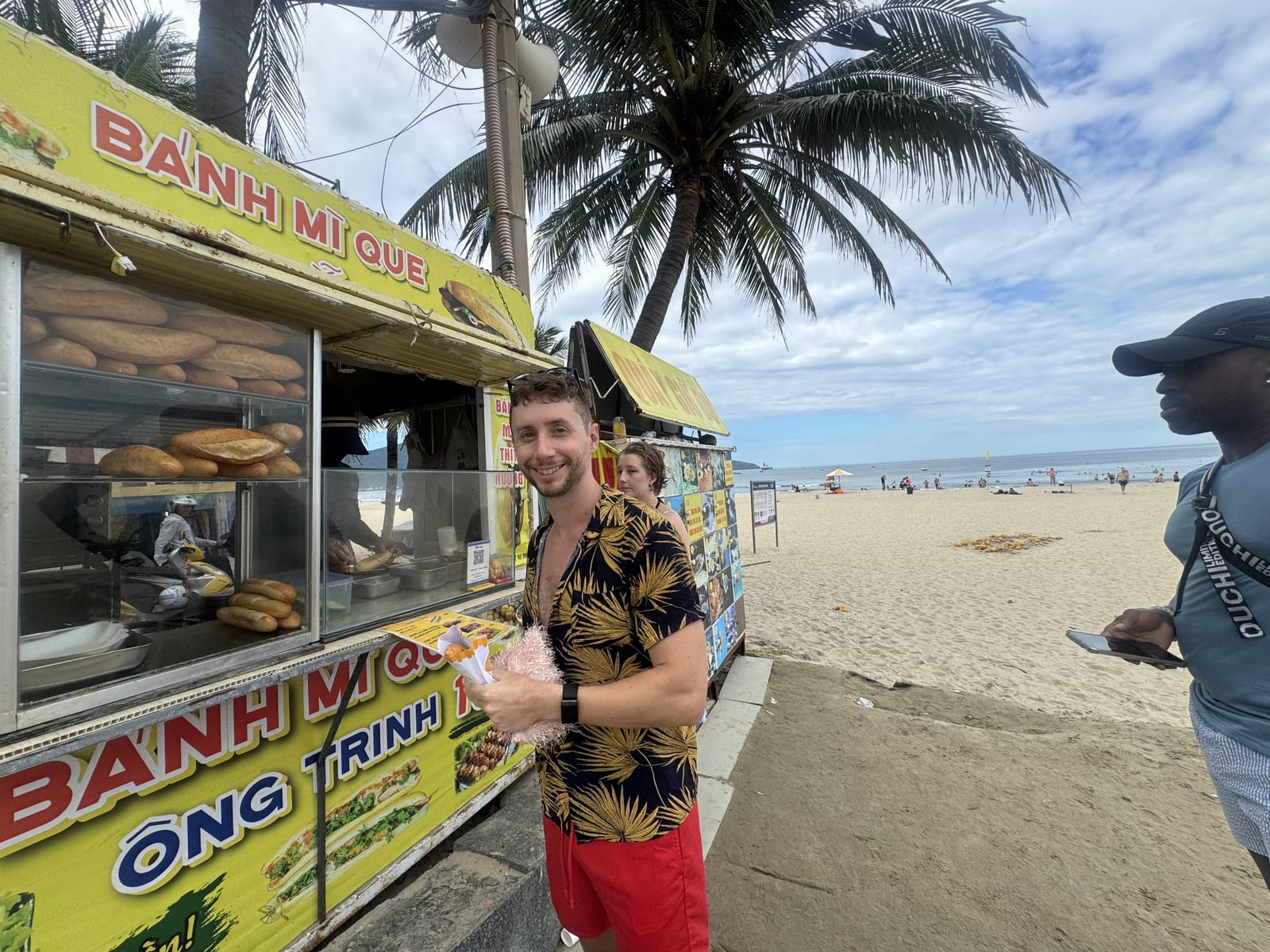
My 20,000 dong bánh mì at a stall right on the beach. The bread in sight, the griddle in sight and a line of people
In Vietnam it’s normal to see your food being made with one of those thin plastic gloves you use to pick fruit at the supermarket. You see it and you decide.
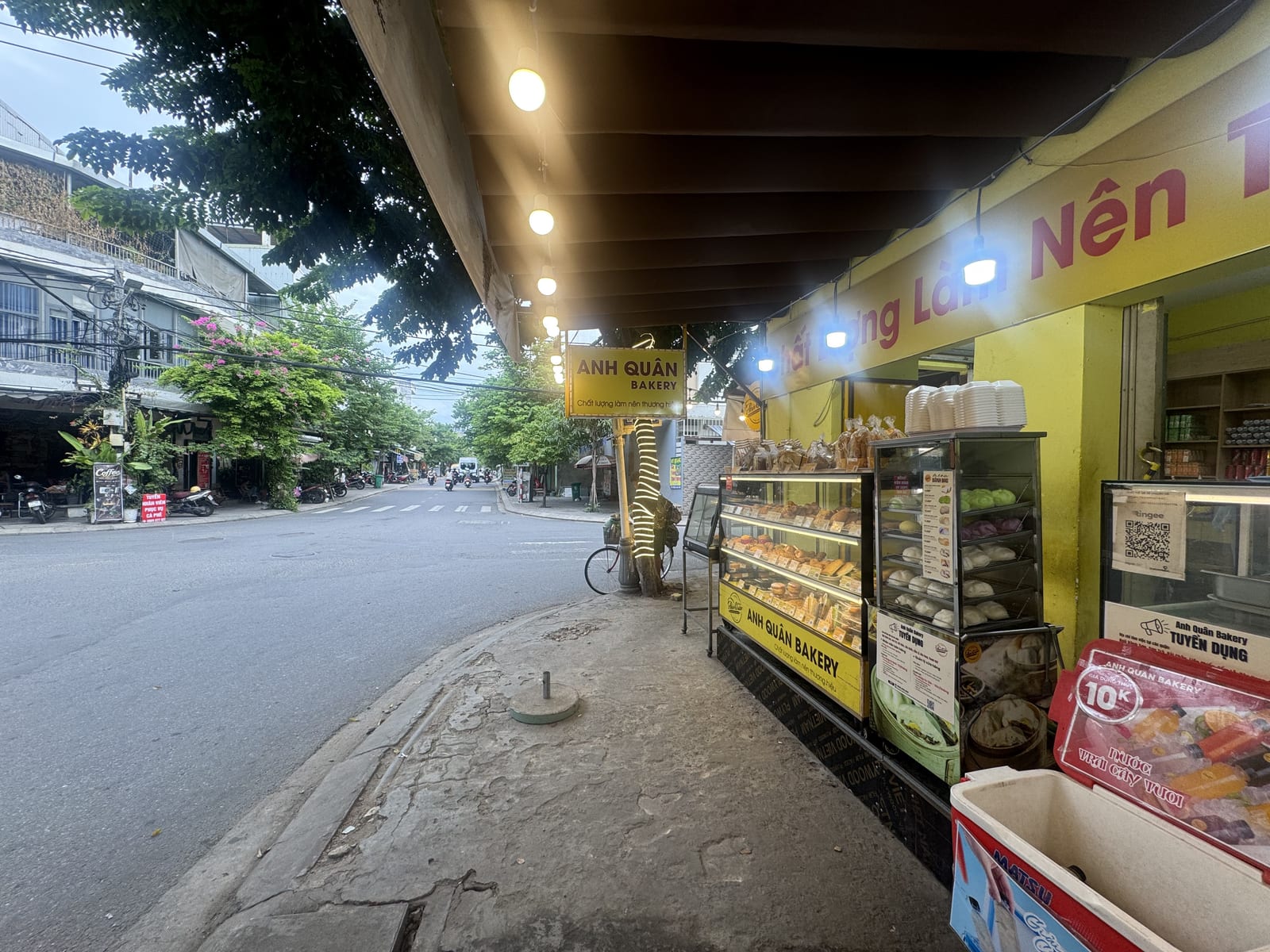
Everything in sight and priced: 10,000 dong. In a closed kitchen you see none of this
At a tourist restaurant you don’t see the kitchen. Maybe they touch something with their bare hands, maybe they don’t clean properly, maybe that imported ingredient has been out for three days. You don’t know.
On top of that, the Western place has slower turnover, imported ingredients and dishes that aren’t from the area. I wouldn’t swap a stall full of Vietnamese locals for an empty place with an English menu again.
What I did, and why I didn’t see a doctor
Paracetamol, lots of water and two days without leaving the room.
I didn’t see a doctor, and I want to explain why properly, because it wasn’t about playing tough. I had drawn a line: if the fever went up, I’d go.
It never went above 38.5°C (101.3°F). There was no blood, no sign of dehydration, and after 48 hours I was clearly getting better.
And besides, all they would have given me was paracetamol and rehydration salts, which I already had in my suitcase.
I didn’t feel like spending the afternoon suffering in a waiting room chair only to leave with what I already had, and I didn’t feel like dealing with the insurance paperwork afterwards either. That’s not advice, it’s what I decided with my own numbers in front of me.
⚠️ When you should see a doctor without hesitating:
- A high fever, or one that won’t come down with fever reducers.
- Blood in your stool, or vomiting that won’t let you keep even water down.
- More than two or three days without improving, or getting worse at any point.
- Signs of dehydration: dizziness when you stand up, a very dry mouth, not peeing.
- Children, older people, pregnancy or any underlying condition. Here the threshold is much lower and you don’t take chances.
In Da Nang and Hoi An there are international hospitals and private clinics with English-speaking staff. If in doubt, go. What I told you above is my case, not a rule.
What I always carry in my bag now
What I changed after that wasn’t where I eat, it was my first-aid kit. Now I always travel with activated charcoal and anti-diarrheal medicine, plus rehydration salts and paracetamol.
It takes up no space and it’s exactly what they’d give you anyway. Having it in your room is what turns a problem into two boring days.
Money: the only thing that has actually cost me money
Let me be upfront about one thing, because otherwise it would be cheating: this didn’t happen to me in Vietnam, it happened in Bali.
I’m including it anyway because the mistake is the same in both places, and because it’s the only incident in all my years of travel that has involved real money.
My card got cloned, and someone used it to book an apartment in Canada, fourteen thousand kilometers from where I was.
I spotted it a few days later while checking my transactions and called the bank and the platform where the booking had been made. They canceled it and I got my money back. Final loss: zero.
I don’t know where it was cloned and I’m not going to guess. It could have been an ATM, a card machine or a data leak at any store. What saved me wasn’t preventing it, it was catching it in time.
What I do now, four things that take a minute
- Checking my transactions every few days while I travel. A charge you see the same day gets canceled; one you only see once you’re back home, who knows.
- Two cards from different banks, and not in the same pocket. So I can block one and still eat.
- A virtual or e-wallet card for everyday spending, and the main one only for the hotel and flights.
- App notifications switched on for every purchase. It’s annoying for three days, and then it’s your safety net.
And one very specific Vietnam trap
At that 2024 hotel in Da Nang, paying by card at reception came with a 3.85% surcharge.
It isn’t fraud (they tell you upfront), but it’s a detail no guide mentions, and it decides whether you take dong out of the ATM when you arrive. On a stay of about $230, that’s almost $9 just for the pleasure of paying with plastic.
These are the real prices I’ve written down, so nobody can fool you with a made-up one. They all come from my receipts, not my memory.
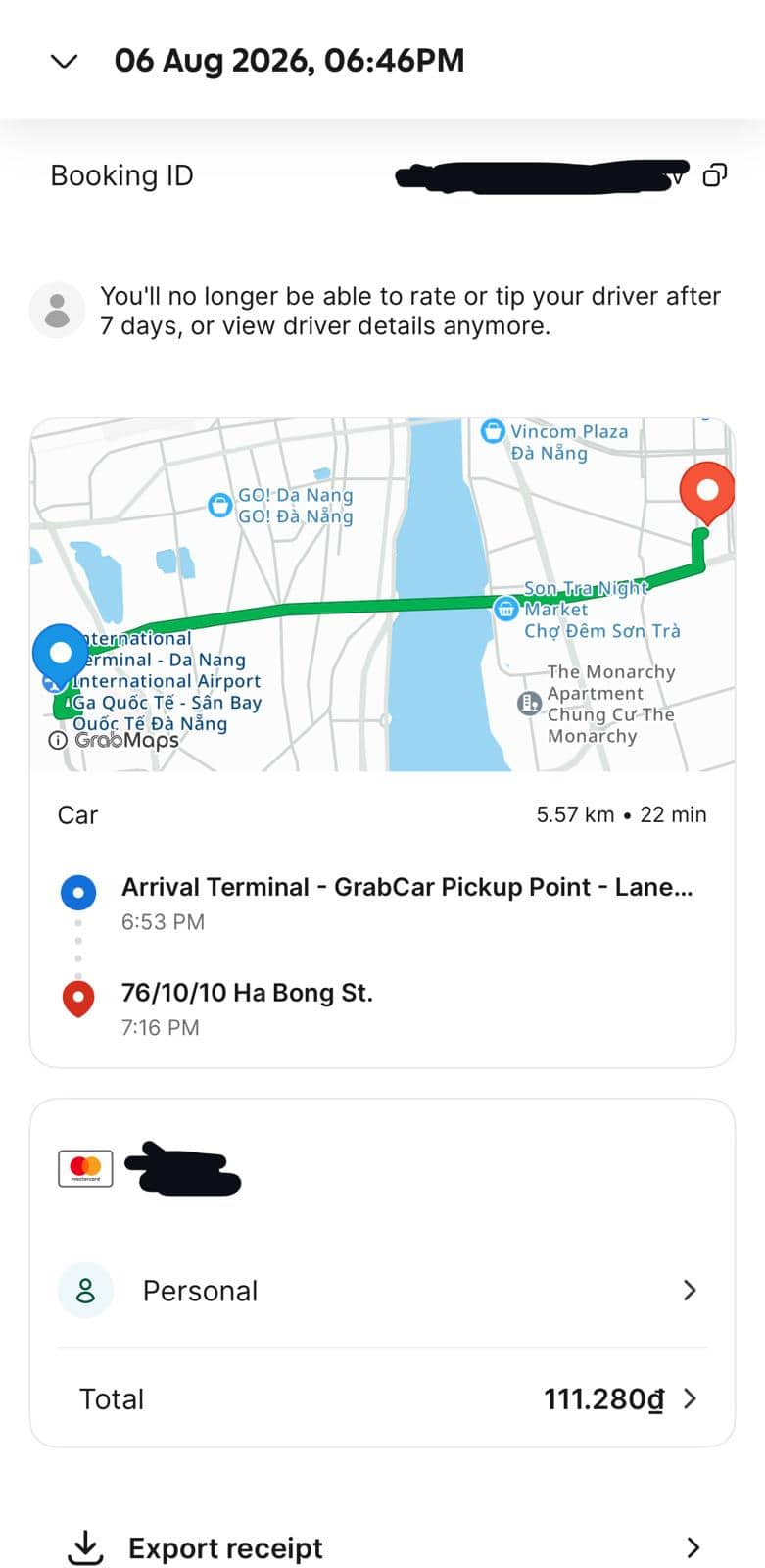
My Grab receipt from the airport to the city: 5.57 km, 22 minutes and 111,280 dong (about $4.30)
Street prices, August 2026
- Coffee at a tourist spot 25,000 to 45,000 VND
- Beer 45,000 to 60,000 VND
- Bánh mì 20,000 to 40,000 VND
- Local chicken rice plate 45,000 to 80,000 VND
- Massage 200,000 VND
Getting around
- Grab car, airport to the city 111,280 VND
- Grab motorbike, 7 or 8 minutes 17,000 VND
- Electric motorbike, full day 120,000 VND
- Surcharge for paying by card at reception 3.85%
If someone asks you for three times that, it’s not that Vietnam is expensive.
The sea in Da Nang: one safe stretch, and kilometers that aren’t
This is the one fewest people expect to find in an article about safety in Vietnam, and it’s literally the one that can kill someone.
Da Nang’s beaches are huge, kilometers of sand. And yet you see stretches packed with people and, on either side, kilometers of empty beach.
The reason isn’t a lack of space. There are markers on the sand showing which area is safer for swimming, and that’s where everyone sets up, especially families.
Outside that area, for hundreds of meters on each side, the red flag is flying.
So when you arrive and see that gorgeous empty strip next to the crowd, the temptation is obvious and so is the reasoning: “it’s empty, even better”.
It isn’t empty because nobody has noticed it. It’s empty because the sea there is unforgiving.
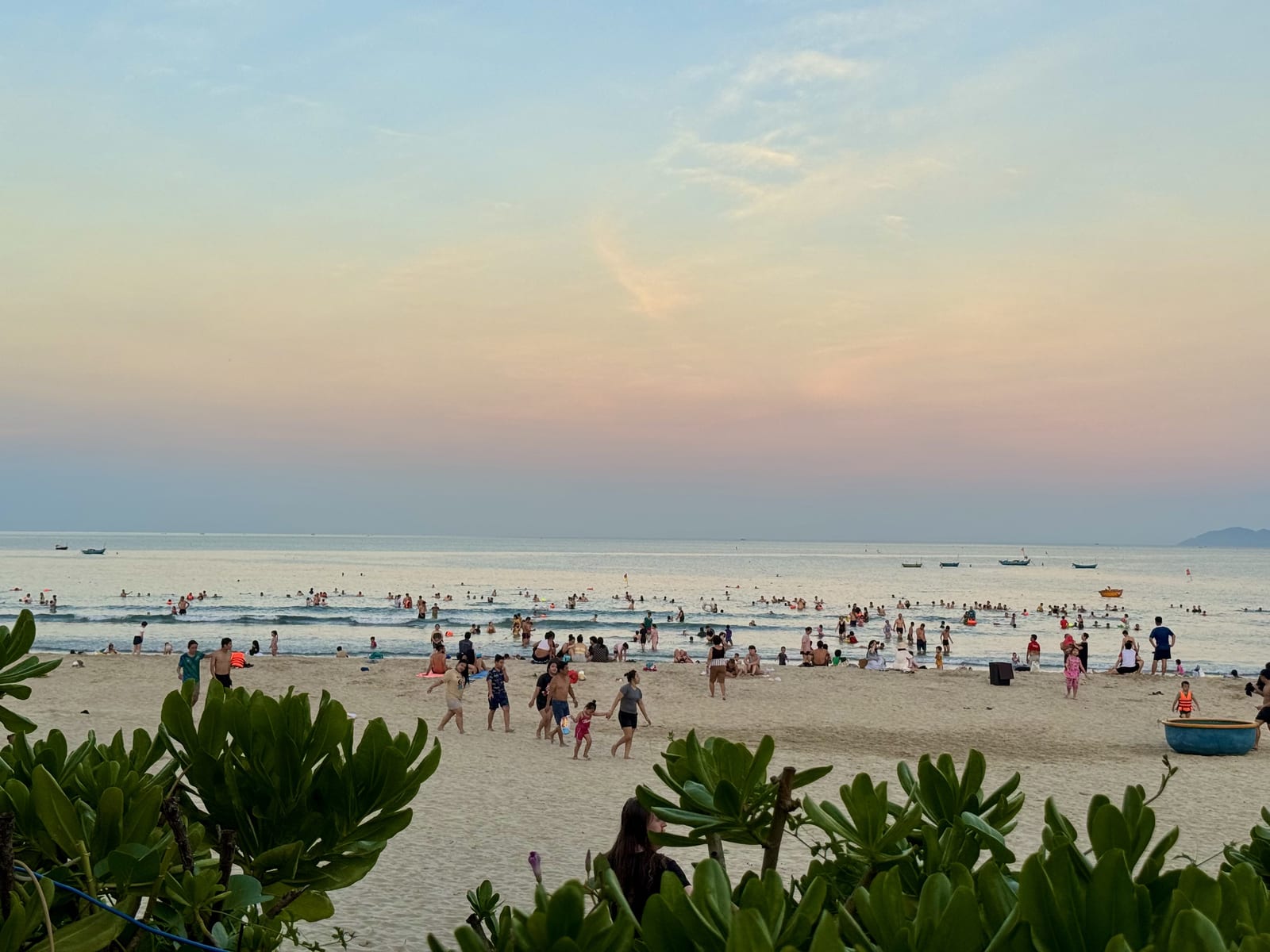
Look where everyone is. It’s no coincidence: that’s the marked swimming area, and on either side there are kilometers of empty beach
And careful, the marker isn’t a lifesaver
This is what you really need to understand, and no sign tells you: there isn’t a lifeguard every five meters.
The marker on the sand tells you “the sea is better here”. It doesn’t tell you “someone here is watching you”.
Staying inside the good area is the right call, but it doesn’t make you someone else’s problem. It’s still your problem: watch where you go in, keep your kids in sight and don’t relax just because there are lots of people around.
The beach is for the afternoon, not midday
A tip that will change your day, even if it’s not about safety.
People swim from four or five in the afternoon until it gets dark, because during the day they’re working and it’s too hot to be out in the sun.
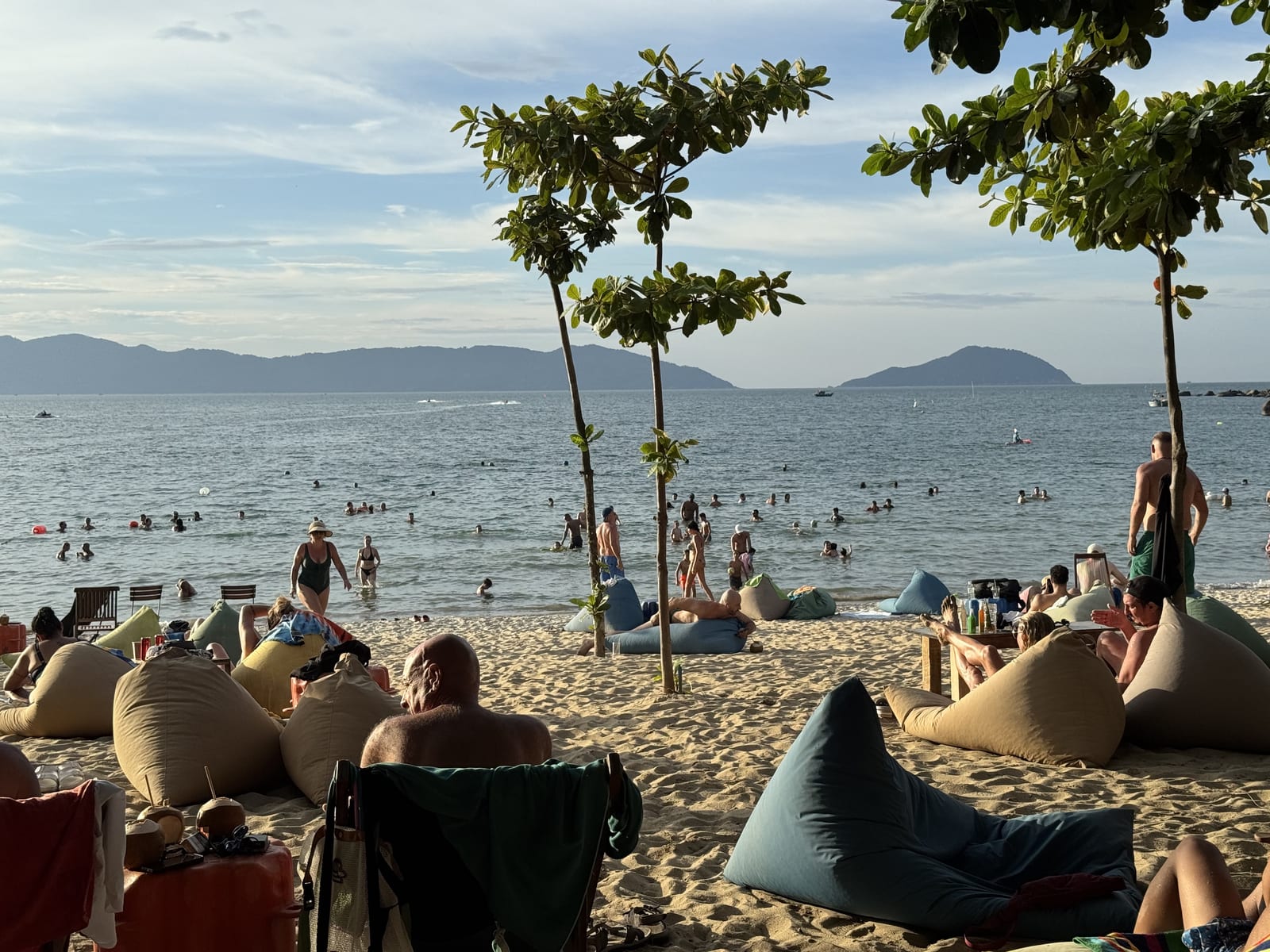
This is the right time. At midday this is empty, and not because you’ve discovered anything
If you go down at noon you’ll find it empty and think you’ve nailed it. What you’ve actually done is go at the worst time, and at the time when there’s nobody around in case something happens.
The monkeys on the Sơn Trà Peninsula
If you go up to the peninsula, which is worth it, you’ll run into monkeys. And there’s one thing nobody tells you: don’t smile at them.
To you it’s a friendly gesture; to a monkey, showing teeth is a threat, and it goes on alert. They look cute, but they can turn dangerous.
Frequently asked questions about safety in Vietnam
Is Vietnam dangerous for tourists?
No. In 41 nights in Da Nang and a week in Hoi An I haven’t had a single problem with crime, and on the beach people leave their things on the sand while they swim. The real risk is the traffic, not crime. That said, keep an eye on your things like you would anywhere, or ask another tourist to watch them while you swim.
Can I ride a motorbike in Vietnam on my home license?
It depends on your international permit. Vietnam only recognizes the one issued under the 1968 Vienna Convention, and Spain, where my license is from, issues it in the 1949 Geneva format, so on a regular gas motorbike I probably wouldn’t be riding legally. For an electric motorbike of up to 4 kW and 50 km/h you don’t need any license at all, under Law 36/2024/QH15. Check with your insurer before you rent anything.
Is hotel Wi-Fi in Vietnam safe?
It’s as safe as Wi-Fi anywhere else, which isn’t saying much: you can’t know who runs it or who else is connected. I stopped using it and travel with my own data. And I’ll be honest about my reasoning, which is more gut feeling than law: in Europe I trust it more because data protection laws are very strict and whoever gets caught is in serious trouble. In Vietnam, Indonesia or Thailand I don’t know the laws, and I don’t think they’re enforced as strictly. I may be wrong, but when I don’t know what protects me, I’d rather not find out with my bank account.
What about street food?
It’s one of the best things about the country and it hasn’t given me a single problem. Pick stalls with a line of locals, where the food is made in front of you. My only scare came from a tourist restaurant with an English menu. And to be clear, I’m not telling you to eat at a stall that looks dirty: I’m telling you to use common sense, which is exactly what a stall in plain sight lets you do and a closed kitchen doesn’t.
Do I need travel insurance for Vietnam?
Yes, especially if you’re going to get on a motorbike. I travel with the cover that comes with my American Express Platinum and my Revolut Ultra. What matters isn’t the list of what’s covered, it’s knowing whether you’ll have to pay upfront and what paperwork they’ll ask you for. Ask before you go, not from a hotel bed in Hoi An.
Can you drink the tap water?
I haven’t, and I don’t know anyone who does. Bottled water costs next to nothing and it’s on every corner, so it’s not a battle worth fighting. As for the ice, at places full of local customers I haven’t had a single problem in three trips.
So, is Vietnam safe?
Yes. I’d go back tomorrow, and in fact I’m writing this from the Lighthouse at Whale Park in Da Nang.
It’s an easy, cheap country, with people who don’t hassle you and where you can walk around at night without worrying.
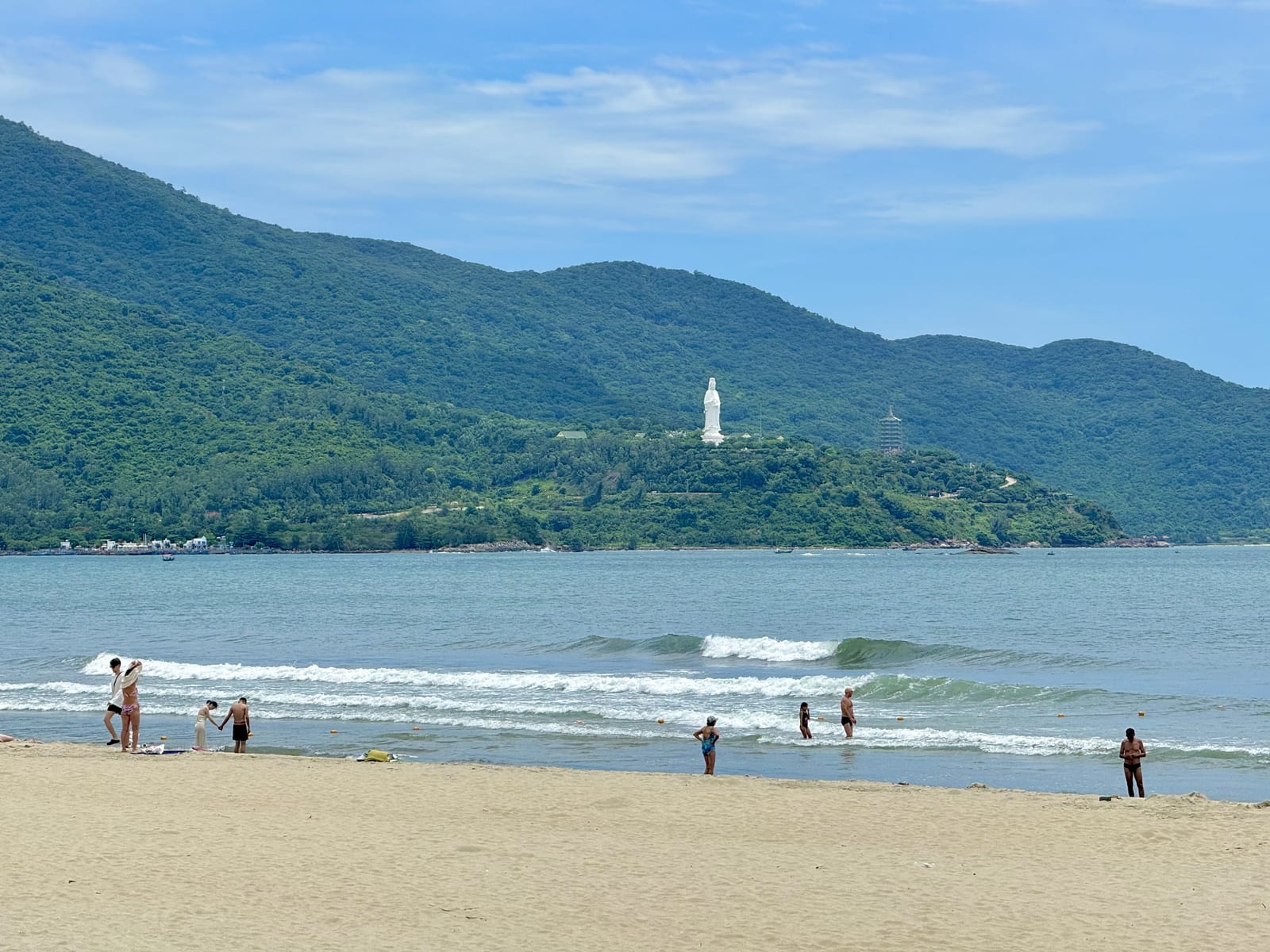
Da Nang beach with the peninsula behind it. I’d go back tomorrow
What I learned in three trips is that the things that really happen to you aren’t the ones you fear before you leave. Nobody has mugged me.
What did happen was a review I never wrote, two days in bed after a tourist dinner and finding out that half the street is riding without a valid license.
Fear doesn’t solve any of the three. What does is twenty minutes of reading before you go, insurance you know how to use, a first-aid kit in your bag and not trusting networks, restaurants or rental shops by default just because they’re there.
That goes for Vietnam, and it goes for your own city too.
Share this and decide together 💙