REAL TESTS IN PUNTA CANA · JULY 2026
Best eSIM for the Dominican Republic: I tested 6 and only recommend 2


Getting an eSIM before you land in the Dominican Republic is easy: you buy it online, install it before your trip, and it activates the first time it connects.
But not all of them actually work well in the Dominican Republic. On my first trip I bought one thinking I’d use it to work, get around with Uber, and pull up maps — but the speed and stability were disappointing: it dropped constantly, the ping was high, and uploads and downloads crawled.
So I bought and tested several eSIMs in the Dominican Republic (Santo Domingo, La Romana, and Punta Cana), instead of just repeating the specs from their websites like most travel blogs do.
Pick your eSIM for the Dominican Republic in 1 minute. NO EMAIL REQUIRED
Not everyone needs the same eSIM, the same amount of data, or the highest speed. In under 30 seconds I’ll tell you which one I’d pick for your trip.
#1 · Saily Ultra
The best eSIM in my Punta Cana tests
The one I’d pick for working, using lots of data, or not risking a slow connection.
See Saily’s exact pricing and get 10% offDiscount code: DISCOVERING
- The fastest of the six I tested.
- Stable connection all day long.
- 30 GB at full speed, then unlimited data at 1 Mbps.
- Supports hotspot with a laptop and other phones.
- Installed in under 30 seconds.
- Pricier than smaller plans.
- The Ultra plan can be overkill for very short trips.
My experience with Saily
Saily Ultra was the eSIM that performed best in my Punta Cana tests. I got close to 100 Mbps download and 20 Mbps upload, with latency around 103 ms.
More important than the top speed was how it behaved day to day: WhatsApp, Google Maps, Instagram, and TikTok all worked without any waiting, and I was also able to share the connection with my laptop.
Who I’d recommend Saily Ultra to
I recommend it for one- or two-week trips, people working from their laptop, content creators, and anyone who needs reliable internet for the whole trip.
#2 · Roam2Go
The alternative for spending less without giving up a good connection
Roam2Go came in second. It wasn’t as fast as Saily, but it was stable and quick enough for maps, calls, social media, and connecting extra devices over hotspot. You can also pick a data plan anywhere from 3 to 30 days.
I liked that its 20MB download speed is plenty for Instagram, maps, and fast browsing — I even connected my laptop and worked for a couple of hours without a single drop.
The other eSIMs I tested
Airalo
It worked, but it was slower. Roam2Go costs about the same and performed much better on the island.
Holafly
It has unlimited data, but the speed was inconsistent — fast at times, slow and dropping at others.
Klook
Very slow. I’d only consider it for messaging. For a few euros more, I’d pick something faster and more stable.
GigSky
I installed it and got signal, but I couldn’t get online. I’m not sure what went wrong — I spent 20 minutes trying everything.
TESTS AND SCREENSHOTS
Test gallery: real results
These are the actual screenshots from the tests I ran in Punta Cana with each provider. Tap an image to zoom in.
The winners: Saily and Roam2Go
The two options that delivered the best speed and stability results.
In practice: Saily stayed the fastest and most stable option throughout. Roam2Go fell behind on speed, but held up well for maps, messaging, calls, and sharing a connection during a normal trip.
Airalo: fairly slow
The purchase was simple, but the tests confirmed a slower connection.
In practice: Airalo was easy to buy and install, but the speed gap showed up when loading pages and using apps outside of WiFi. For a similar price, Roam2Go delivered a far more convincing result.
Holafly: unlimited data, but not the best
The screenshots show an inconsistent connection — fast in some parts of Bávaro, noticeably slower in others.
In practice: Holafly alternated between good moments and performance drops. It can work, but I wouldn’t pick it for working or sharing data.
If you’re already used to Holafly and don’t need the fastest eSIM out there, it can still get the job done — even at its “slowest” point, at 5.39MB/s up and down, that’s enough for almost everything. You can check its prices here: See HolaFly for the Dominican Republic and use the code “DESCUBRIENDO” for an extra discount at checkout.
Klook: very slow
The cheapest option was limited to messaging and the most basic tasks. Better not to risk needing internet in an emergency and having it crawl…
In practice: Klook was the most limited option of the group. It might get you through text messages, but I wouldn’t rely on it for steady browsing, video, maps, or working during your trip. Its download speed is “acceptable,” but the 0.59MB/s upload makes the whole connection feel even slower. And forget video calls or uploading Instagram stories with that upload speed.
What nobody tells you about eSIMs in the Dominican Republic
The important thing isn’t picking an eSIM with unlimited data. It’s whether that eSIM actually works well in the Dominican Republic.
They all promise internet, but they don’t behave the same in practice. Some are fine for WhatsApp messages, but calls drop, browsing fails, and worse, Google Maps stops working right when you need to know where the taxi’s headed.
At a lot of hotels, the WiFi works fine in the room but not so well by the pool or on the beach. And that’s exactly where you need the eSIM to come through.
That’s why this comparison isn’t about picking the most well-known eSIM. It answers a simple question: after testing nearly all of them in the Dominican Republic, which one would I buy?
Quick comparison of the eSIMs I tested
| eSIM | Approx. price | Local calls | Hotspot | My test result |
|---|---|---|---|---|
| Saily | Medium-High | No | Yes | The fastest and most stable |
| Roam2Go | Medium | No | Yes | Fast and stable |
| Airalo | Medium | No | Yes | Slow in my tests |
| Holafly | Medium-High | No | Yes | Average speed, inconsistent connection |
| Klook | Low | No | Yes | Very slow; messaging only |
| GigSky | Medium | No | Couldn’t test it | Never got online |
Frequently asked questions
Do you need an eSIM if your hotel has WiFi?
Yes, though you may not always need a lot of data.
In my experience, in-room WiFi works fine at a lot of hotels. The problem is usually the common areas: pool, lobby, restaurants, beach, or water park. In those spots, WiFi either doesn’t reach or is painfully slow.
For most people, the eSIM doesn’t need to replace all of the hotel’s WiFi — it just needs to keep you connected once you step outside the room, or when the WiFi fails.
- 1–3 GB: WhatsApp, maps, and quick searches.
- 5–10 GB: social media, maps, browsing, and some video.
- 20 GB or more: frequent Instagram, TikTok, or YouTube.
- Unlimited: you don’t want to watch your data usage and you’ll be sharing it with family.
Do Dominican Republic eSIMs come with a local phone number?
In most cases, no. In fact, it’s quite rare — I haven’t come across one.
In the DR, travel eSIMs are data-only. You can use WhatsApp, Google Maps, Instagram, TikTok, Gmail, and video calls, but you usually don’t get a Dominican number for calling local phones.
If you need to call a restaurant, hotel, doctor, or local agency, use WhatsApp if they have a number, an app like Skype or Rebtel, or just ask the front desk for help. For most tourists, a data eSIM plus WhatsApp is enough.
HOW I TESTED
How I ran the real-world tests in Punta Cana
To make this comparison actually useful, I’m not just repeating the specs listed on each provider’s website. I used these eSIMs under real travel conditions.
I tested them:
- In different areas of Punta Cana.
- With Google Maps, WhatsApp, Instagram, and TikTok.
- Sharing the connection with my laptop and other phones.
- Making video calls.
- Measuring speed with Ookla and Fast.
I also tested them on several phones: iPhone 15 Pro Max, iPhone 17 Pro Max, iPhone 17 Pro, and Pixel 9 Pro XL.
For each test I checked:
And, most importantly — what actually matters if you’re not a tech expert: which one is fastest, easiest to install, and most reliable.
My final recommendation
Pick Saily if you want the fastest, most stable, easiest option for working, using lots of data, or traveling without worrying. Pick Roam2Go if you’d rather spend less and need reliable data for a few days.
LOCAL NETWORKS IN THE DR
Local eSIM (Claro / Altice) vs. travel eSIM: which is right for you?
A lot of you ask me why not just buy a Claro, Altice, or Viva eSIM directly when you land in Punta Cana or at Las Américas Airport. Short answer: the time you’ll lose, and the risk of handing your passport around at local kiosks.
The local networks: what you’re actually connecting to
The Dominican Republic’s mobile infrastructure is dominated by three carriers:
- Claro The carrier with the widest coverage nationwide, including remote beach areas and highways.
- Altice Very good coverage in cities and the main tourist areas — AI summaries claim it’s slower, but it was fast for me. I’d guess that’s just because they’re repeating what bloggers who’ve never actually used an eSIM there say…
- Viva The third option — cheaper for locals, but with less 4G/LTE reach outside the main urban centers.
Mobile coverage maps for the Dominican Republic
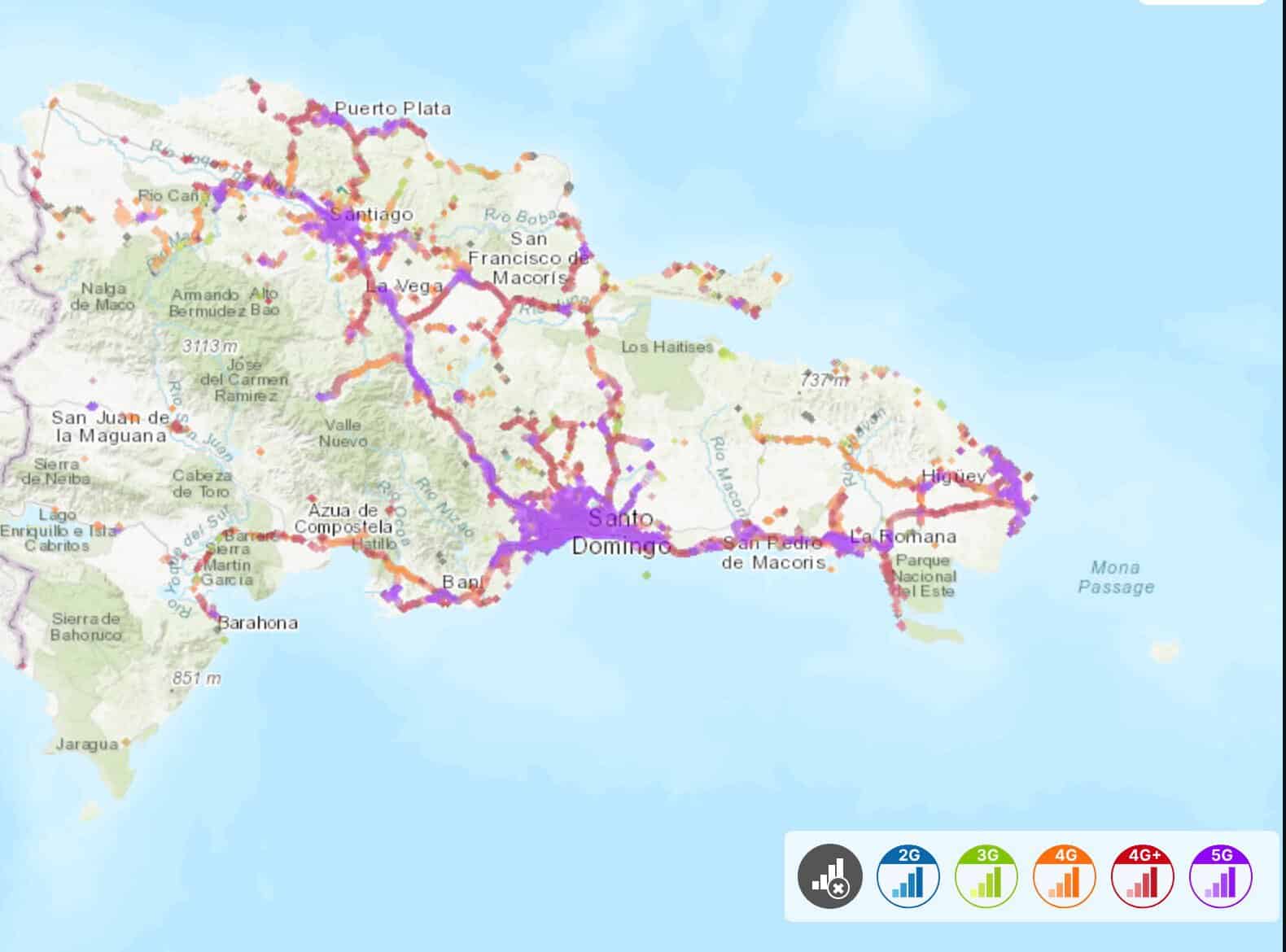
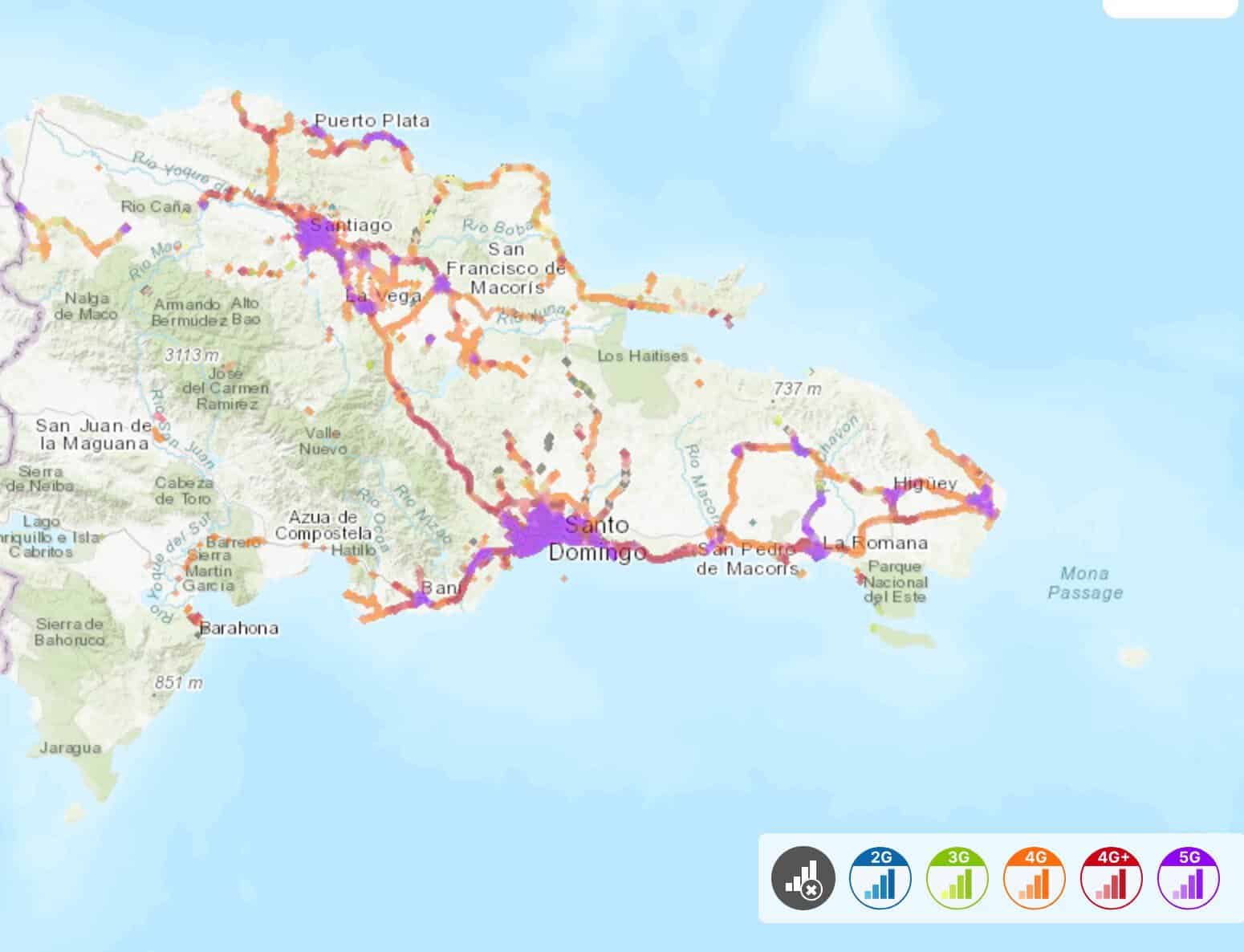
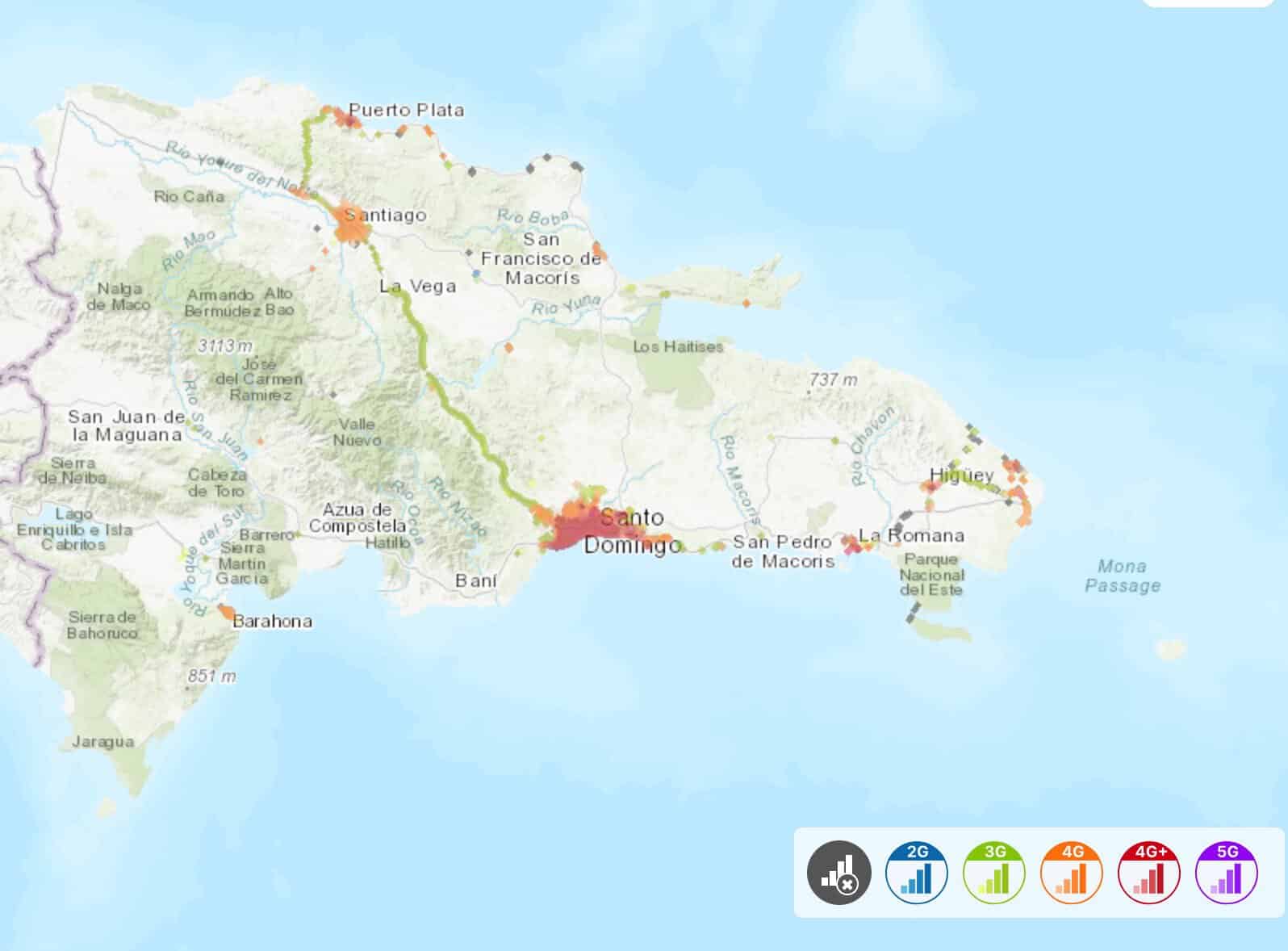
These maps show each carrier’s approximate reach. To also compare recorded speeds across different areas, check the nPerf coverage and speed map.
A technical detail I picked up on the ground: two travel eSIMs riding on the same Claro towers doesn’t mean they perform the same. In my tests, I noticed throttling and high latency depending on the brand.
Saily, for instance, masks the network name (your phone screen just shows “Saily” instead of the Dominican carrier’s name). Even so, its data routing gave me the lowest ping and downloads close to 100 Mbps, while other brands running on the exact same physical infrastructure suffered micro-drops.
The hassle of buying an eSIM at a Dominican store
Both Claro and Altice offer prepaid eSIMs, but the process isn’t built for tourists. You can’t download one with a single click from your couch before you fly.
If you want a local carrier’s eSIM, here’s what actually happens once you land in the Dominican Republic:
- You have to physically go to an official store (airports usually have one, but the price is steep).
- You’ll wait in line, show your physical passport, and register your details.
- You’ll get a printed QR code to scan and install the eSIM.
Personal experience: I did this back when I first started traveling the world, and it’s a waste of time. The price is almost the same, and you’ll burn at least 30 minutes between waiting and getting it done. On top of that, they need to photograph your passport, and it’s not exactly reassuring to keep handing your passport around at kiosks and stores in every country you visit…
Will your phone work on Dominican networks? (The band-compatibility issue)
In 2026, if you have an iPhone (12 or newer), a Samsung Galaxy S, or a Google Pixel, you don’t have anything to worry about — your phone is global and will work perfectly.
When should you be careful? If you’re using a budget Android phone imported from Asia (certain Xiaomi, Redmi, or Poco models bought online). The Dominican Republic runs on American frequencies, specifically Band 4 (AWS – 1700/2100 MHz) for 4G/LTE.
If your phone doesn’t support that specific band, the eSIM will still install correctly, but your phone won’t be able to “talk” to the 4G towers, and you’ll end up browsing at 3G or Edge (H+) speed. That’s still enough for messaging, Uber, Maps, WhatsApp, and so on.
Even with an older phone, buy a 1 or 3 GB eSIM. It’s enough to feel safe and connected anywhere in the Dominican Republic, and even at 3G speed, it gets the job done.
Need a hand?
We've stayed here ourselves and experienced it firsthand. If you have any questions, leave a comment below and avoid the typical first-timer mistakes.